
Testing Fruitwood Quick-Light Charcoal to Improve Repeat Orders

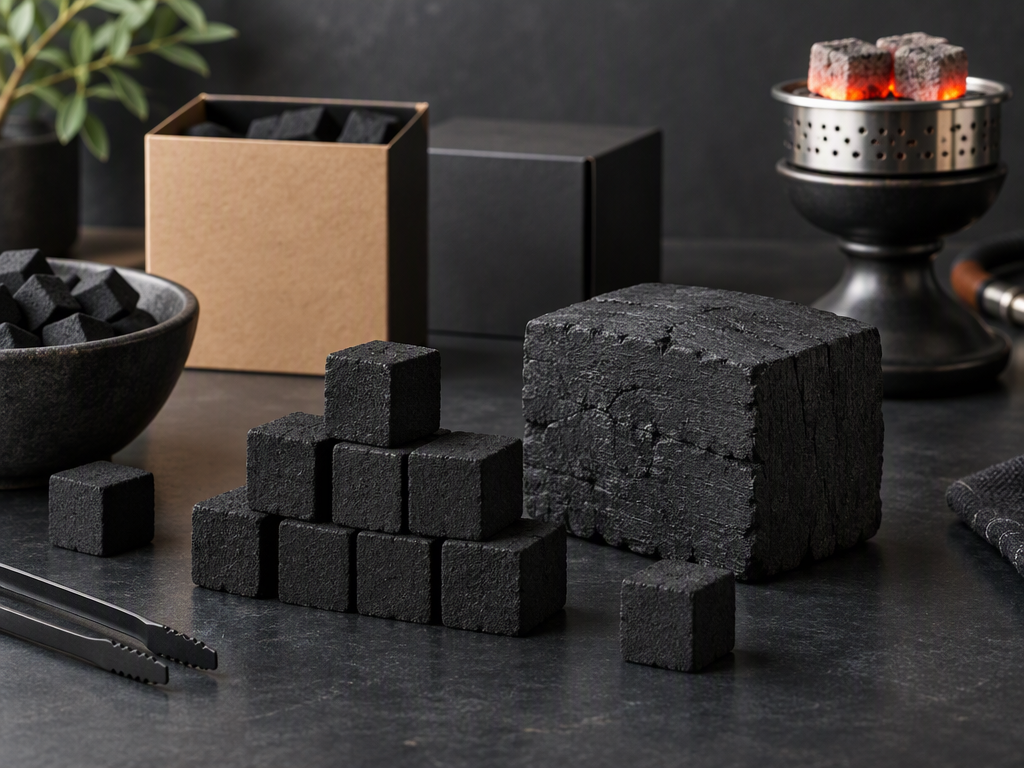
A European distributor evaluated fruitwood quick-light charcoal alongside its established coconut shell range to address customer needs for faster, simpler preparation. The case highlights how comparing product specifications and tracking customer behavior can help guide sourcing decisions without assuming one charcoal type suits every market.
The reorder problem behind a familiar product choice
For a European distributor of smoking and aromatherapy accessories, the hardest part of selling shisha charcoal was never the first order. It was the second one. Customers expected dependable charcoal that lit predictably, fit their burners and trays, and arrived in packaging that survived the trip from warehouse to lounge. When any of those expectations slipped, repeat orders slipped with them.
Charcoal sourcing is a messy, interconnected problem. Product performance shapes the customer experience, the customer experience shapes reorder behavior, reorder behavior shapes stock planning, and stock planning shapes distributor margins. A product that lights slowly or inconsistently can generate complaints that no amount of competitive pricing will offset.
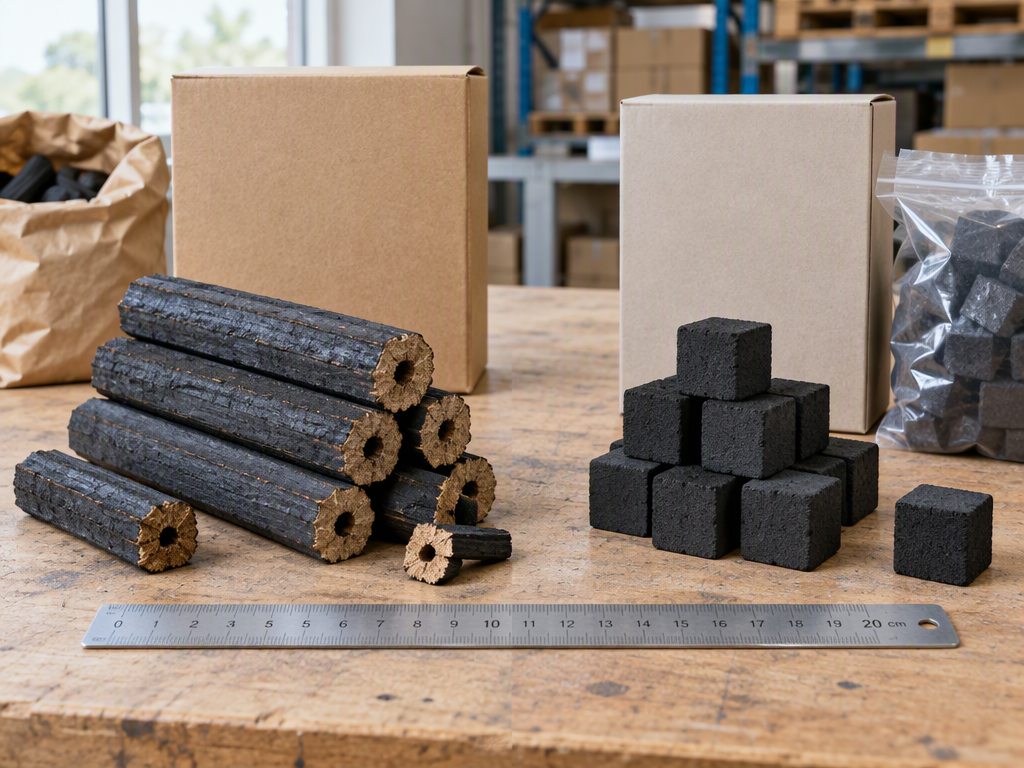
This case looks at one distributor's practical sourcing decision: testing quick light charcoal made from fruit wood alongside an existing coconut shell range. It is not proof that one charcoal type is best for every market. It is an example of how a measured product change, evaluated against real customer behavior, can influence reorder rates.
The distributor's starting point: coconut shell charcoal
The distributor had built its charcoal business on coconut shell charcoal, sold primarily to shisha lounges, specialty tobacco retailers, and a smaller group of hospitality accounts. Ordering patterns were fairly stable: most accounts reordered on a predictable cycle, with larger volumes ahead of weekends and seasonal peaks.
Before the change, the distributor tracked a baseline across several dimensions:
- Reorder rate, defined as the share of accounts placing a second order within a set window
- Average time between first and second order
- Complaint volume, particularly around lighting difficulty and breakage
- Return rates and credit notes
- Stockouts and backorder frequency on core SKUs
The coconut shell range performed well for customers who valued a natural product and were willing to manage ignition with a burner or external heat source. But the distributor identified gaps: some accounts wanted faster preparation, some wanted a simpler lighting routine for staff with limited training, and some wanted a product better suited to casual or outdoor use. The goal was not to replace coconut shell charcoal but to improve ease of use, consistency, and fit with particular customer needs.
Why consider fruitwood quick-light charcoal?
Quick light charcoal is designed around convenience. Its intended role is straightforward ignition for customers who value speed and a simple preparation routine—light it, wait briefly, and use it. For shisha lounges turning tables quickly, or retailers serving customers who want minimal fuss, that convenience can matter as much as the charcoal itself.
Comparing fruit wood charcoal with coconut shell charcoal is best done on specifications and use cases rather than broad claims. Relevant dimensions include:
- Ignition method and expected preparation time
- Block or cube dimensions and how they fit common bowls, trays, and burners
- Packaging format and transport durability
- Intended use case—shisha, BBQ, outdoor cooking, or aromatherapy
- Compliance documentation and labeling requirements in the destination market
Two products illustrate how format and function differ. A large block format such as the 50*50*40mm Block Quick-Burning Charcoal, Fully Burning, Black Fruit Wood AA554-SBQ is built for BBQ, outdoor cooking, and hookah use, with a 1–3 second ignition window and full burning behavior. A different format, the 50mm perforated quick burning charcoal fruit charcoal, is designed for hookah, shisha, and aromatherapy burners, with perforations that support airflow and a fruit fragrance profile.
What matters for sourcing is clarity: fruitwood quick-light is not automatically a replacement for natural shisha charcoal. The right choice depends on customer preferences, the accounts being served, and product testing against written specifications.
How the distributor evaluated the switch
The distributor ran a controlled trial rather than a wholesale swap. Representative accounts were selected across lounge, retail, and hospitality segments. A defined test period was set, and pricing and promotions were kept visible in the analysis so that any change in orders could be attributed correctly.
The evaluation covered:
- Ignition reliability across batches and storage conditions
- Burn behavior during typical customer use
- Packaging integrity and transport durability
- Customer feedback from staff and end users
- Compliance documentation for the destination market
Samples were compared against the distributor's written specifications, and the distributor worked with a qualified hookah charcoal supplier and shisha charcoal manufacturer rather than relying on marketing claims. For importers, the diligence extended further: verifying production capacity, quality controls, export documents, and whether the hookah charcoal factory could support consistent supply over time.
What changed in the product mix and customer offer
The distributor positioned fruitwood quick-light alongside existing shisha charcoal rather than assuming it suited every account. Accounts that valued speed and simple preparation were offered the quick-light line first; accounts with established natural charcoal routines kept their existing range.
Product education did much of the work. Clear usage guidance, honest expectations about ignition and preparation, and appropriate pack sizes helped customers make an informed choice instead of guessing. Smaller trial packs reduced the risk of a first order that was too large for an untested product.
It is worth noting that other categories serve different needs and should be evaluated separately. Bamboo charcoal, bamboo cube shisha charcoal, and incense charcoal each have their own customer base, specifications, and compliance considerations. A change in one line does not automatically justify changes in another.
Measuring the effect on reorder rates
Reorder rate needs a clear definition to be useful. In this case, it was defined as the share of trial customers who placed a subsequent order within a specified period after their first quick-light purchase.
The distributor compared pre- and post-switch cohorts over equivalent time windows, separating first-time buyers from established accounts so that the two groups were not blended into a misleading average. Supporting indicators were tracked alongside the headline number:
- Time to second order
- Average order size
- Repeat frequency
- Complaints and returns
- Gross margin per account
Before attributing any change to the charcoal itself, the distributor examined other possible influences: seasonality, price changes, promotional activity, and shifts in account mix. This matters because reorder rates can move for reasons unrelated to product performance.
Where a distributor has a verified result from its own trial, that figure should be reported directly. This case does not infer a percentage from unrelated market reports or general industry statistics—reorder outcomes are account-specific and should be measured, not assumed.
What the case can—and cannot—teach other distributors
Quick light hookah charcoal may fit a distributor's customer base when accounts prioritize speed, simple preparation, and staff-friendly routines—particularly lounges with high table turnover or retailers serving casual users. Natural coconut or bamboo options may remain preferable where customers value a natural product, manage ignition with dedicated equipment, or have established preferences that a convenience product does not address.
The broader lesson is about method. A measured pilot reduces sourcing risk for a charcoal wholesale business before a larger commitment. Testing a limited set of accounts, defining success criteria in advance, and comparing results over equivalent time windows gives a distributor evidence rather than impressions.
Assortment decisions should be guided by customer feedback and repeat-order data, not by product claims alone. A supplier's specification sheet is a starting point; the customer's second order is the verdict.
A practical checklist for sourcing and scaling
Whether a distributor is testing quick light charcoal or expanding an existing range, the same diligence applies. Start by asking suppliers for:
- Product specifications and batch consistency data
- Safety and compliance documents for the destination market
- Packaging options and sample quantities
For private label or OEM projects, confirm minimum order quantities, lead times, quality acceptance criteria, and artwork responsibilities with a hookah charcoal OEM manufacturer or custom hookah charcoal supplier. Match supplier capabilities to the product: a fruit wood quick light hookah charcoal manufacturer for quick-light lines, or a bamboo cube shisha charcoal supplier when natural cube products are required for bamboo shisha charcoal wholesale.
Also evaluate whether a bulk hookah charcoal supplier can support the forecast, and whether a shisha charcoal exporter or shisha charcoal factory in China meets the buyer's documentation and service requirements. Adjacent categories deserve their own diligence—a fruit wood charcoal for hookah supplier may differ from an incense charcoal manufacturer for aromatherapy, and fruit wood incense charcoal wholesale has specifications that should not be assumed from a shisha line.
For buyers building a broader assortment, it helps to map suppliers to product families: a B2B hookah charcoal supplier or hookah charcoal manufacturer for importers for core volume, a private label hookah charcoal manufacturer for branded lines, a quick light shisha charcoal exporter for convenience formats, and a fruit wood charcoal cubes supplier or bamboo charcoal cubes for shisha wholesale partner for cube formats. Customization requests—fruit wood hookah charcoal OEM or bamboo hookah charcoal custom—should be scoped with clear acceptance criteria before production begins.
Conclusion: let customer behavior validate the switch
A product change is valuable only when it meets customer needs and produces measurable commercial results. The European distributor's experience with quick light charcoal was not a story about one charcoal type defeating another—it was a story about testing a product against real accounts, measuring what happened, and letting reorder behavior decide.
Distributors considering a similar move should trial fruit wood quick light hookah charcoal, compare it fairly with existing products, and monitor repeat orders before scaling. The same discipline applies to adjacent sourcing needs—whether that means fruit wood charcoal cubes, bamboo shisha charcoal wholesale, or fruit wood incense charcoal wholesale—each evaluated according to its own market, specifications, and customer expectations.
Related Articles
Coconut Shell vs. Fruitwood Quick-Light Charcoal: A 2026 Guide for Hookah Importers
This guide compares coconut-shell and fruitwood quick-light charcoal, focusing on the sourcing, product, and supply factors importers should verify. It offers a practical framework for evaluating samples and suppliers without assuming one feedstock is universally better.
How to Choose Charcoal by Material, Format, and Specifications
Labels such as “natural” don’t guarantee consistent performance or suitability for a particular use. This guide compares coconut shell, bamboo, and fruit wood charcoal, highlighting the specifications buyers should verify before choosing.