
Coconut Shell vs. Fruitwood Quick-Light Charcoal: A 2026 Guide for Hookah Importers

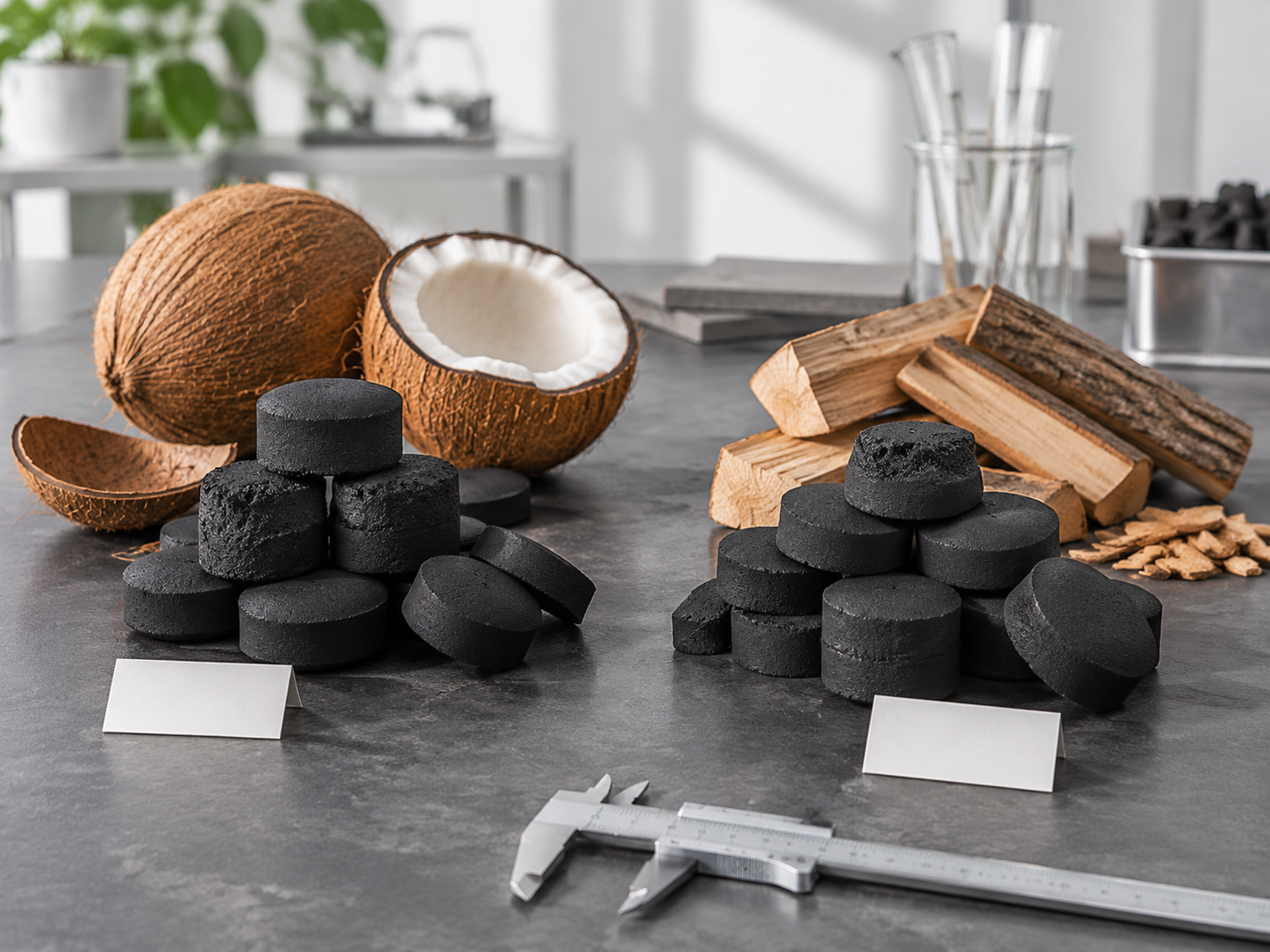
This guide compares coconut-shell and fruitwood quick-light charcoal, focusing on the sourcing, product, and supply factors importers should verify. It offers a practical framework for evaluating samples and suppliers without assuming one feedstock is universally better.
Coconut Shell vs. Fruitwood Quick-Light Charcoal: A 2026 Head-to-Head Comparison for Hookah Importers
Introduction: The sourcing decision behind a reliable hookah experience
For hookah importers, choosing a charcoal line is rarely about a single headline number. It is a practical balancing act between consistent ignition, acceptable burn performance, dependable supply, and products that meet the requirements of the destination market. A product that lights quickly and looks right on a shelf can still fail in the lounge, the retail channel, or the customs file if the specification, documentation, and intended-use labeling do not hold up.
Quick-light products also appear in adjacent categories. A quick-light product may be used for incense, but that does not make every charcoal suitable for every use. Product specifications, intended application, and safety instructions matter, and buyers should never infer suitability from appearance alone. A tablet designed for one application may carry different formulation, burn, and labeling requirements than a product intended for another.
This guide compares coconut shell and fruitwood quick-light charcoal to help buyers evaluate samples, suppliers, and total landed value in 2026. The goal is not to crown a universal winner, but to give importers a measurable framework for deciding which feedstock and which supplier fit their program.
What quick-light charcoal is—and what it is not
Quick light charcoal is charcoal formulated to ignite more readily than natural charcoal, often with an ignition aid built into the product. Formulations and performance vary widely by manufacturer, so the term describes a category of behavior rather than a fixed specification. Two products labeled quick-light can differ substantially in ignition time, odor, ash, and heat profile.
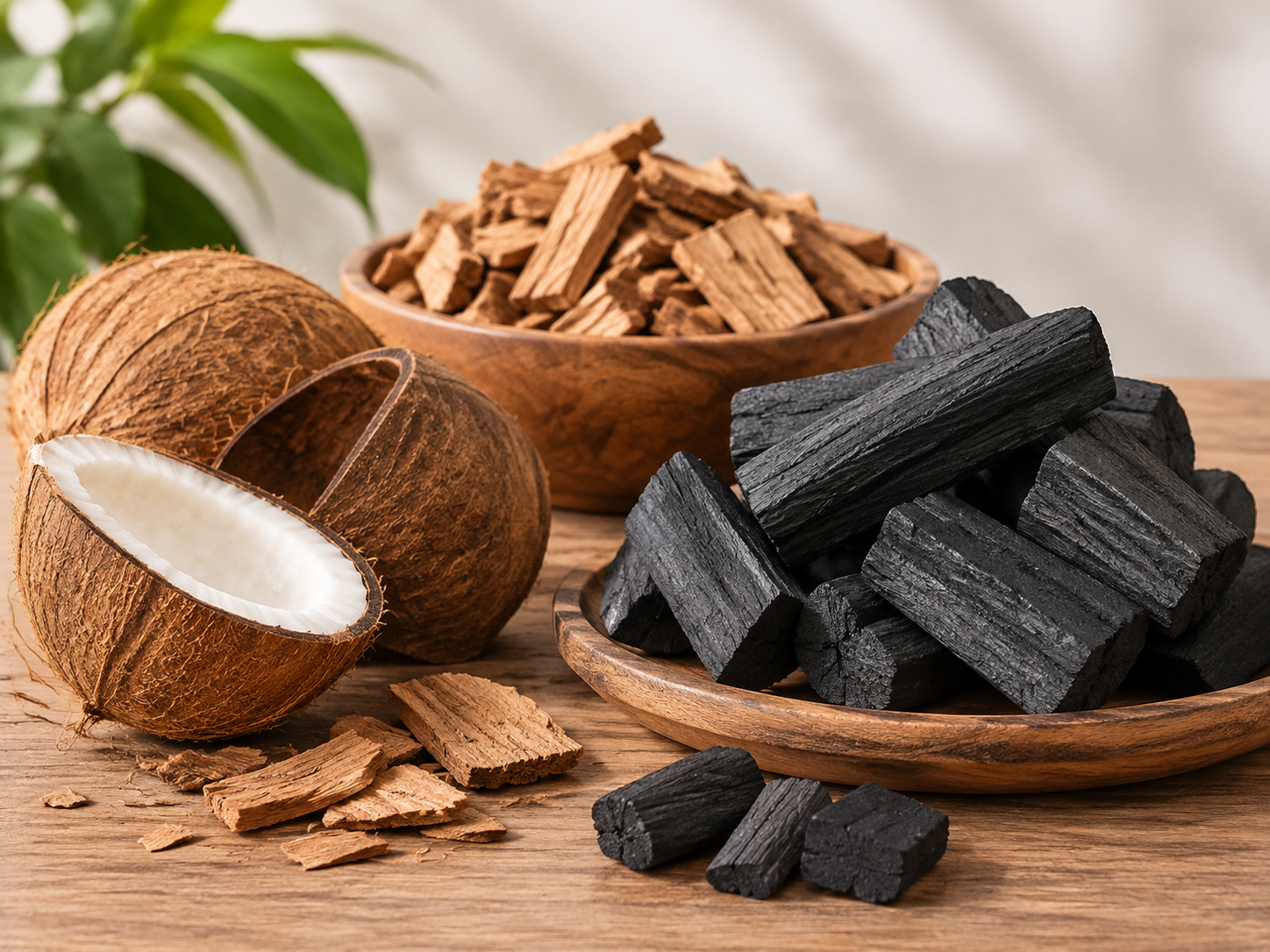
It is important to distinguish quick-light shisha charcoal from natural shisha charcoal, including coconut-shell and fruitwood products that may require an external heat source such as a burner or hot plate. Natural charcoal typically offers a longer, steadier burn but demands more preparation. Quick-light charcoal trades some of that control for convenience. Neither is inherently superior; the right choice depends on how the end customer uses the product.
Bamboo charcoal is a separate feedstock category and should not be treated as interchangeable with coconut shell or fruitwood. It has its own supply chain, processing characteristics, and performance profile. Buyers building a portfolio may evaluate bamboo charcoal alongside the two feedstocks in this comparison, but should qualify it on its own terms rather than assuming equivalence.
Finally, incense charcoal and hookah charcoal may have different intended-use specifications. Buyers should verify labeling and suitability rather than infer use from appearance. A product marketed for burners or resin incense is not automatically appropriate for hookah use, and vice versa. Clear intended-use statements protect both the importer and the end customer.
Coconut shell vs. fruitwood: Feedstock and product characteristics
Feedstock availability, processing requirements, batch consistency, and traceability are factors to verify with each supplier rather than assume. Coconut shell supply is tied to coconut-producing regions and the competing demands of the activated-carbon and other industries. Fruitwood supply depends on orchard and timber by-products and regional processing capacity. In both cases, ask how raw material is sourced, how it is carbonized, and how lots are tracked from input to finished carton.
Finished-product attributes—ash, odor, burn duration, heat consistency, breakage, and ignition time—should be assessed through documented specifications and controlled sample testing. Suppliers should be able to provide dimensional tolerances, moisture targets, density information, and packing details. Where they cannot, that gap is itself a data point about quality control.
It is tempting to assume that one feedstock always burns longer or produces less ash. Outcomes depend on formulation, carbonization, density, additives, and manufacturing controls, not on the feedstock name alone. A well-made fruitwood product can outperform a poorly controlled coconut-shell product, and the reverse is equally true. This is why sample testing under matched conditions matters more than marketing claims.
Fruit wood charcoal and bamboo charcoal belong in the sourcing matrix as distinct alternatives, not as automatic substitutes for coconut-shell products. Each brings its own commercial and technical profile. For example, a large-format fruit wood option such as the 50*50*40mm Block Quick-Burning Charcoal, Fully Burning, Black Fruit Wood AA554-SBQ is positioned for BBQ, outdoor cooking, and hookah use, with a stated 1–3 second ignition. Its block format suits buyers who want a substantial, fully burning piece across multiple channels. A different format, such as the 50mm perforated quick burning charcoal fruit charcoal, is a 50 mm perforated quick-light hookah charcoal aimed at hookah, shisha, and aromatherapy burners, with a fruit fragrance profile. These two products illustrate how format and intended use shape the sourcing decision within a single feedstock family.
Head-to-head comparison for importer priorities
A structured comparison keeps the coconut shell versus fruitwood decision grounded in evidence. The following priorities should be scored consistently for both feedstocks.
- Performance: compare ignition time, usable heat, burn consistency, and ash across matched product formats and test conditions. Use the same method for each sample.
- Quality: check cube or tablet dimensions, density, cracks, moisture, packaging integrity, and lot-to-lot variation. Document every observation.
- Commercial fit: compare minimum order quantity, production lead time, packing options, shelf life, and landed cost—not just the quoted price per carton.
- Supply resilience: review feedstock sourcing, production capacity, seasonal exposure, and contingency plans for either coconut shell or fruitwood.
- Compliance and market fit: confirm applicable destination-country rules, safety documentation, labeling, and product claims with qualified regulatory support.
When these five dimensions are scored side by side, the feedstock question often resolves itself. A supplier with strong performance data but weak documentation may fail the compliance test, while a supplier with excellent paperwork but inconsistent lots may fail on quality. The scorecard makes those trade-offs visible.
A practical sample-testing protocol
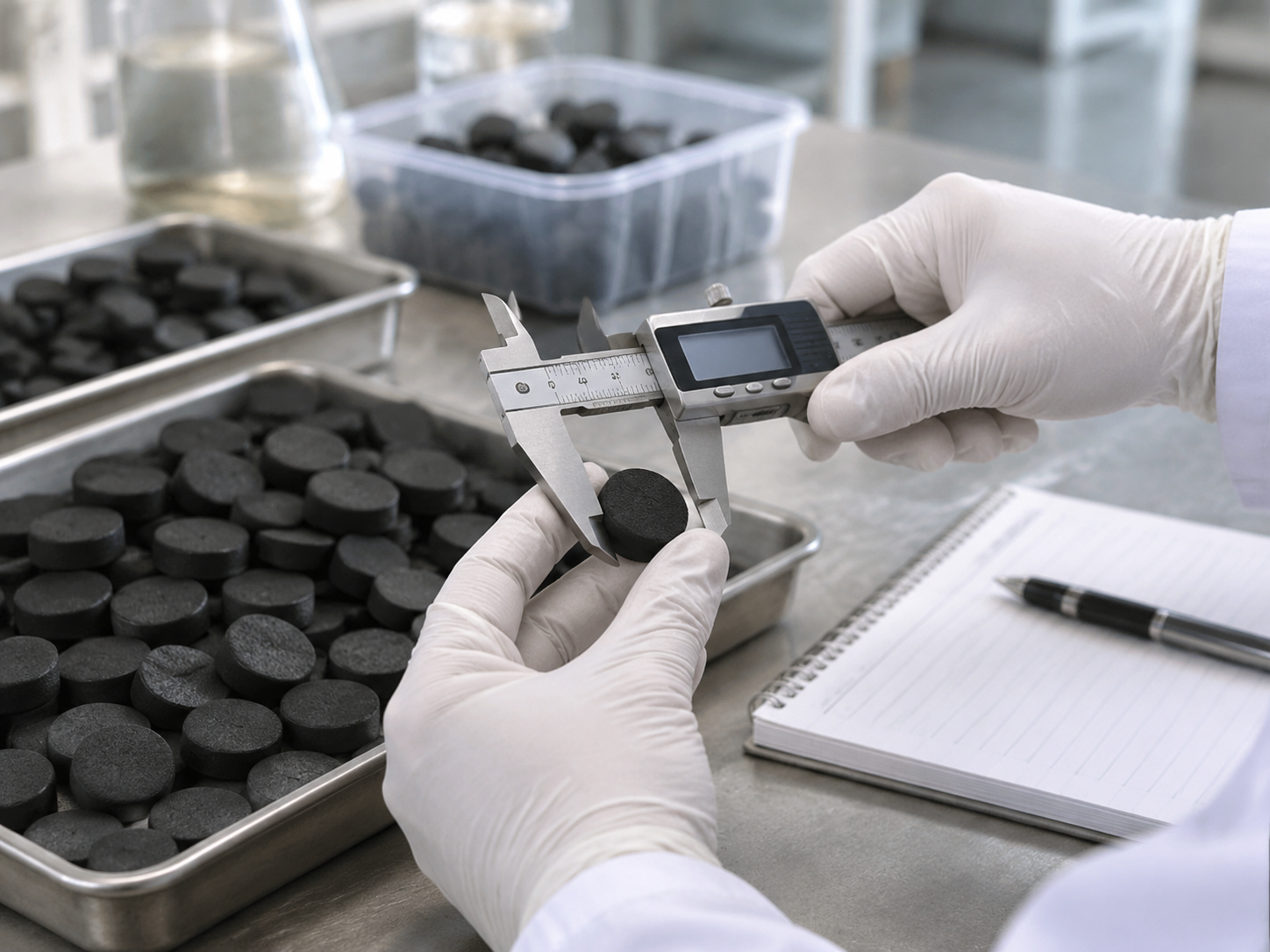
Sampling is where sourcing decisions are won or lost. Request samples from multiple lots and record product type, dimensions, batch number, packaging, and stated intended use. A single sample from a single lot tells you very little about production consistency.
Test ignition time, heat consistency, burn duration, ash, odor, breakage, and performance under repeatable conditions, using the same method for both feedstocks. Keep notes on ambient conditions, equipment, and timing so results are comparable across suppliers and across time.
Have qualified staff conduct tests in appropriate, well-ventilated settings and follow product instructions. Do not test charcoal in enclosed spaces. Ventilation is a basic safety requirement, not an optional convenience.
Set acceptance thresholds before ordering and document results so purchasing teams can compare suppliers objectively. A pre-agreed threshold—for example, a maximum acceptable ignition time or a minimum burn duration—turns subjective impressions into a pass/fail decision that survives staff changes and repeat orders.
Safety, ventilation, and responsible product communication
Charcoal combustion can produce carbon monoxide. Importers have a responsibility to emphasize ventilation, provide clear warnings, and comply with applicable safety and labeling requirements in each destination market.
Do not present charcoal as risk-free or imply that a feedstock choice eliminates smoke or carbon monoxide hazards. No feedstock does. Responsible marketing describes performance honestly and directs users to proper ventilation and handling instructions.
Use credible public-health sources for safety context, including guidance on carbon monoxide poisoning. Avoid citing unsupported percentages or treating unrelated health statistics as charcoal-specific evidence. If a claim cannot be traced to a verifiable source with a date and methodology, it does not belong on a product page or in a sales deck.
For incense charcoal, provide use-specific instructions and avoid suggesting that a hookah product is appropriate for aromatherapy unless the manufacturer and applicable rules support that use. Intended-use clarity protects the brand and the customer alike.
2026 sourcing and market considerations
The market continues to evolve, which is itself a reason to verify current buyer requirements, supplier capacity, input traceability, and applicable regulations before committing to a program. What worked in a previous season may not match today's retail expectations or documentation standards.
A practical importer sourcing framework looks like this:
- Define specifications in writing, including dimensions, moisture, ignition targets, and packing.
- Qualify suppliers against those specifications and their documentation.
- Test samples from multiple lots under matched conditions.
- Audit documentation, including test records and traceability.
- Negotiate commercial terms, including MOQ, lead time, and change control.
- Monitor repeat orders with periodic re-testing and supplier reviews.
Compare charcoal wholesale offers on landed cost, consistency, packaging, and service—not headline price alone. A lower carton price can disappear quickly once freight, breakage, and rework are factored in. Treat market forecasts and industry statistics as directional unless the source, date, methodology, and geographic scope can be verified.
How to qualify a supplier for an import program
Evaluate a hookah charcoal supplier or B2B hookah charcoal supplier for production capability, quality controls, export experience, references, and clear communication. Responsiveness during qualification is a reasonable proxy for responsiveness after the order is placed.
Ask a shisha charcoal manufacturer or hookah charcoal factory for product specifications, test records, batch traceability, packaging details, and realistic lead times. Vague answers to specific questions are a warning sign.
For buyers considering a shisha charcoal factory in China, verify the facility, export documentation, and manufacturing role rather than relying on a trading-company description. Confirm whether the entity you are contracting actually manufactures the product or sources it from elsewhere.
Use supplier search terms such as fruit wood quick light hookah charcoal manufacturer, quick light hookah charcoal factory, shisha charcoal exporter, and quick light shisha charcoal exporter as discovery terms—not as proof of capability. The same applies to phrases like fruit wood charcoal for hookah supplier or hookah charcoal manufacturer for importers. Search terms open doors; documentation and samples close deals.
For broader portfolios, separately qualify a bamboo cube shisha charcoal supplier, bamboo charcoal cubes for shisha wholesale provider, or bamboo shisha charcoal wholesale program. Bamboo deserves its own qualification track rather than being folded into coconut shell or fruitwood evaluations.
OEM, private label, and product-format options
Many importers eventually move beyond catalog products. Discuss whether a hookah charcoal OEM manufacturer or private label hookah charcoal manufacturer can meet the buyer's formulation, branding, packaging, and documentation requirements. OEM capability should be demonstrated, not merely offered.
Ask a custom hookah charcoal supplier about minimum order quantities, artwork approval, packaging materials, production tolerances, and change-control procedures. Change control is especially important: a formulation or packaging change mid-program can disrupt retail listings and customer expectations.
For fruitwood programs, compare fruit wood charcoal cubes supplier options and confirm whether fruit wood hookah charcoal OEM specifications can be reproduced at scale. Reproducibility across lots is the real test of an OEM partner.
If sourcing for multiple channels, assess fruit wood incense charcoal wholesale and incense charcoal manufacturer for aromatherapy offers separately from hookah products, checking intended-use claims and compliance. A product sold for incense burners should carry instructions and claims appropriate to that use, distinct from hookah marketing. Buyers exploring bamboo formats may also evaluate bamboo hookah charcoal custom programs, again on a separate qualification track.
Decision guide: Which option fits your business?
Choose based on validated product performance, customer expectations, supply continuity, regulatory fit, and total landed cost—not feedstock claims alone. The feedstock is one variable among several, and rarely the deciding one once data is on the table.
Consider coconut-shell charcoal when supplier data and testing demonstrate a strong fit for the buyer's required consistency and commercial targets. Coconut shell has a well-established position in the shisha market, and buyers often have existing customer expectations to meet.
Consider fruitwood charcoal when verified samples, sourcing transparency, and supplier capacity meet the same acceptance criteria. Fruitwood formats—from large blocks to perforated quick-light pieces with a fruit fragrance profile—can serve hookah, outdoor cooking, and burner channels, giving importers flexibility across a portfolio.
For either option, shortlist a bulk hookah charcoal supplier or hookah charcoal manufacturer for importers only after documentation and samples pass review. A shortlist built on evidence is worth more than a long list built on price quotes.
Conclusion: Make the comparison measurable
There is no universal winner between coconut shell and fruitwood quick-light charcoal. Manufacturing quality and buyer-specific requirements determine the better fit, and those factors vary by supplier, lot, and market.
Use a consistent scorecard covering performance, quality, safety documentation, supply reliability, and landed cost before placing a trial order. The scorecard turns a complex sourcing decision into a repeatable process that your team can defend internally and revisit as suppliers and markets change.
Request specifications, samples, and export documentation from qualified suppliers before scaling a charcoal wholesale program. The importers who get this right in 2026 will be the ones who measured first and committed second.
Related Articles
How to Choose Charcoal by Material, Format, and Specifications
Labels such as “natural” don’t guarantee consistent performance or suitability for a particular use. This guide compares coconut shell, bamboo, and fruit wood charcoal, highlighting the specifications buyers should verify before choosing.
Why “Natural” Coconut Charcoal Doesn’t Automatically Mean Cleaner
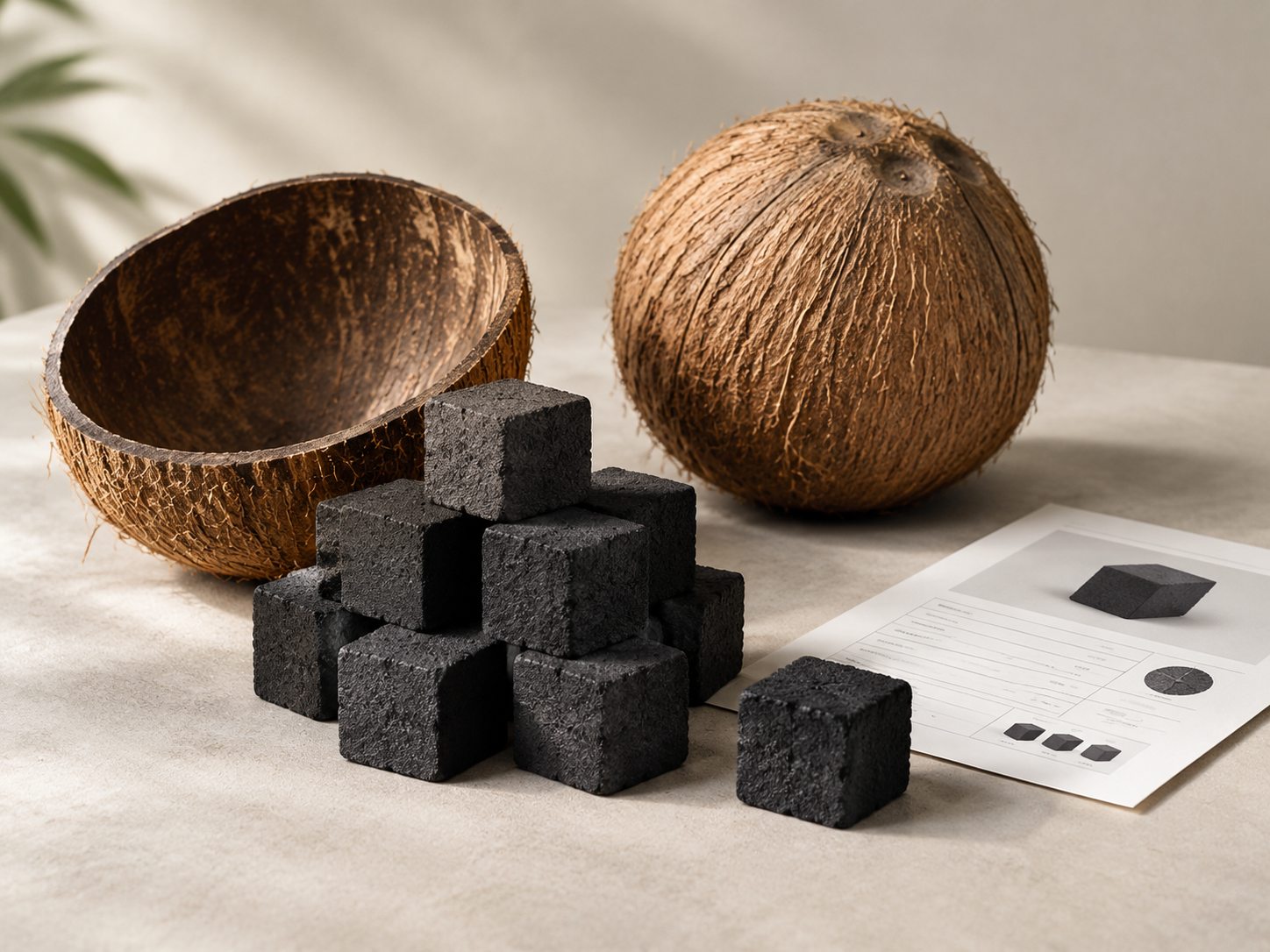
Coconut shells are a natural feedstock, but that alone does not determine a charcoal product’s burn performance, emissions, or consistency. B2B buyers should compare product specifications, processing details, and credible test evidence rather than relying on labels such as “natural” or “clean.”