
How to Choose Charcoal by Material, Format, and Specifications

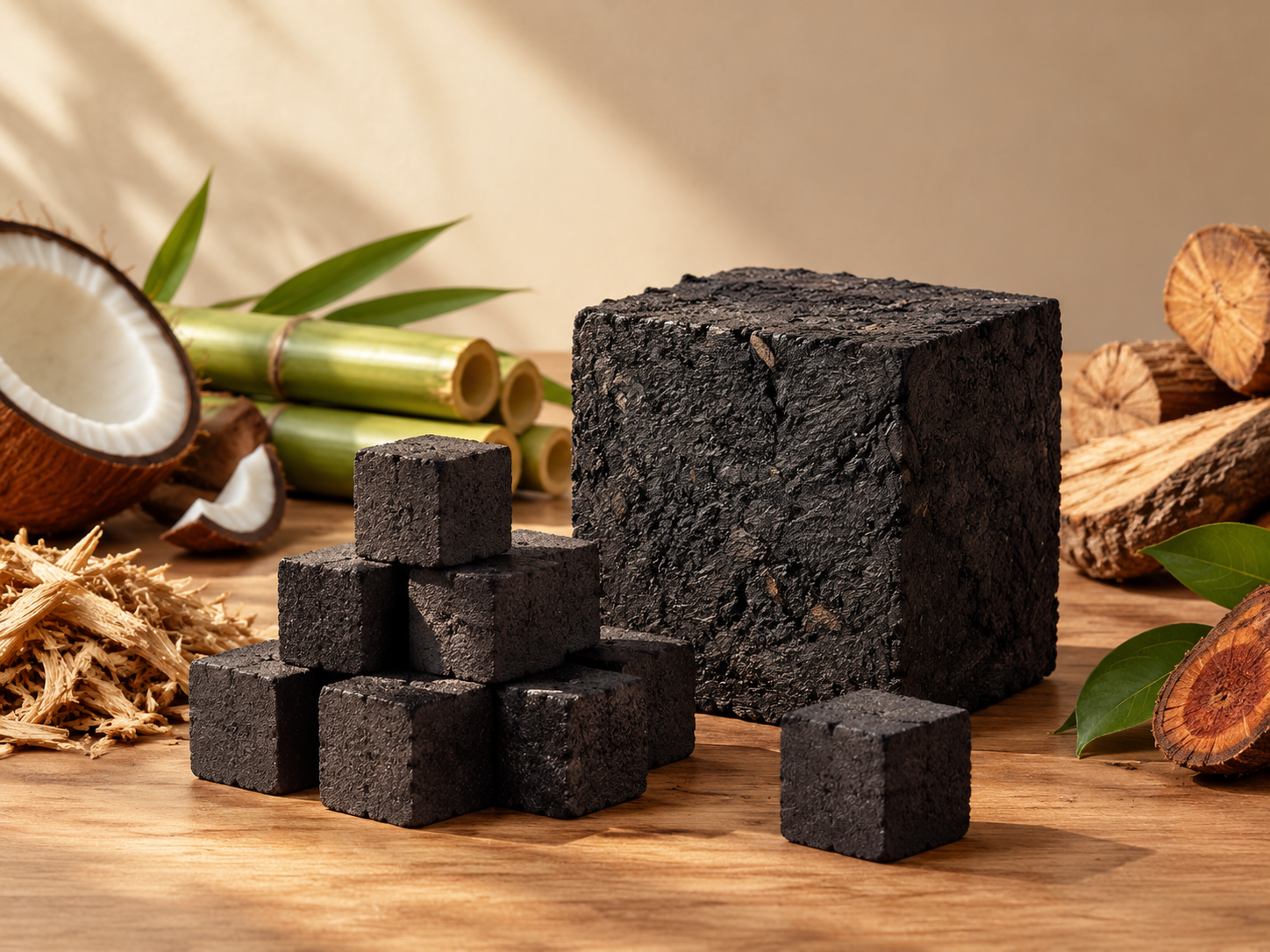
Labels such as “natural” don’t guarantee consistent performance or suitability for a particular use. This guide compares coconut shell, bamboo, and fruit wood charcoal, highlighting the specifications buyers should verify before choosing.
Why charcoal choice matters more than a “natural” label
Anyone who has spent time comparing charcoal listings online knows the feeling: one product is labeled “natural,” another “quick light,” another simply “hookah charcoal,” and the descriptions blur together until it is genuinely hard to tell whether a given box is meant for shisha, hookah, or incense. The confusion is not a buyer problem — it is a labeling and disclosure problem. When product pages use vague language, the burden falls on the purchaser to decode what is actually inside the box.
This matters because a word like “natural” does not, by itself, establish performance, composition, or suitability. It is a source claim, not a specification. A charcoal can be plant-based and still vary widely in density, moisture content, ignition behavior, ash output, and consistency from batch to batch. Two products both described as “natural” may behave nothing alike in a hookah bowl or an incense burner.
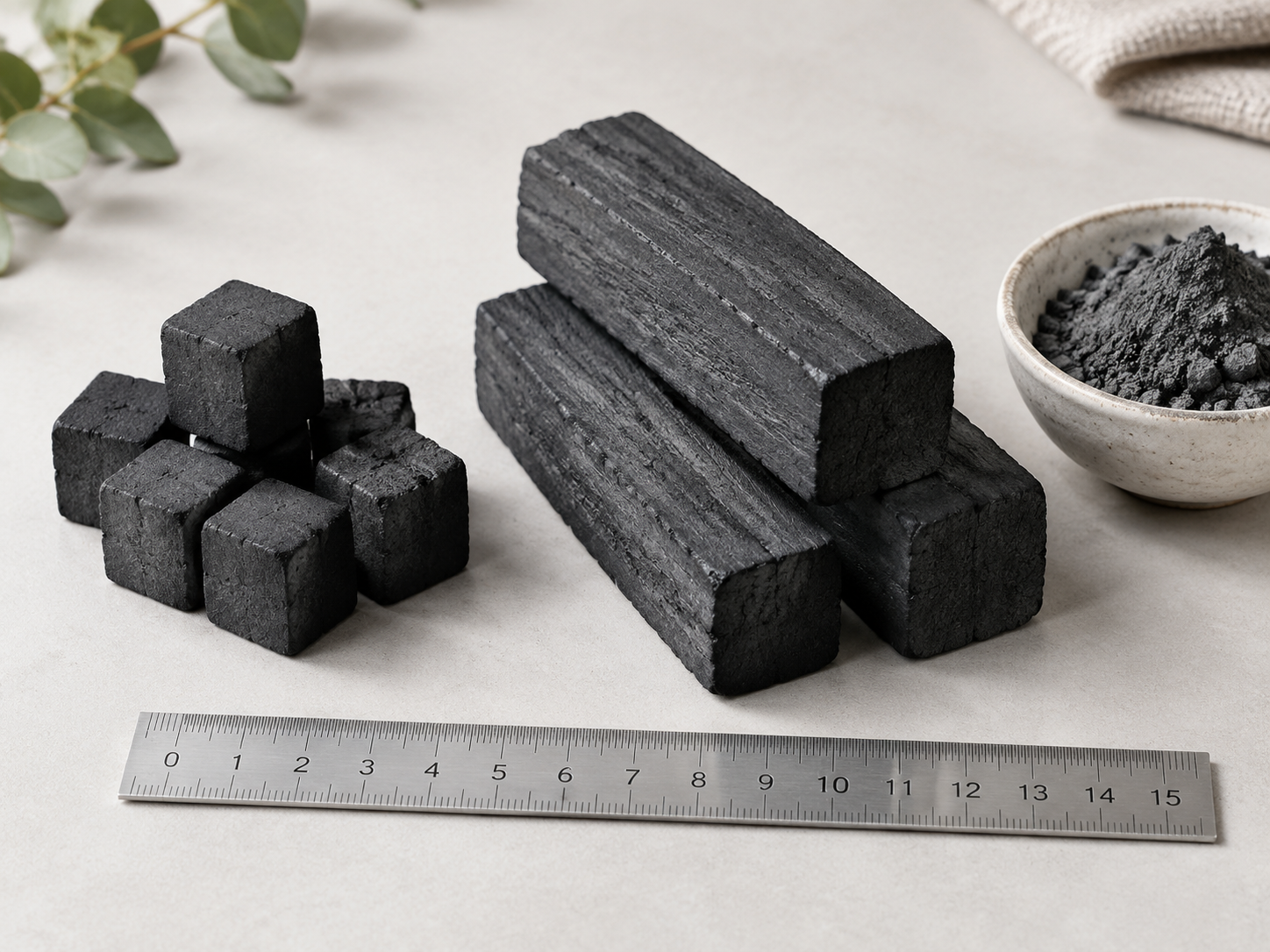
This article compares charcoal materials and formats, separates evidence from marketing claims, and gives buyers — from individual users to importers and distributors — a practical way to choose based on intended use rather than label language.
Myth: Coconut shell is the only natural option for shisha charcoal
Coconut shell is one feedstock used to make shisha charcoal, and it has earned a strong reputation for density and burn duration. But reputation is not exclusivity. Coconut shell is not the only plant-based option, and treating it as the default “correct” material oversimplifies a category that includes several viable feedstocks.
Bamboo charcoal and fruit wood charcoal are two other possible feedstocks. Each can be processed into cube or block formats suitable for different applications. What matters far more than the feedstock name is how the product is manufactured and what the finished specifications actually are — density, dimensions, moisture, ash behavior, and batch consistency all depend on production decisions, not just on what plant the material came from.
It is also worth being precise about what “natural” does and does not guarantee. The term describes a source claim. It does not guarantee low emissions, safe indoor use, or consistent heat output. Those outcomes depend on formulation, processing, and how the product is used — which is why the label alone should never be the deciding factor.
What actually distinguishes coconut, bamboo, and fruit wood charcoal?
A fair comparison looks at feedstock, shape, burn consistency, ash characteristics, and intended application — without declaring one material universally superior. Each has trade-offs that suit different buyers.
- Coconut shell charcoal is typically dense and associated with longer, steadier burn times in cube formats. Buyers should still verify density, dimensions, and moisture rather than assuming quality from the material name.
- Bamboo charcoal may be offered in cube formats and is often positioned as a plant-based alternative. Because bamboo varies in density, buyers should verify density, dimensions, moisture, and batch consistency directly with the supplier. For volume buyers, working with a bamboo cube shisha charcoal supplier that can document these figures is more meaningful than relying on the word “bamboo” on the box.
- Fruit wood charcoal is a category that requires clear disclosure of wood species and processing details. “Fruit wood” covers a range of source materials, and a responsible fruit wood charcoal cubes supplier should be able to state the species, the forming process, and the additives (if any) used.
Format matters as much as material. Some fruit wood products are produced as large blocks — for example, a 50×50×40mm block quick-burning charcoal made from black fruit wood, designed for fully burning and positioned for BBQ, outdoor cooking, and hookah use, with a very fast 1–3 second ignition. Others are perforated cubes or discs. A 50mm perforated quick-burning fruit charcoal, for instance, is aimed at hookah, shisha, and aromatherapy burners and carries a fruit fragrance note. These are different products for different jobs, and the specifications — not the material headline — tell you which is which.
Quick-light charcoal versus natural shisha charcoal
The distinction between quick light charcoal and natural shisha charcoal is one of the most misunderstood in the category. Quick-light charcoal is designed to ignite rapidly, often with minimal external heat. That ignition behavior usually comes from formulation details — ignition aids or other additives — that distinguish it from natural charcoal, which typically requires a longer lighting process on a burner or with sustained heat.
Buyers should review ingredients, lighting instructions, odor during ignition, and intended use rather than assuming all quick-light products are equivalent. A product that lights in seconds and one that lights in a minute may both be called “quick light,” but they are not the same formulation, and the odor and burn profile can differ noticeably.
Equally important: quick-light products made for hookah or shisha should be distinguished from incense charcoal. A product intended for one use should not automatically be treated as suitable for another. Incense charcoal is formulated and marketed for burning incense or resins, and its burn characteristics and additives are chosen for that purpose — not for heating shisha tobacco.
Myth: Natural charcoal is smoke-free or safe to use without ventilation
This is the most consequential myth in the category, and it needs to be stated plainly: burning charcoal can produce carbon monoxide, a dangerous gas, regardless of whether the feedstock is coconut, bamboo, or fruit wood. “Natural” does not mean non-toxic, smoke-free, or appropriate for use in an unventilated room. The chemistry of combustion does not care about the feedstock label.
Natural does not mean smoke-free. Any burning charcoal can produce carbon monoxide, and no charcoal product should be treated as a substitute for ventilation or carbon-monoxide safety precautions.
Buyers and businesses should follow product instructions, maintain appropriate ventilation, and use carbon-monoxide safety measures such as detectors where relevant. Any health-related figures cited in purchasing or marketing materials should come from authoritative public-health guidance — not from supplier claims — and charcoal products should never be presented as a substitute for medical or safety guidance.
Myth: Incense charcoal and hookah charcoal are interchangeable
Incense charcoal is made and marketed for burning incense or resins. Shisha charcoal is intended to heat shisha tobacco or herbal mixtures. These are different applications with different requirements, and the products are not interchangeable by default.
Buyers should check the label, composition, shape, and stated application before purchasing. A disc designed for an incense burner is not the same product as a cube designed for a hookah bowl, even if both are described as “natural.”
For business buyers, the sourcing distinction matters too. Fruit wood incense charcoal wholesale requirements — packaging, burn profile, fragrance expectations, and end-market regulations — differ from those for hookah charcoal sourcing. Likewise, an incense charcoal manufacturer for aromatherapy should be evaluated against aromatherapy-use specifications, not assumed to meet shisha standards. Matching the supplier to the use case is the first step in any sourcing decision.
How to evaluate quality beyond the material name
Once you look past the feedstock headline, quality comes down to a set of verifiable attributes. Ask about each of the following:
- Raw-material disclosure — what feedstock, and for fruit wood, which species.
- Binders or additives — what is used to hold the product together, and what is added for ignition.
- Moisture content — a key driver of ignition behavior and consistency.
- Ash characteristics — how much ash remains and how it behaves.
- Ignition behavior — time to light, odor during ignition, and stability once lit.
- Heat duration — how long the product sustains usable heat.
- Odor — during ignition and during use.
- Breakage rate — a practical indicator of handling and shipping quality.
- Batch-to-batch consistency — the attribute that separates reliable suppliers from inconsistent ones.
Request product specifications, samples, test documentation where available, and clear packaging and storage guidance. And when certifications or test results are presented, verify their scope and relevance rather than treating them as blanket proof of safety or superiority. A certificate that covers one attribute does not cover the whole product.
A practical sourcing checklist for importers and distributors
Sourcing charcoal at volume is a specification exercise, not a label exercise. A structured checklist keeps the process grounded:
- Match format and material to the market. Align the product with the target market, use case, local requirements, and customer preferences. A charcoal wholesale program built for one region may not fit another.
- Compare commercial terms. Minimum order quantities, production capacity, lead times, packaging options, shipping terms, and quality-control processes all belong in the same comparison table as the product specs.
- Ask about consistency management. How does the supplier manage raw-material consistency, batch traceability, and product changes? A bulk hookah charcoal supplier that can answer these questions in detail is a different kind of partner than one that cannot.
- Verify the supplier’s role. Confirm whether you are dealing with a manufacturer, a trading company, or an intermediary, and request evidence of production and quality controls.
For buyers sourcing at scale, the practical terms to keep in mind are straightforward: a reliable hookah charcoal supplier should function as a genuine B2B hookah charcoal supplier, not just a reseller; a shisha charcoal exporter should be able to document export experience and paperwork; and a hookah charcoal manufacturer for importers should understand the compliance and logistics realities of cross-border purchasing.
Questions to ask a manufacturer before placing an order
A short, direct questionnaire will separate serious manufacturers from the rest. Start with the product itself:
- Is the product natural or quick light, and what materials and additives does it contain?
- Which application is it designed for — shisha, hookah, incense, or BBQ?
- What are the dimensions, density, moisture, and expected burn duration?
Then move to the supplier:
- Are you a shisha charcoal manufacturer, a hookah charcoal factory, or an intermediary? Can you provide evidence of production and quality controls?
- How do you manage raw-material consistency and batch traceability?
- What OEM, private-label, and customization capabilities do you offer — dimensions, packaging, branding, and export documentation?
For buyers with specific sourcing needs, these questions map onto concrete supplier categories. A hookah charcoal OEM manufacturer should be able to walk through customization options in detail. A private label hookah charcoal manufacturer should have a clear process for packaging and branding. A custom hookah charcoal supplier should be able to confirm which specifications are adjustable and which are fixed. And a quick light hookah charcoal factory or fruit wood quick light hookah charcoal manufacturer should be able to explain exactly how its ignition formulation works and what it means for odor and burn behavior.
Choosing the right option: a buyer decision guide
With the myths cleared away, the decision becomes simpler. Match the product to the use case, and use disclosed specifications to compare within each category.
- If you prioritize plant-based feedstock: compare coconut, bamboo, and fruit wood products using disclosed specifications rather than the word “natural” alone. A bamboo shisha charcoal wholesale program, for example, should come with documented density and moisture figures, not just a material claim.
- If you prioritize rapid ignition: evaluate quick light charcoal separately, and confirm its intended use and formulation. A quick light shisha charcoal exporter should be able to provide ignition instructions and odor information up front.
- If you are sourcing for incense: source incense charcoal specifically, and evaluate suppliers against aromatherapy-use specifications.
- If you are sourcing for shisha or hookah: select products explicitly designed for those uses. A fruit wood charcoal for hookah supplier or a shisha charcoal factory in China should be able to state the intended application clearly and back it with specifications.
Targeted examples help here. Buyers seeking a bamboo charcoal cubes for shisha wholesale arrangement should request cube dimensions and batch data. Buyers seeking a fruit wood hookah charcoal OEM or bamboo hookah charcoal custom program should confirm which elements — size, packaging, branding — can be tailored. The point is not the label on the box; it is whether the supplier can document what is inside it.
Conclusion: choose by evidence, application, and consistency
Coconut shell is not the only natural-material option for shisha charcoal — bamboo and fruit wood are legitimate feedstocks with their own characteristics. But no feedstock alone guarantees quality or safety. The material name is a starting point, not a verdict.
The key distinctions to carry into any purchase are these: natural charcoal versus quick-light charcoal; shisha charcoal and hookah charcoal versus incense charcoal; and a documented specification versus a marketing claim. Each distinction corresponds to a real difference in formulation, performance, and intended use.
Buyers get the best results by requesting transparent specifications, evaluating suppliers on application fit, consistency, and verifiable quality controls, and treating “natural” as one data point among many. Whether you are an individual user or a distributor building a charcoal wholesale program, the same principle applies: choose by evidence, application, and consistency — not by the word on the label.
Related Articles
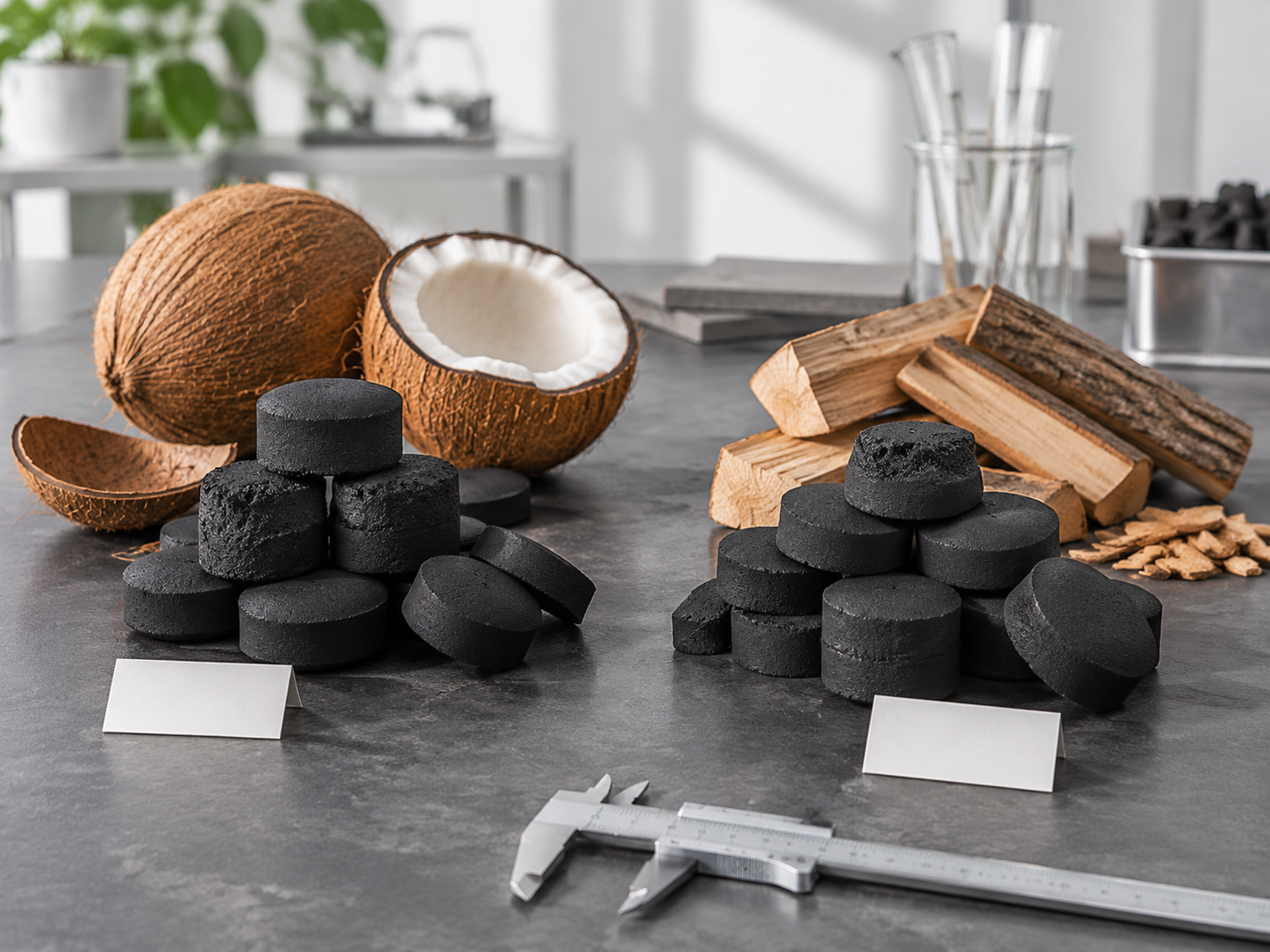
Coconut Shell vs. Fruitwood Quick-Light Charcoal: A 2026 Guide for Hookah Importers
This guide compares coconut-shell and fruitwood quick-light charcoal, focusing on the sourcing, product, and supply factors importers should verify. It offers a practical framework for evaluating samples and suppliers without assuming one feedstock is universally better.
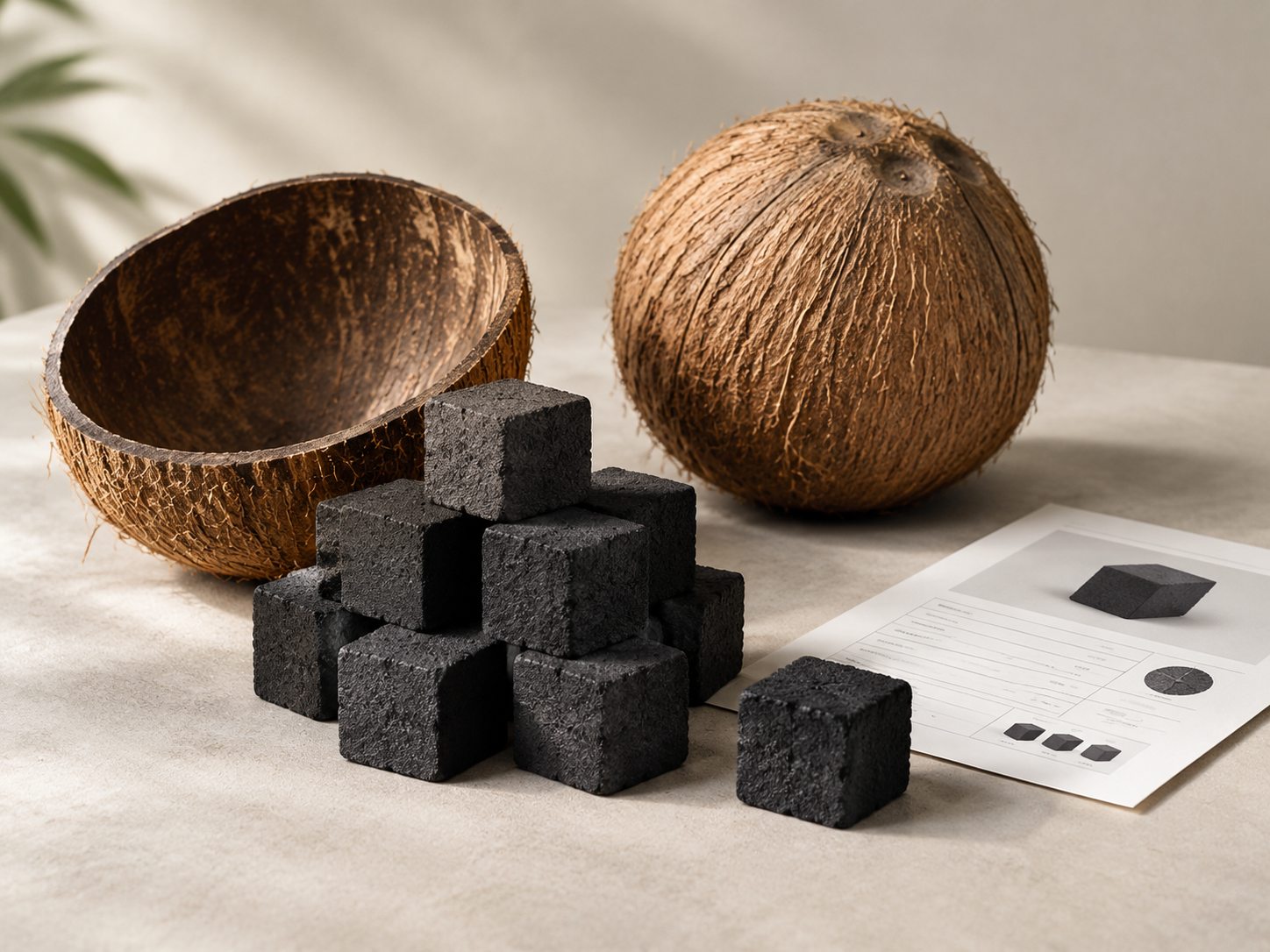
Why “Natural” Coconut Charcoal Doesn’t Automatically Mean Cleaner
Coconut shells are a natural feedstock, but that alone does not determine a charcoal product’s burn performance, emissions, or consistency. B2B buyers should compare product specifications, processing details, and credible test evidence rather than relying on labels such as “natural” or “clean.”