
Why “Natural” Coconut Charcoal Doesn’t Automatically Mean Cleaner

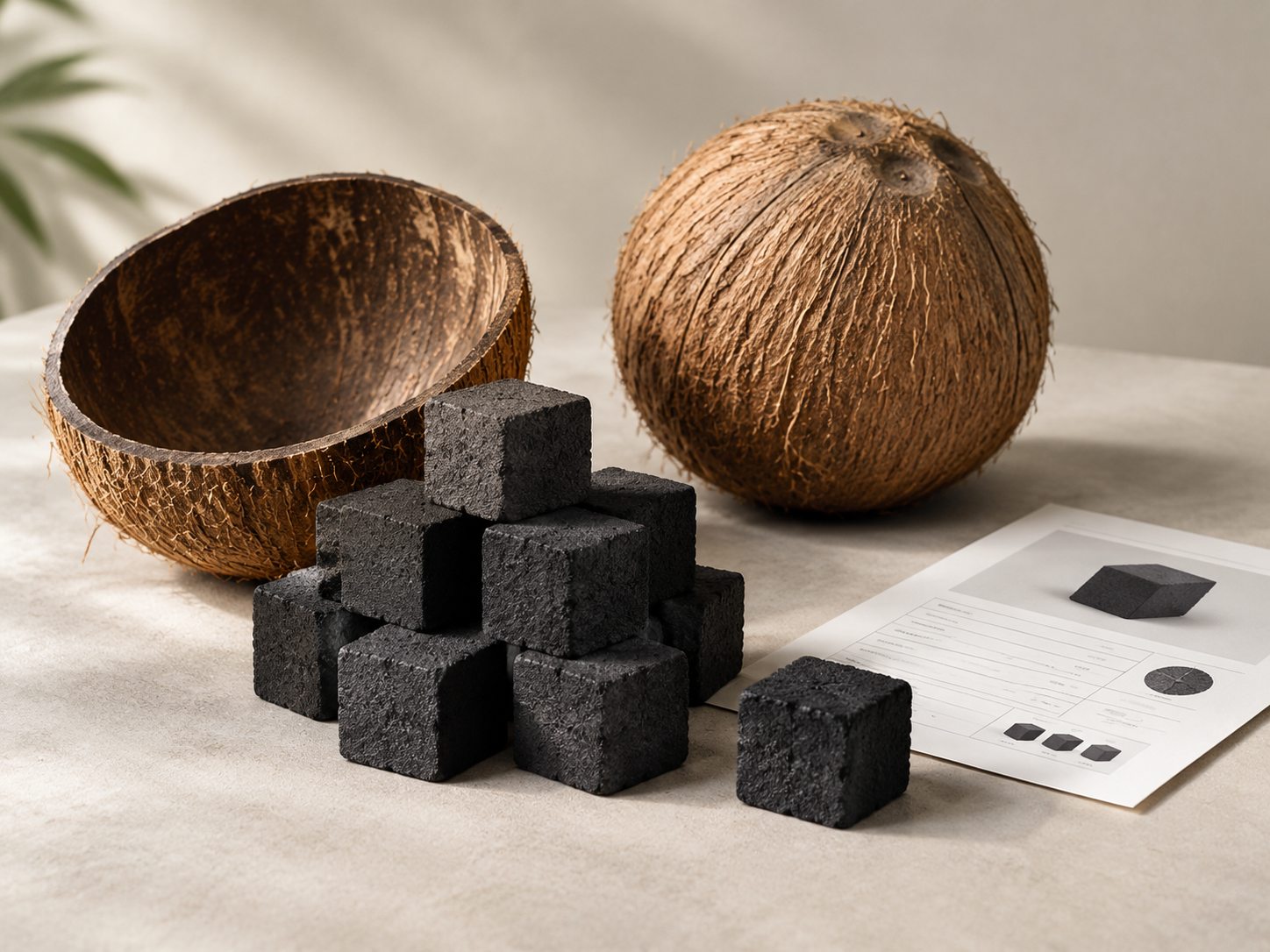
Coconut shells are a natural feedstock, but that alone does not determine a charcoal product’s burn performance, emissions, or consistency. B2B buyers should compare product specifications, processing details, and credible test evidence rather than relying on labels such as “natural” or “clean.”
The Coconut Shell Charcoal Myth: Why “Natural” Doesn’t Automatically Mean Cleaner for Hookah Buyers
Walk through any hookah charcoal catalog and you will see the same words repeated: natural, pure, clean, eco-friendly. For buyers trying to choose charcoal for hookah or incense use, these vague claims can make a crowded product listing feel almost impossible to decode. “Natural” sounds reassuring, but it tells you very little about how a finished product actually burns, what it emits, or whether it suits your customers and your compliance requirements.
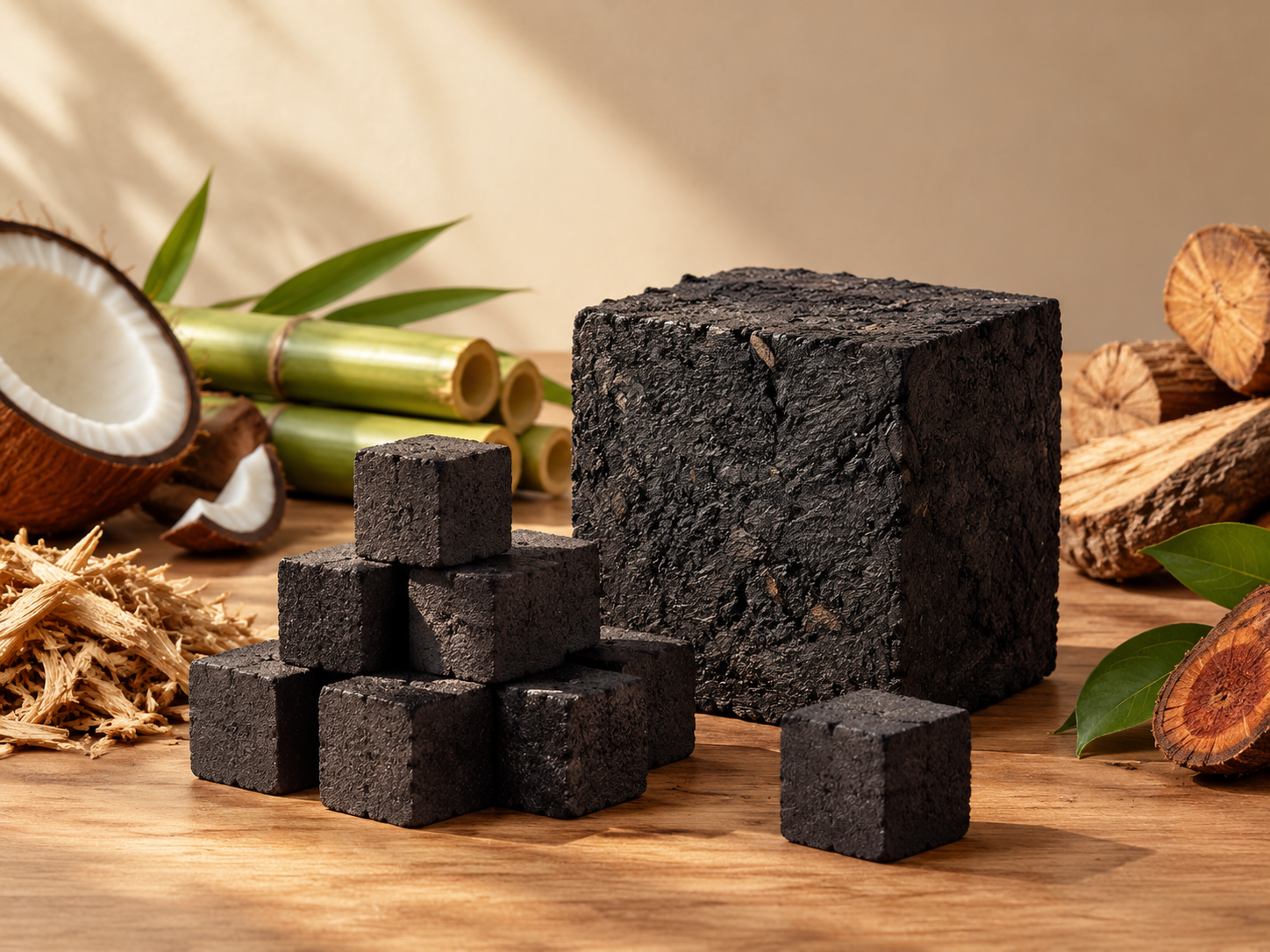
Coconut shells are, of course, a genuinely natural raw material. But the word “natural” describes a feedstock, not a finished product. It does not establish burn behavior, emission profile, consistency, or safety. For B2B buyers, the distinction that matters is this: feedstock is only one factor. Processing methods, binders or ignition agents, batch consistency, and intended use matter just as much—often more.
Why the “natural means cleaner” claim appeals to buyers
The appeal is easy to understand. Buyers are navigating confusing listings, inconsistent terminology, and marketing language that is rarely backed by documentation. When every supplier claims to be “natural,” the label becomes a shortcut for trust—even though it proves nothing about performance.
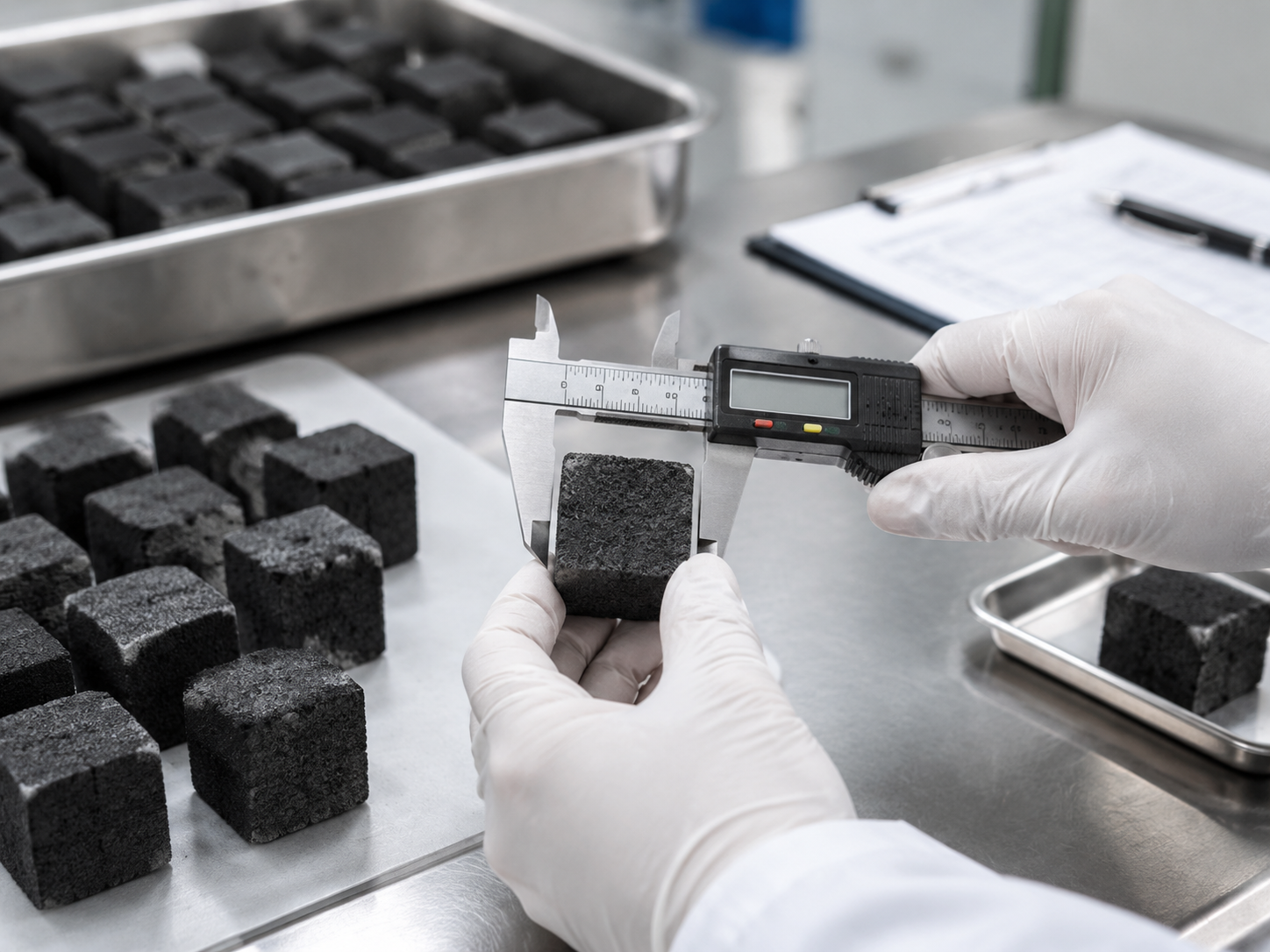
Coconut shell charcoal has earned a strong reputation, and deservedly so in many applications. But reputation is not the same as verification. A finished charcoal product’s behavior depends on how the raw material is carbonized, what is added during processing, how dense the final cube is, how much moisture it retains, and how consistently all of this is controlled from batch to batch.
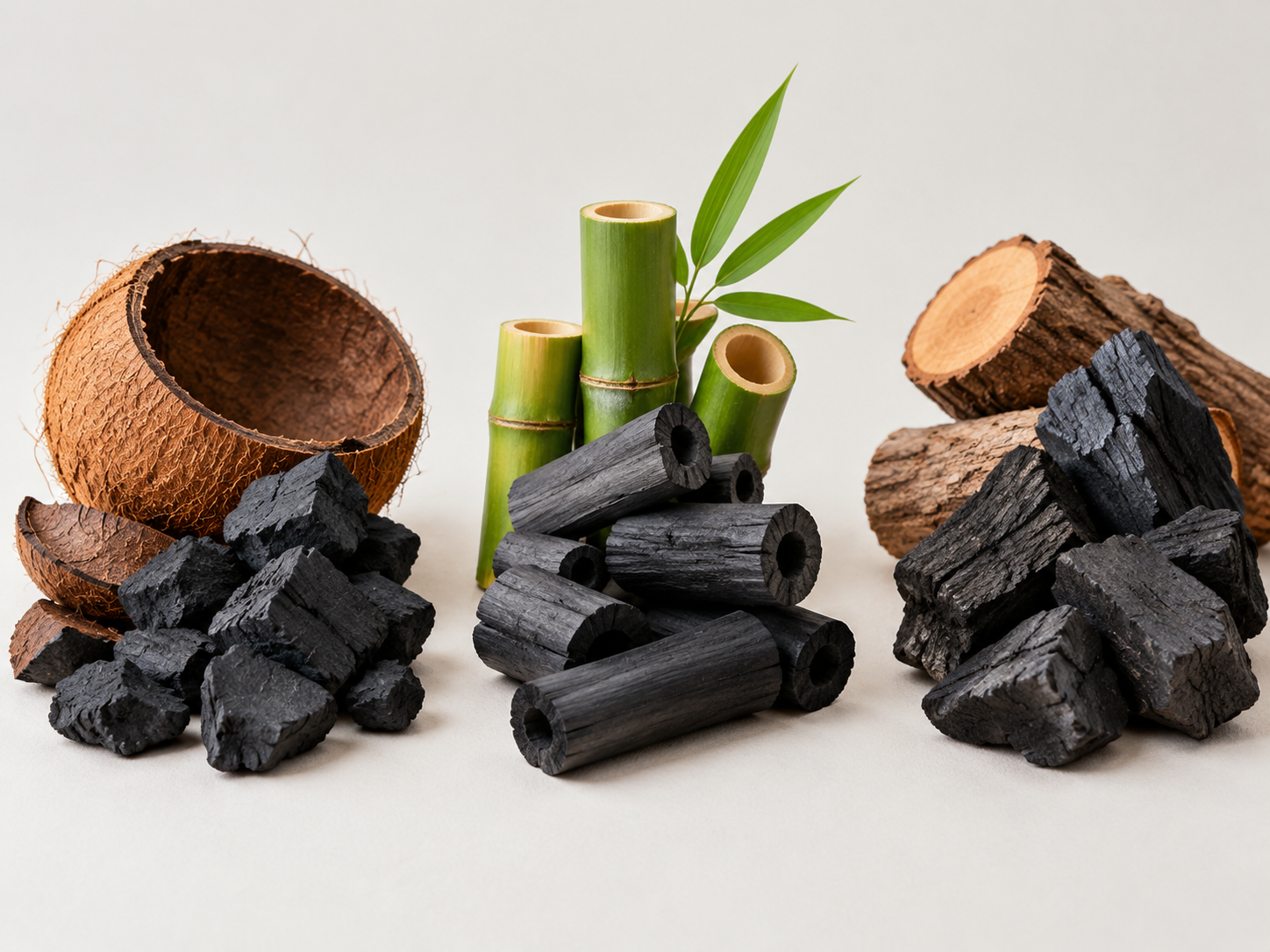
For B2B buyers—importers, distributors, and private label brands—the practical takeaway is to separate feedstock from product. Ask not only “what is it made from?” but “how is it made, how does it perform, and what evidence supports the claims?”
What actually affects charcoal performance and emissions
Several variables shape how any charcoal product burns:
- Carbonization: The temperature and process used to convert raw material into charcoal affect density, fixed carbon content, and burn characteristics.
- Additives and binders: Some products use binders, ignition agents, or other additives. Their presence, quantity, and function should be declared.
- Density and moisture: Denser, properly dried cubes tend to burn more consistently; excess moisture can cause sputtering, smoke, and uneven ignition.
- Cube size and shape: Dimensions and perforations influence airflow, ignition time, and burn duration.
- Batch consistency: A single good sample means little if production batches vary in density, size, or burn time.
Burn behavior and emissions should be evaluated with product-specific evidence—not inferred from the raw material. Buyers should request specifications and credible test documentation, and then check what the tests actually measured and under what conditions. A report that does not state its methodology, sample size, or test conditions is difficult to rely on.
Coconut, bamboo, fruit wood, and quick-light charcoal: compare the product, not the label
Coconut-shell shisha charcoal, bamboo charcoal, and fruit wood charcoal are different product categories with different characteristics. None of them is automatically “cleaner” than the others; each should be judged on its own specifications and performance.
Quick light charcoal is designed to ignite readily, and that convenience may involve ignition agents. Buyers should confirm the composition, handling instructions, and intended application before committing to a program. For example, the 50mm perforated quick-burning charcoal fruit charcoal is a 50 mm perforated quick-light hookah charcoal intended for hookah, shisha, and aromatherapy burners, with a fruit fragrance profile—a product whose specifications should be reviewed against your specific use case.
Larger formats serve different needs. The 50×50×40mm Block Quick-Burning Charcoal, Fully Burning, Black Fruit Wood AA554-SBQ is a large fruit wood charcoal block suited to BBQ, outdoor cooking, and hookah use, with a 1–3 second ignition window. Its size and format make it a distinct product from standard shisha cubes, and it should be evaluated as such.
It is also important to note that incense charcoal and hookah charcoal may have different formulation and performance requirements. One product should never be assumed suitable for both applications without confirmation. Across all categories, ask suppliers for consistent details on ignition time, burn duration, ash, odor, sizing, and relevant emissions testing.
Carbon monoxide and indoor-use safety matter more than marketing language
Burning charcoal can produce carbon monoxide, a dangerous gas that cannot be reliably detected by smell or appearance. This is a safety fact that applies regardless of feedstock or marketing claims.
Health and safety research has documented the seriousness of carbon monoxide exposure in indoor settings, and some studies have reported that a substantial share of carbon monoxide poisoning cases are linked to charcoal burning. Buyers should treat such figures carefully: without a verifiable definition and source, a number like 30% should not be presented as a charcoal-specific statistic. What is not in dispute is that carbon monoxide exposure is a genuine hazard that deserves serious attention.
Buyers should communicate product safety instructions clearly and follow applicable local guidance on ventilation and indoor use. A “natural” or “low-smoke” claim is not proof that a product is safe to burn in an enclosed space.
A practical sourcing checklist for importers and distributors
A structured sourcing process replaces marketing language with verifiable information. Consider the following checklist:
- Request the full ingredient or additive declaration, product specifications, batch consistency information, and applicable test reports.
- Ask how the supplier controls raw materials, production, quality checks, packaging, and traceability.
- Evaluate samples under repeatable conditions, recording lighting time, burn duration, ash, odor, breakage, and customer feedback.
- For charcoal wholesale orders, verify minimum order quantities, lead times, packaging options, export documents, and quality controls before committing.
This checklist works best when applied identically to every candidate supplier, so that comparisons are based on evidence rather than impressions.
Questions to ask a hookah charcoal supplier
The first question is often the most revealing: is the supplier a shisha charcoal manufacturer, a hookah charcoal factory, or a trading company—and what evidence supports that description?
For a shisha charcoal factory in China or another sourcing market, request factory and quality documentation appropriate to your requirements. Confirm whether a hookah charcoal OEM manufacturer or private label hookah charcoal manufacturer can support your target specifications, packaging, and repeat orders.
For import programs, assess a shisha charcoal exporter or bulk hookah charcoal supplier on documentation, communication, and shipment reliability—not just the “natural” claim. A B2B hookah charcoal supplier or hookah charcoal manufacturer for importers should be able to answer detailed technical questions consistently over time.
Choosing by application: hookah, incense, and material-specific sourcing
For hookah programs, compare hookah charcoal and shisha charcoal against the intended device, customer expectations, and documented product specifications. For incense applications, confirm that incense charcoal is formulated and labeled for the intended use; buyers seeking an incense charcoal manufacturer for aromatherapy should request suitable product and safety information.
Material-specific sourcing deserves the same rigor. A bamboo cube shisha charcoal supplier, bamboo shisha charcoal wholesale program, or bamboo charcoal cubes for shisha wholesale order should be evaluated on verified performance and consistency. Likewise, for fruit wood charcoal, distinguish fruit wood charcoal cubes supplier, fruit wood charcoal for hookah supplier, fruit wood quick light hookah charcoal manufacturer, fruit wood incense charcoal wholesale, and fruit wood hookah charcoal OEM requirements by application.
For custom programs, clarify specifications with a custom hookah charcoal supplier, bamboo hookah charcoal custom producer, or hookah charcoal OEM manufacturer before placing a production order. The same applies when comparing a quick light hookah charcoal factory or quick light shisha charcoal exporter—use one documented checklist for all of them.
Conclusion: replace the natural-versus-chemical shortcut with evidence
Coconut-shell origin may be useful sourcing information, but it does not by itself prove a cleaner burn. The buyer’s best decision criteria are intended use, formulation, consistent performance, transparent specifications, credible testing, and safe-use guidance.
Importers should compare suppliers—including a quick light hookah charcoal factory or quick light shisha charcoal exporter—using the same documented checklist. When “natural” becomes a starting question rather than a final answer, sourcing decisions become more defensible, more consistent, and ultimately more profitable.
Related Articles
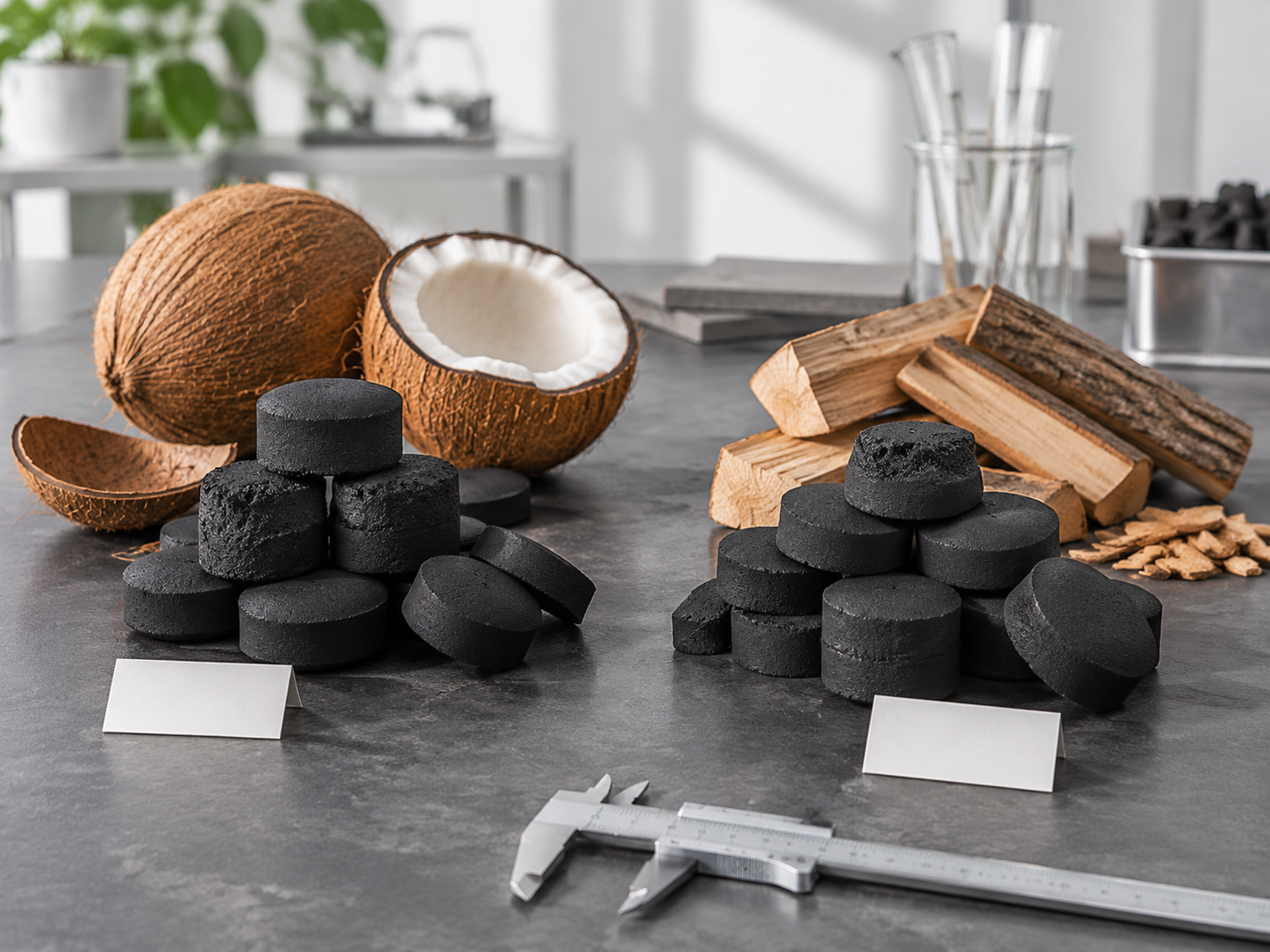
Coconut Shell vs. Fruitwood Quick-Light Charcoal: A 2026 Guide for Hookah Importers
This guide compares coconut-shell and fruitwood quick-light charcoal, focusing on the sourcing, product, and supply factors importers should verify. It offers a practical framework for evaluating samples and suppliers without assuming one feedstock is universally better.
How to Choose Charcoal by Material, Format, and Specifications
Labels such as “natural” don’t guarantee consistent performance or suitability for a particular use. This guide compares coconut shell, bamboo, and fruit wood charcoal, highlighting the specifications buyers should verify before choosing.