
Natural Shisha Charcoal: What the Label Does—and Doesn’t—Tell You

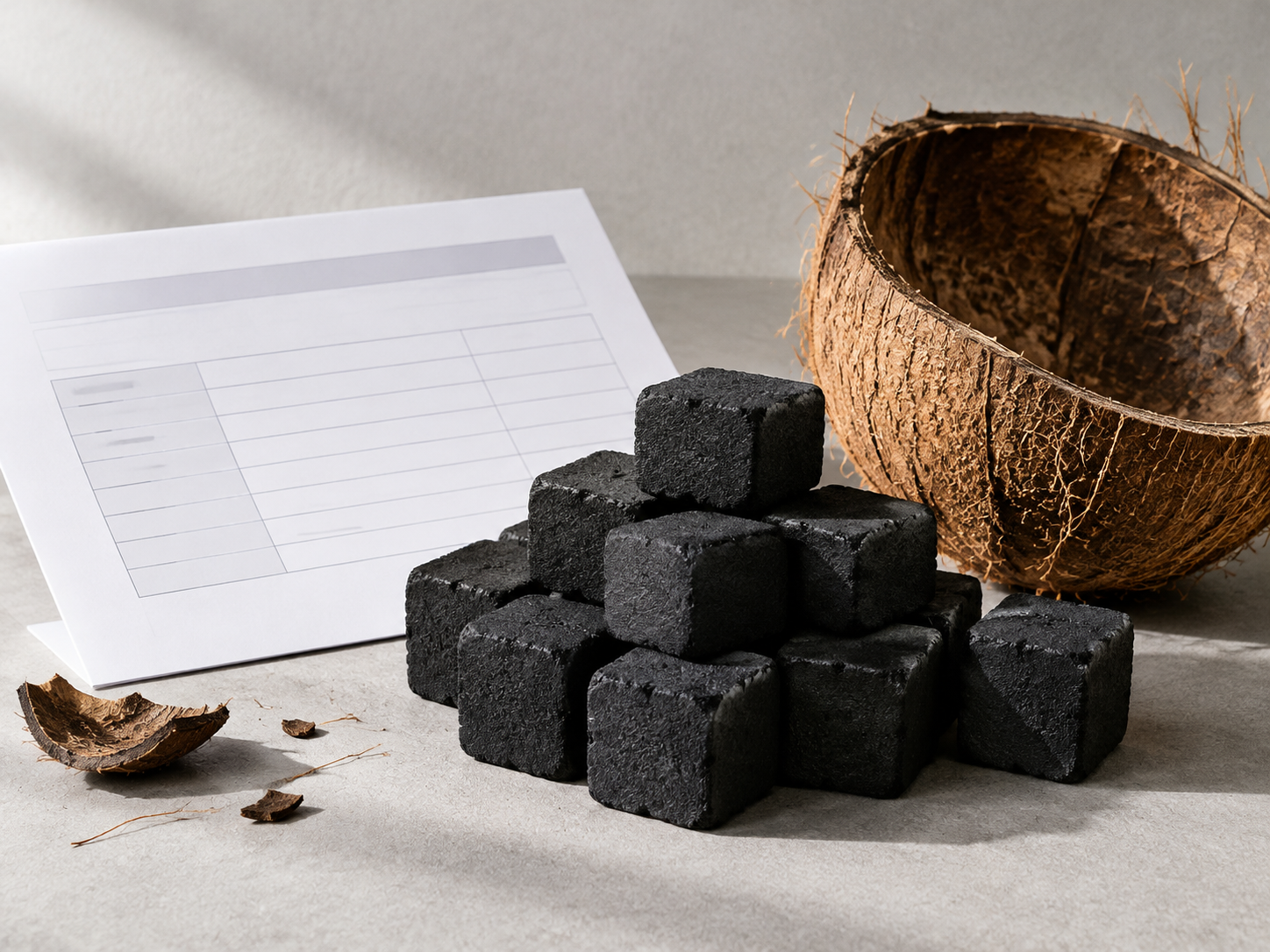
Coconut shell charcoal’s “natural” label describes its feedstock, not its emissions, performance, or safety. Buyers should compare product specifications and test documentation, while remembering that burning any charcoal can produce carbon monoxide and requires serious attention to ventilation.
Introduction: When “Natural” Sounds Like a Safety Guarantee
Search for shisha charcoal online and you will quickly run into a familiar phrase: “natural coconut shell.” For many buyers, that wording feels like an implicit safety guarantee—cleaner smoke, fewer emissions, a more comfortable indoor session. It is an easy assumption to make, especially when the alternative is a product labeled “quick light” with obvious chemical ignition aids.
But that assumption often leads to disappointment. A coconut shell product can light differently than expected, burn hotter or cooler than the last batch, produce more ash, or simply cost more without delivering a noticeably better experience. And critically, no feedstock eliminates the health risks associated with burning charcoal in an enclosed space. Poor ventilation and incomplete combustion remain the dominant factors, regardless of what the charcoal is made from.
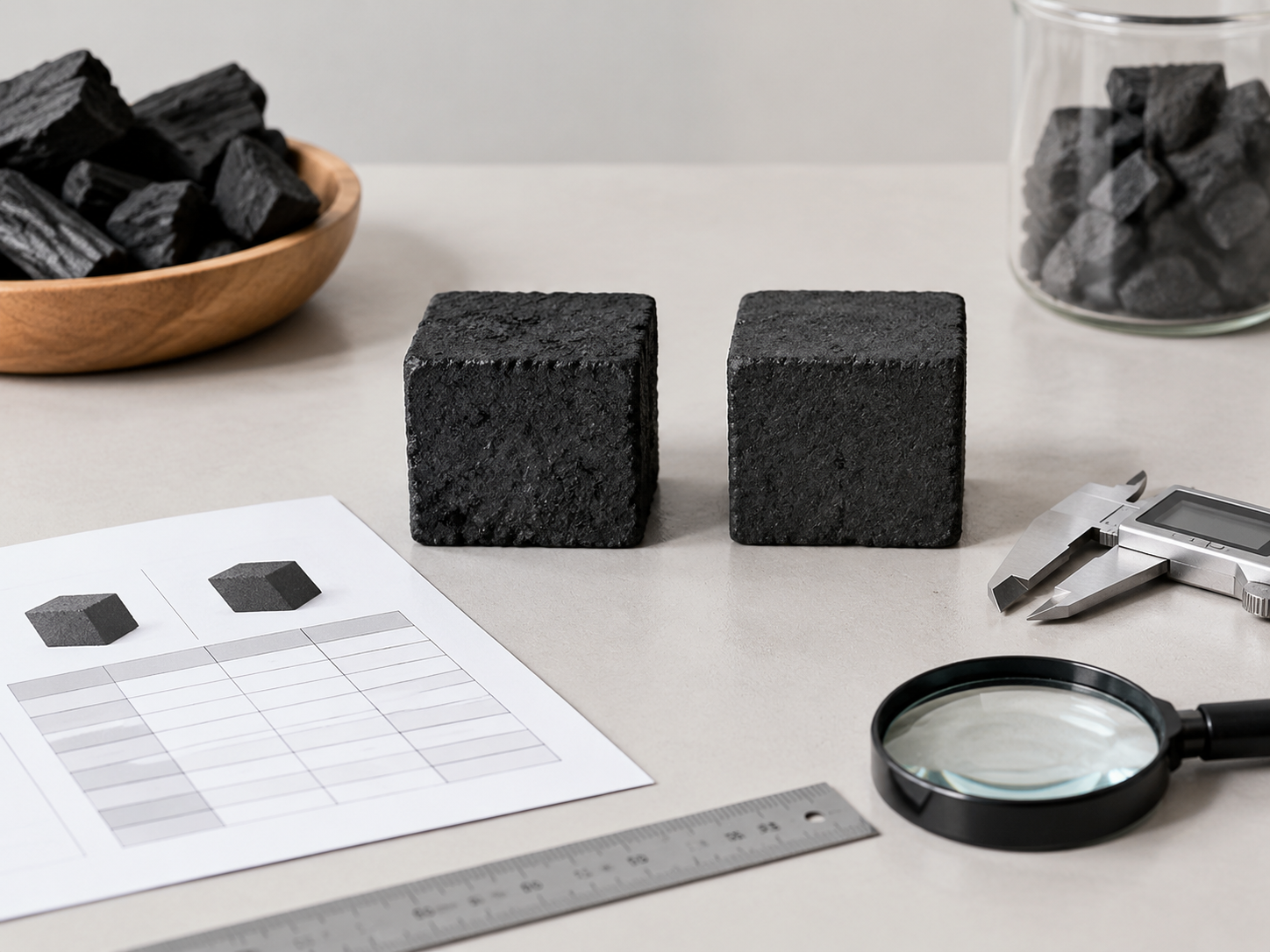
The central point of this article is straightforward: feedstock matters, but “natural” alone does not prove that charcoal is cleaner, safer, or better performing. Buyers—especially importers, distributors, and private-label brands—need to look past the label and into the specification.
What Coconut Shell Charcoal Can—and Can’t—Tell You
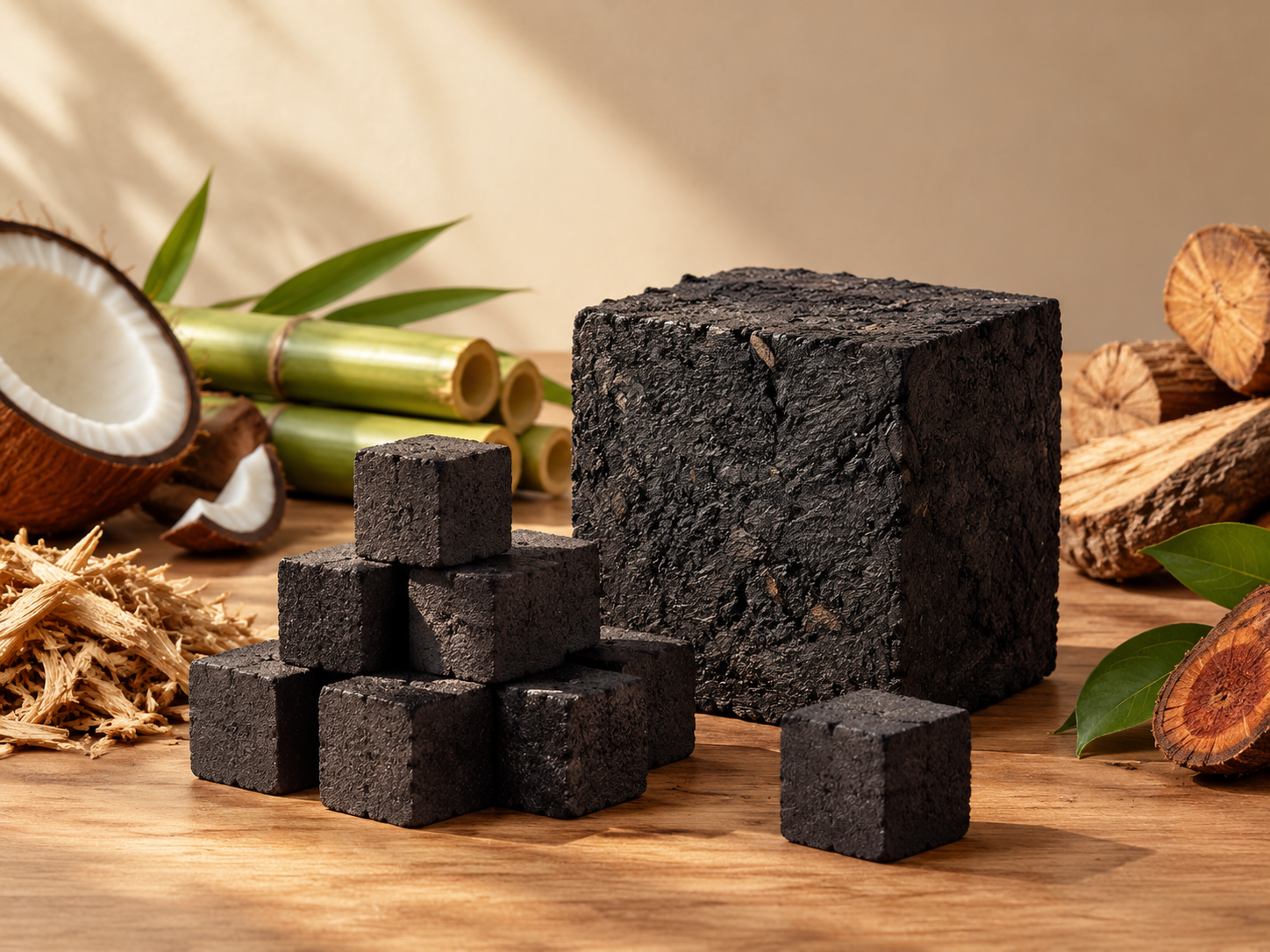
Coconut shell charcoal is exactly what the name suggests: charcoal produced from carbonized coconut shells. That tells you something about the raw material. It does not tell you the full story of performance or emissions.
Processing method, binder selection, additive content, density, moisture level, and quality control all shape how a finished product lights and burns. Two products made from identical coconut shells can behave very differently if one is pressed at higher density, dried more thoroughly, or produced under tighter process controls. A “natural” claim says nothing about any of these variables.
This is why serious buyers should request product specifications and test documentation rather than relying on a natural-material claim. Ask for density figures, moisture content, ash percentage, burn duration under defined conditions, and any available laboratory documentation. If a supplier cannot provide these, the natural label is doing more marketing work than quality work.
Natural, Quick-Light, and Cleaner Are Different Claims
Three claims get tangled together constantly: natural, quick-light, and cleaner. They are not interchangeable.
Quick light charcoal is formulated to ignite rapidly, typically with the help of an ignition aid. That is a convenience feature, and there is nothing inherently wrong with it—but buyers should ask exactly what ignition aids or additives are used, and at what levels. Fast ignition is not evidence of lower emissions or better indoor air quality. It is evidence of fast ignition.
Natural charcoal, meanwhile, describes the feedstock and often the absence of certain chemical ignition agents. It does not automatically mean lower carbon monoxide output, less particulate matter, or a safer session. “Cleaner” is a separate, testable claim that requires documentation—not a synonym for “natural.”
Before making a purchasing decision, check ingredient disclosures, lighting instructions, odor behavior during ignition and burn, ash characteristics, and any relevant test results. A product that discloses its composition and provides verifiable data is a better bet than one that leans entirely on an appealing adjective.
Combustion Still Produces Carbon Monoxide
Here is the point that matters most, and it applies to every feedstock: burning charcoal can produce carbon monoxide, whether the source material is coconut shell, bamboo charcoal, or wood. The chemistry of combustion does not care about the marketing story.
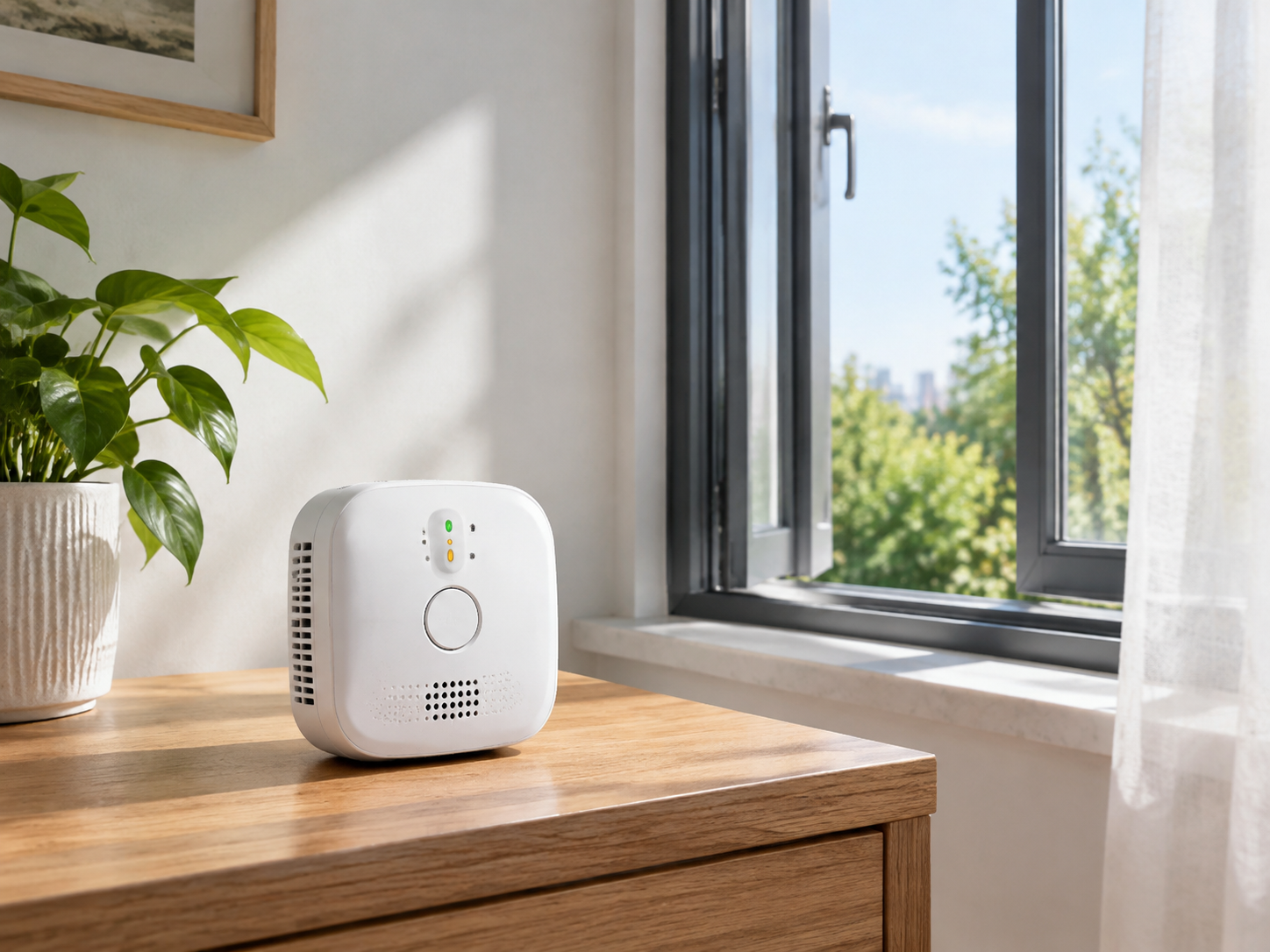
Public-health guidance is consistent on this. Carbon monoxide is odorless and can cause symptoms including headache, dizziness, weakness, nausea, and confusion. In higher concentrations or prolonged exposure, the consequences are far more serious. Choosing a premium charcoal is not a substitute for ventilation, a functioning carbon monoxide alarm, or adherence to local safety guidance. No product label overrides those fundamentals.
One caution for anyone researching this topic: the supplied research for this article mentions a 30% figure without enough context to interpret it—30% of what, measured how, under what conditions, is unclear. We have deliberately not used that statistic. Buyers should apply the same skepticism to any emissions number they encounter without a traceable source and defined test method.
How Charcoal Types Compare for Buyers
Coconut-based hookah charcoal is one legitimate option, valued for consistent density and long burn times in many products—but quality varies widely between manufacturers, and so do burn characteristics. The feedstock is a starting point, not a verdict.
Bamboo charcoal is another feedstock buyers encounter, often positioned as a fast-lighting, low-ash alternative. Assess it the same way you would anything else: documented performance and batch-to-batch consistency, not the word “natural.” Buyers sourcing bamboo charcoal cubes for shisha wholesale or working with a bamboo cube shisha charcoal supplier should insist on the same specification discipline they would apply to coconut products.
Fruit wood charcoal occupies its own category, and quality products in this space can serve both hookah and outdoor cooking applications. For example, the 50*50*40mm Block Quick-Burning Charcoal, Fully Burning, Black Fruit Wood AA554-SBQ is a large fruit wood charcoal block designed for BBQ, outdoor cooking, and hookah use, with a 1–3 second ignition window and full-burn performance. It illustrates why specification matters: block dimensions, ignition time, and burn behavior are stated, which gives buyers something concrete to evaluate.
Similarly, the 50mm perforated quick burning charcoal fruit charcoal is a 50 mm perforated quick-light hookah charcoal intended for hookah, shisha, and aromatherapy burners, with fruit fragrance characteristics. Perforation and format are performance-relevant details—not decoration—and they belong in any honest comparison.
Finally, incense charcoal is a distinct product category with different intended uses. Do not assume incense charcoal is suitable for hookah, and do not assume hookah charcoal is appropriate for incense burners. Cube size, density, ash, odor, heat output, and burn duration are the useful comparison criteria—provided they are specified and tested consistently.
A Practical Checklist for Evaluating Charcoal Claims
- Ask what the charcoal is made from, and whether binders, ignition agents, or other additives are included—and at what levels.
- Request batch-level quality controls and any available laboratory or emissions documentation, with clear test methods and stated scope.
- Compare ignition time, burn consistency, ash level, odor, breakage rate, and packaging performance using identical evaluation conditions across products.
- Check that product descriptions clearly distinguish between natural feedstock, quick-light performance, and any verified emissions or safety claims.
- Verify that the intended use—hookah, BBQ, or incense—is explicitly stated by the manufacturer.
Questions Importers and Distributors Should Ask Suppliers
For B2B buyers, the quality of the supplier relationship matters as much as the product itself. When evaluating a hookah charcoal supplier or shisha charcoal manufacturer, ask about raw-material sourcing, formulation, production controls, and how product consistency is maintained across batches.
For charcoal wholesale orders, confirm minimum order quantities, lead times, packaging options, shipping documentation, and—critically—how product changes are communicated. A supplier that quietly alters formulation between shipments creates problems downstream that no price advantage can offset.
When assessing a hookah charcoal factory or shisha charcoal factory in China, evaluate traceability, quality systems, sample consistency, and responsiveness—not only price. Request samples from multiple batches and test them under the same conditions you will use in your market.
For OEM, private-label, or custom programs, agree on written specifications, approved samples, packaging claims, and acceptance criteria before production begins. Whether you need a hookah charcoal OEM manufacturer, a custom hookah charcoal supplier, or a private label hookah charcoal manufacturer, the contract should define what “acceptable” means in measurable terms.
Choosing the Right Product for the Intended Use
Match hookah charcoal to the intended hookah setup and follow the manufacturer’s usage instructions. Do not substitute incense charcoal for hookah use without clear manufacturer approval—the products are formulated and formatted differently.
Where rapid ignition is a genuine requirement, quick light charcoal can be a practical choice, provided you review its composition and directions carefully. Products such as the 50mm perforated quick burning fruit charcoal and the 50×50×40mm fruit wood block demonstrate how ignition speed and format can be specified rather than implied.
Treat bamboo charcoal, fruit wood charcoal, and coconut-based products as options to compare on documented performance—not as automatic indicators of cleaner burning. Buyers sourcing fruit wood charcoal for hookah supplier programs or fruit wood charcoal cubes supplier relationships should apply the same evidence standard across every feedstock.
For incense applications, source incense charcoal from a supplier that explicitly identifies it for that purpose. If you are looking for an incense charcoal manufacturer for aromatherapy applications, confirm the product is intended for burner use and follow its directions precisely.
Conclusion: Buy on Evidence, Not the Label
“Natural” describes a material claim. It does not, by itself, guarantee cleaner air, safer use, or superior burn performance. Coconut shell, bamboo, and fruit wood are all legitimate feedstocks—and all of them produce carbon monoxide when burned.
The right approach is unglamorous but effective: compare specifications, demand verified documentation, test samples under consistent conditions, and maintain proper ventilation and carbon monoxide precautions regardless of which product you choose. Whether you are a B2B hookah charcoal supplier evaluating manufacturers or a brand sourcing through a shisha charcoal exporter, the strongest sourcing decision comes from transparent product data and repeatable quality—not a single appealing label.
Related Articles
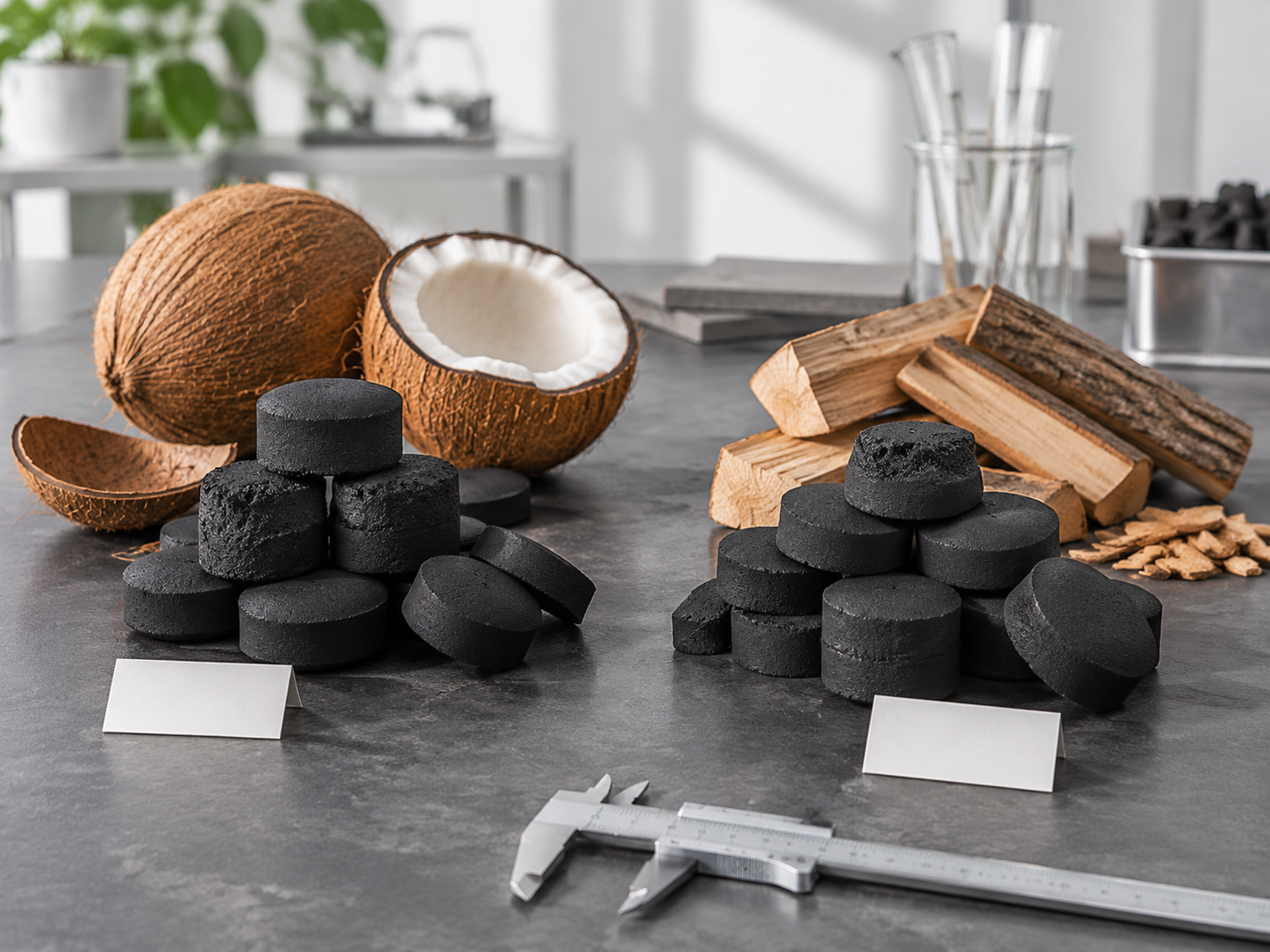
Coconut Shell vs. Fruitwood Quick-Light Charcoal: A 2026 Guide for Hookah Importers
This guide compares coconut-shell and fruitwood quick-light charcoal, focusing on the sourcing, product, and supply factors importers should verify. It offers a practical framework for evaluating samples and suppliers without assuming one feedstock is universally better.
How to Choose Charcoal by Material, Format, and Specifications
Labels such as “natural” don’t guarantee consistent performance or suitability for a particular use. This guide compares coconut shell, bamboo, and fruit wood charcoal, highlighting the specifications buyers should verify before choosing.