
Quick-Light vs. Coconut Shell Charcoal: A Buyer’s Checklist

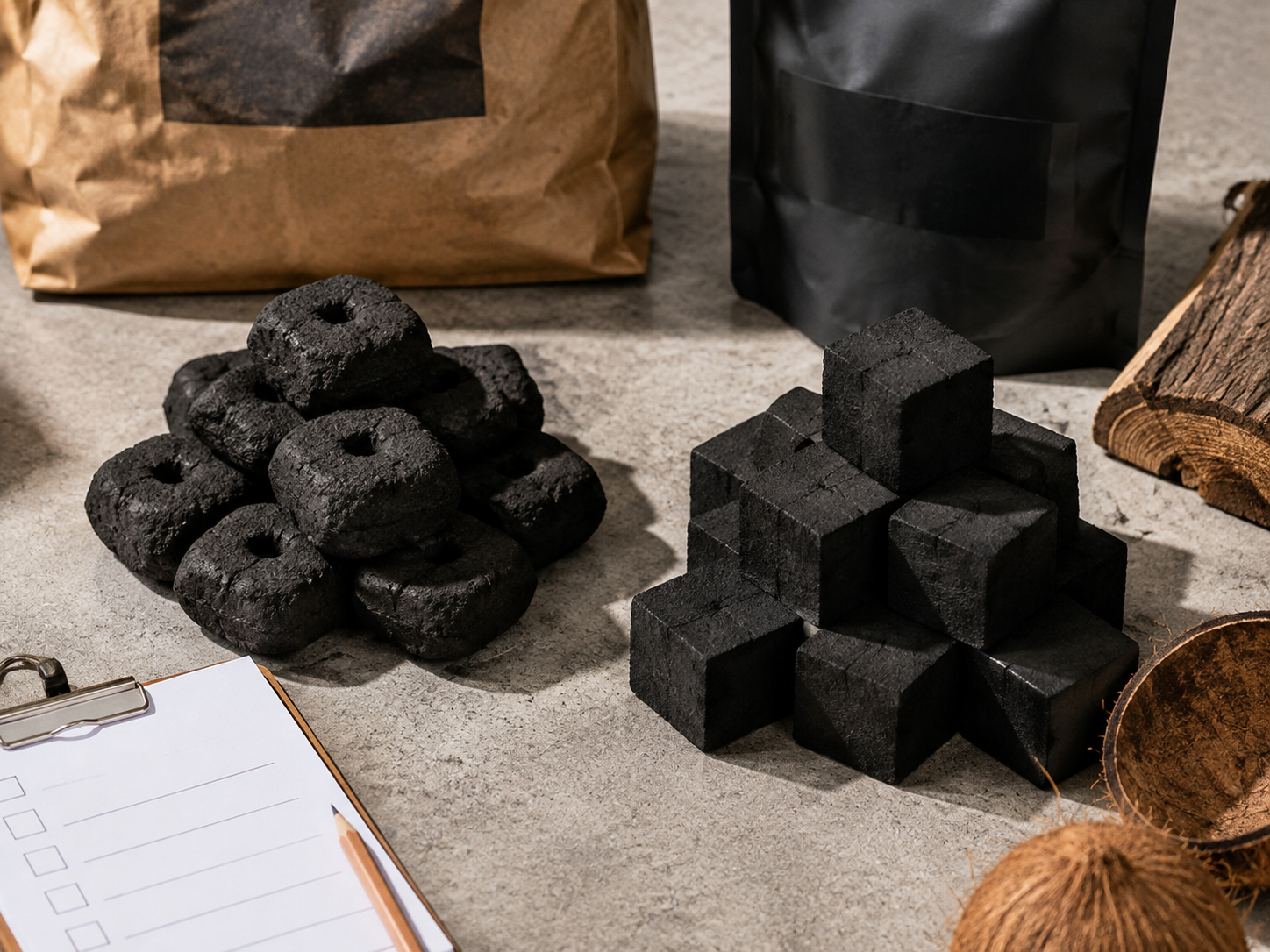
Choosing charcoal for resale means weighing intended use, customer expectations, performance, compliance, and total landed cost—not just the price per carton. This checklist helps importers, distributors, and retailers compare options, test samples, and document a more informed purchasing decision.
Introduction: Choosing Charcoal Is More Complicated Than It Looks
Buying charcoal sounds simple until you sit down with two quotes side by side. One supplier offers quick light charcoal that ignites in seconds; another offers coconut shell charcoal with a steadier burn and cleaner ash. Both look good on paper. Both have customers. The question is which one fits your business.
The right choice depends on far more than price per carton. End use, customer expectations, local labeling and import rules, and total landed cost all shape whether a product succeeds on your shelf or sits in the warehouse. A product that lights fast may delight one market and disappoint another that values long, even burns. A premium-grade cube may perform beautifully but fail if your customers expect instant ignition.

This checklist is built for importers, distributors, and retailers who need a structured way to compare quick-light and coconut shell options, verify suppliers, and reduce risk before placing an order. Work through it step by step, and you will have a documented basis for a purchasing decision rather than a gut feeling.
Step 1: Define the Product’s Intended Use
Before comparing products, define what the charcoal must actually do. The same category name can hide very different performance expectations.
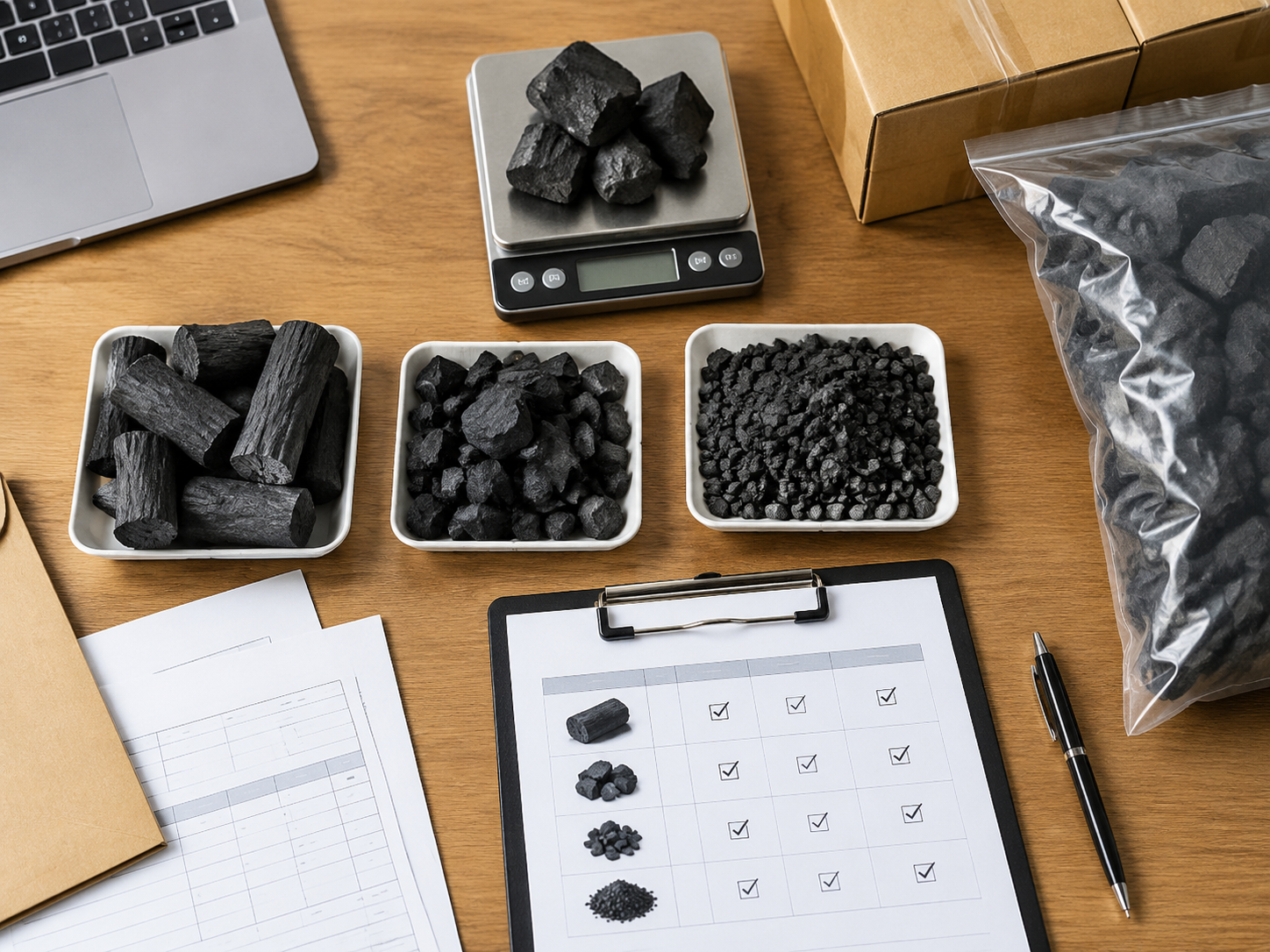
For shisha charcoal and hookah charcoal, ask whether your customers prioritize rapid lighting, long burn time, low ash, or a particular heat profile. A lounge that serves customers all evening may value burn duration and heat consistency above all else. A retail customer buying a box for occasional home use may care most about how quickly the product is ready.
For incense charcoal, clarify the intended incense type, the lighting method customers will use, expected burn duration, and any concerns about fragrance or residue. Incense users are often sensitive to odor, so a product that introduces unwanted smells during ignition can damage repeat business.
Consider whether bamboo charcoal or fruit wood charcoal is relevant to the use case. Do not assume these materials perform like coconut shell charcoal; they behave differently in ignition, heat, and ash. If your brief calls for a specific material, state it clearly from the start.
Finally, list your target markets and the applicable product, labeling, transport, and import requirements for each. Requirements vary by country and can affect packaging, claims, and documentation. Confirm details with qualified advisers or the relevant authorities in each market.
Step 2: Compare Quick-Light and Coconut Shell Options
Quick-light charcoal is designed to ignite readily, which can be convenient for casual users, outdoor settings, and markets where speed matters. Buyers should assess ignition consistency, odor during lighting, and formulation details rather than assuming all quick-light products are equivalent.
Coconut shell charcoal is commonly considered for shisha applications where buyers value a steady heat profile and controlled ash. It is not automatically better; it is different. Confirm performance through samples and test burns under conditions that resemble real customer use.
Compare the two categories on the metrics that matter to your market: lighting time, usable burn time, heat consistency, ash quantity, breakage, and performance under real customer conditions. A product that performs well in a lab may behave differently on a windy terrace or in a busy lounge.
Fruit wood formats also deserve a fair comparison where relevant. For example, a large block product such as the 50*50*40mm Block Quick-Burning Charcoal, Fully Burning, Black Fruit Wood AA554-SBQ is built for BBQ, outdoor cooking, and hookah use, with a 1–3 second ignition and a fully burning block format. It suits buyers whose customers want fast lighting in a substantial block. A different option, the 50mm perforated quick burning charcoal fruit charcoal, is a 50 mm perforated quick-light hookah charcoal aimed at hookah, shisha, and aromatherapy burners, with a fruit fragrance profile. These two products illustrate why category-level assumptions fail: both are quick-light fruit wood products, yet their format and positioning differ.
Avoid treating either quick-light or coconut shell as universally superior. Suitability depends on product specifications and buyer priorities, and the only reliable test is documented performance against a defined brief.
Step 3: Build a Practical Product Specification
A written specification protects both sides of the transaction. Specify material, shape, dimensions, weight, moisture limits, ash expectations, packaging, and acceptable defect or breakage rates. Vague terms like “premium quality” cannot be inspected or enforced.
For quick light charcoal, request clear information on ignition characteristics and product composition, plus relevant safety and compliance documentation. If a supplier cannot describe how the product ignites and what it contains, that is a warning sign.
For coconut shell shisha charcoal, define the cube or other format, target burn performance, and inspection criteria. State how cubes should be packed, how breakage will be measured, and what tolerance is acceptable.
Ask suppliers to provide a written specification sheet and confirm that production batches will match approved samples. Keep that sheet on file; it becomes the reference document for every future order and every quality dispute.
Step 4: Test Samples Before Committing
Samples are only useful if you test them properly. Run comparable tests using the same lighting method, equipment, ventilation, and test duration for each candidate product. If one product is tested with a torch and another with a burner, the results tell you nothing.
Record ignition time, heat stability, burn duration, ash, odor, breakage, and user feedback in a simple scoring sheet. Test more than one batch where possible to check consistency rather than relying on a single sample. Consistency between batches is often more important than peak performance in a single box.
Keep a signed sample or reference specification for future quality checks. When a shipment arrives months later, that retained sample is the benchmark against which you can compare.
Step 5: Evaluate Supplier Capability and Traceability
Product quality is only as reliable as the supplier behind it. Check production capacity, quality controls, raw-material sourcing, export experience, and the ability to support repeat orders.
Ask a hookah charcoal supplier or shisha charcoal manufacturer for references, factory details, batch records, and product documentation. For import programs, assess whether a shisha charcoal exporter can provide reliable packing lists, certificates, and shipment coordination. A supplier who handles documentation well saves considerable friction at customs and in your own warehouse.
Confirm whether the supplier is a manufacturer, trading company, or both, and verify claims before making a purchasing decision. Factory visits, video walkthroughs, and third-party inspections are all reasonable requests for a serious order.
Step 6: Compare Total Landed Cost—not Just Unit Price
The lowest unit price is frequently not the lowest cost. Calculate product cost alongside packaging, inspection, freight, insurance, duties, storage, and expected product loss. Breakage in transit and returns from poor performance both add to the real cost of a cheap carton.
Where reliable test data is available, compare cost per usable burn or per sellable unit. This is where a slightly more expensive product with better consistency can win decisively.
For charcoal wholesale orders, check minimum order quantities, payment terms, lead times, and price validity. Request a clear quotation that identifies specifications, packaging, Incoterms, and any customization charges. A quotation that leaves these items open invites disputes later.
Step 7: Review Packaging, Branding, and Compliance
Packaging is part of the product. Confirm carton strength, moisture protection, product labeling, barcode needs, and pallet configuration for the intended sales channel. Retail shelves, distributor warehouses, and e-commerce fulfillment each impose different demands.
Ask about private-label and OEM options if you are building a branded product line. For a hookah charcoal OEM manufacturer or custom hookah charcoal supplier, approve artwork and packaging samples before production begins; changes after printing are expensive and slow.
Verify market-specific labeling, safety, transport, and import documentation with qualified advisers or relevant authorities. Requirements change, and responsibility for compliance ultimately rests with the importer.
Step 8: Place a Controlled Trial Order
Start with an order size that allows commercial evaluation without exposing the business to unnecessary inventory risk. A trial order should be large enough to test logistics and customer response, but small enough that a poor result is survivable.
Agree in writing on specifications, inspection method, tolerance levels, delivery schedule, and remedies for nonconforming goods. Inspect goods before dispatch or arrival using agreed sampling criteria, and track customer feedback, complaints, reorder rates, and product performance after launch. The trial order is a data-gathering exercise as much as a purchase.
Step 9: Match Alternative Charcoal Types to Specific Needs
Beyond quick-light and coconut shell, several material categories serve specific briefs. Consider bamboo charcoal when a buyer’s product line or customer base specifically calls for bamboo-based shisha formats. Evaluate fruit wood charcoal or fruit wood quick light hookah charcoal only against a clear use case and verified performance data.
For specialized sourcing, request relevant documentation from a bamboo cube shisha charcoal supplier or fruit wood charcoal cubes supplier. Treat terms such as fruit wood charcoal for hookah supplier and bamboo hookah charcoal custom as sourcing descriptors, not proof of product suitability. The label on a supplier’s website is a starting point for due diligence, not a substitute for it.
Supplier Questions to Ask Before Ordering
- Can you provide current specifications, batch consistency records, and samples from the intended production line?
- What quality checks are performed before packing, and how are defects or breakage handled?
- What are your production lead time, minimum order quantity, monthly capacity, and shipping options?
- Can you support private label, OEM, or market-specific packaging, and what approvals are required?
- Which documents can you provide for export, product identification, and buyer due diligence?
Record the answers in writing. A supplier’s willingness to answer precisely, and to put commitments in the contract, tells you a great deal about how the relationship will run after the deposit is paid.
Common Buyer Mistakes to Avoid
- Choosing solely by the lowest quoted price without comparing landed cost and usable performance.
- Assuming every quick-light product or coconut shell product performs the same across brands and batches.
- Ordering at scale before testing samples and agreeing on measurable specifications.
- Using broad supplier labels—such as hookah charcoal factory or shisha charcoal factory in China—as a substitute for verification.
Each of these mistakes is avoidable with a documented process. The checklist in this article exists precisely to prevent them.
Conclusion: Use the Checklist to Make a Lower-Risk Purchase
The decision comes down to a sequence: define the use case, compare tested performance, verify the supplier, calculate landed cost, and begin with a controlled order. Quick light charcoal and coconut shell charcoal each serve real markets well; the buyer’s job is to match the product to the market and prove the match with data.
Document your specifications and inspection expectations so that repeat procurement becomes faster and safer. A well-maintained specification file, retained samples, and batch records turn a one-time purchase into a reliable supply relationship.
Importers and distributors should request samples and a detailed quotation before choosing a long-term supplier. Test the products, ask the supplier questions above, and compare total landed cost rather than headline price. That approach will not eliminate risk, but it will make the risk visible, measurable, and manageable.
Related Articles
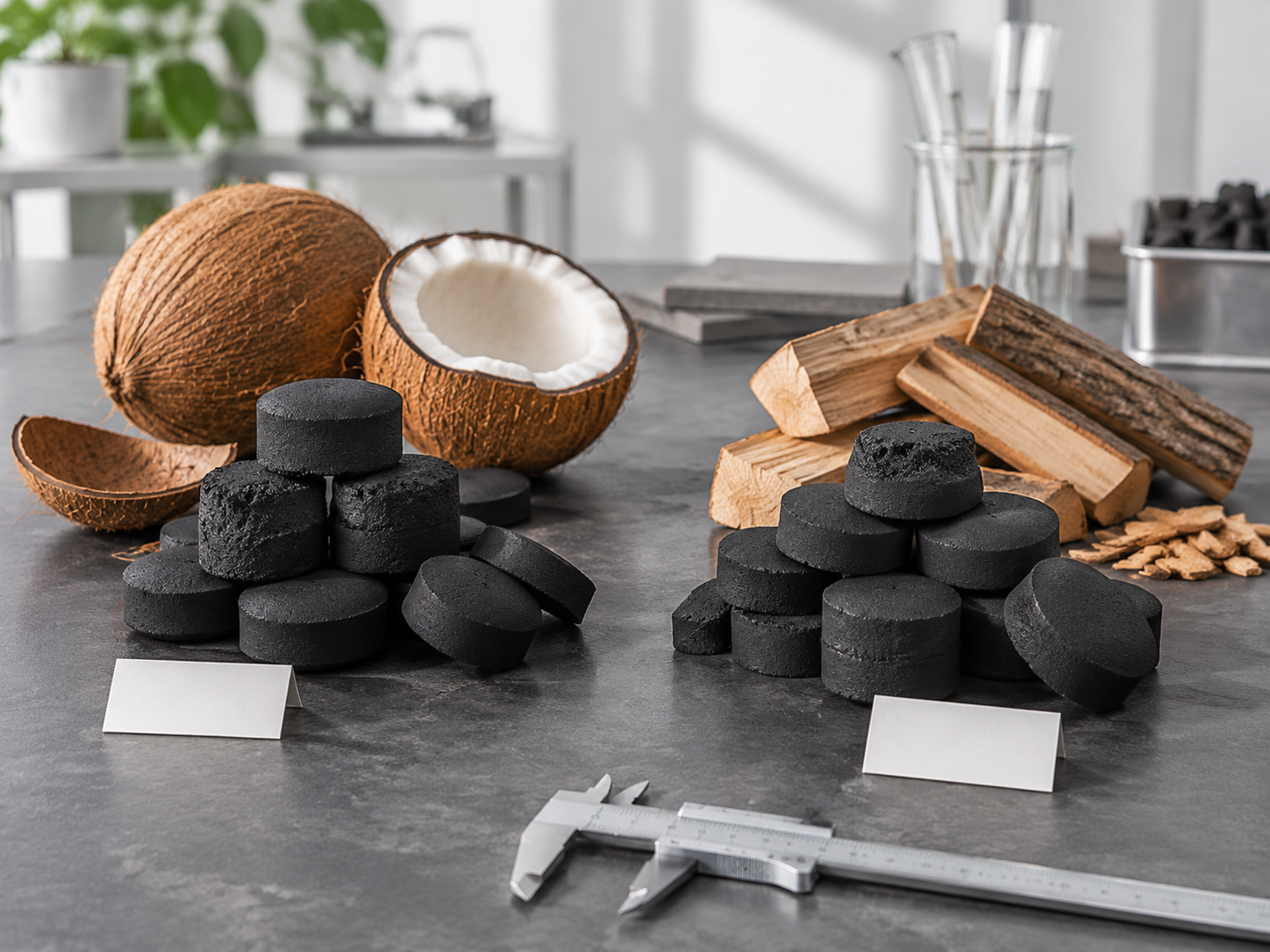
Coconut Shell vs. Fruitwood Quick-Light Charcoal: A 2026 Guide for Hookah Importers
This guide compares coconut-shell and fruitwood quick-light charcoal, focusing on the sourcing, product, and supply factors importers should verify. It offers a practical framework for evaluating samples and suppliers without assuming one feedstock is universally better.
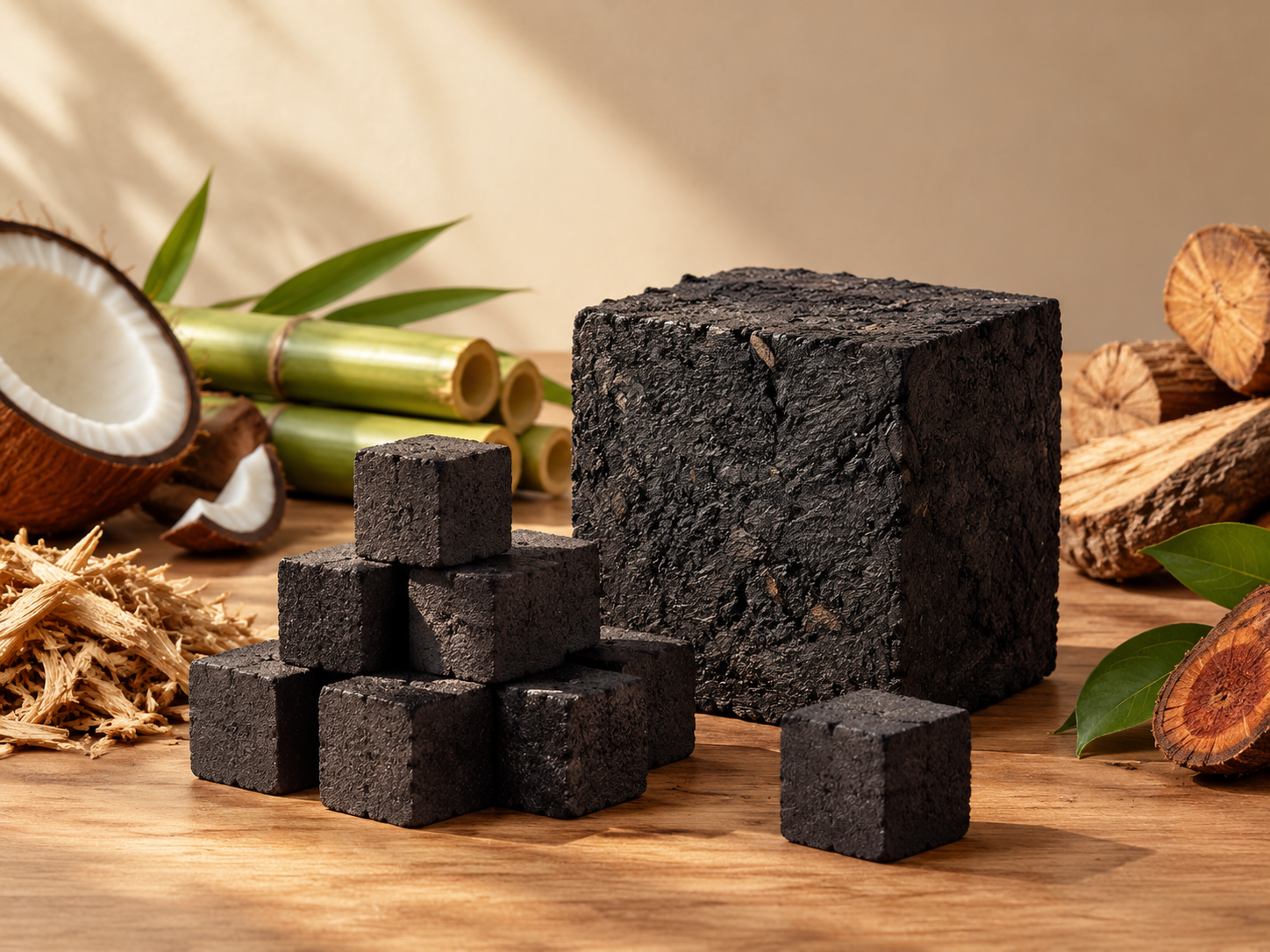
How to Choose Charcoal by Material, Format, and Specifications
Labels such as “natural” don’t guarantee consistent performance or suitability for a particular use. This guide compares coconut shell, bamboo, and fruit wood charcoal, highlighting the specifications buyers should verify before choosing.