
How to Compare Quick-Light and Coconut Shell Charcoal

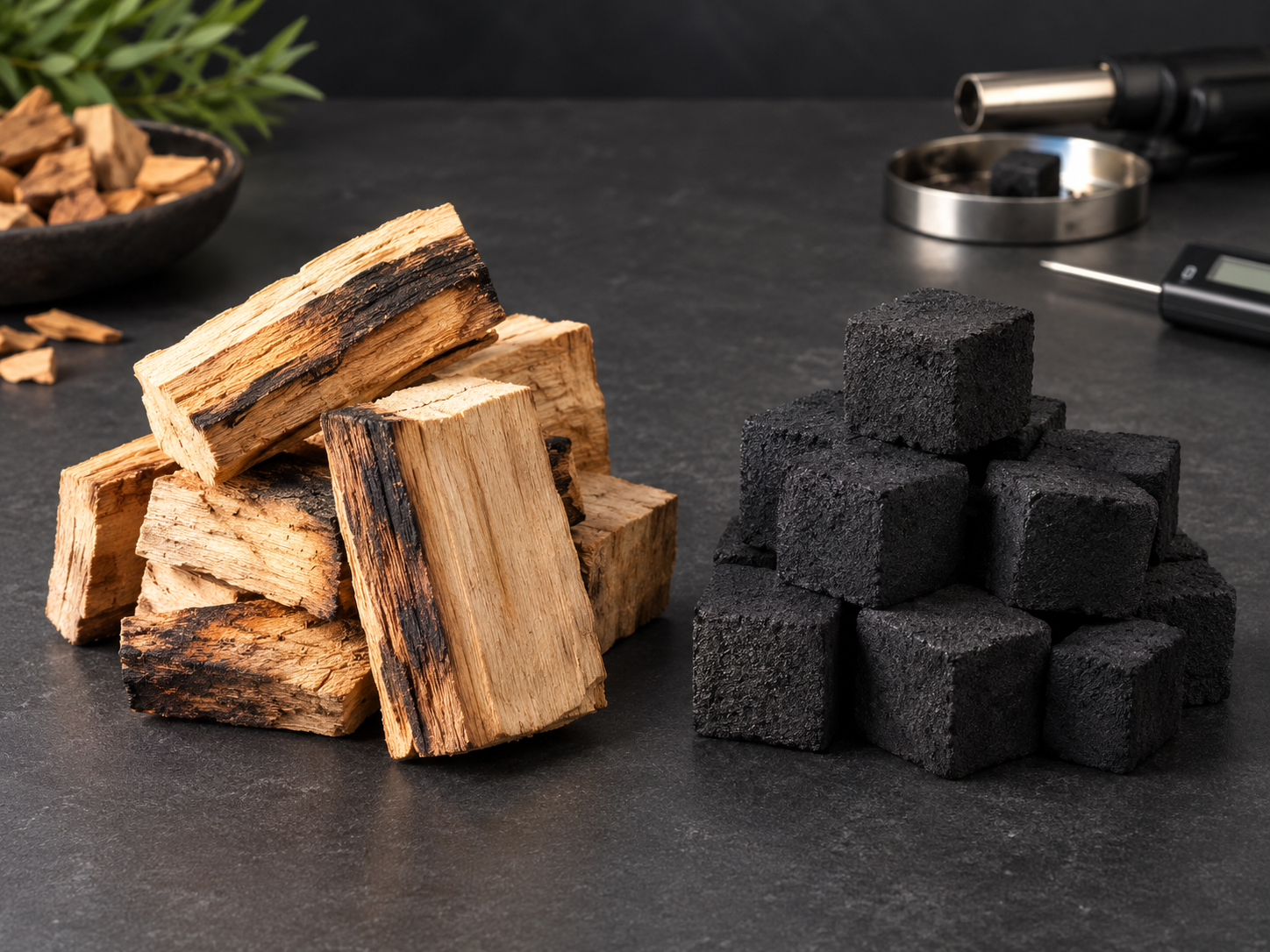
Quick-light fruitwood and coconut shell charcoal differ in ignition, preparation time, ash behavior, and heat performance. A consistent batch-testing process can help buyers compare real session costs before placing a wholesale order.
Why charcoal choice can become a sourcing problem
Charcoal looks like a simple commodity until you start comparing products across a full session. A quick light charcoal that ignites in seconds may cost more per piece than a denser natural product, while a slower-lighting cube may deliver longer, steadier heat. Buyers who compare only carton price or first-flame speed often end up with a product that raises their real cost per session or creates complaints at the point of use.
For distributors, wholesalers, and venue operators, the problem compounds when batches vary. If one shipment lights cleanly and the next smolders, crumbles, or produces excessive ash, inventory planning becomes guesswork and customers lose confidence in the brand on the box. Consistency matters as much as headline performance.
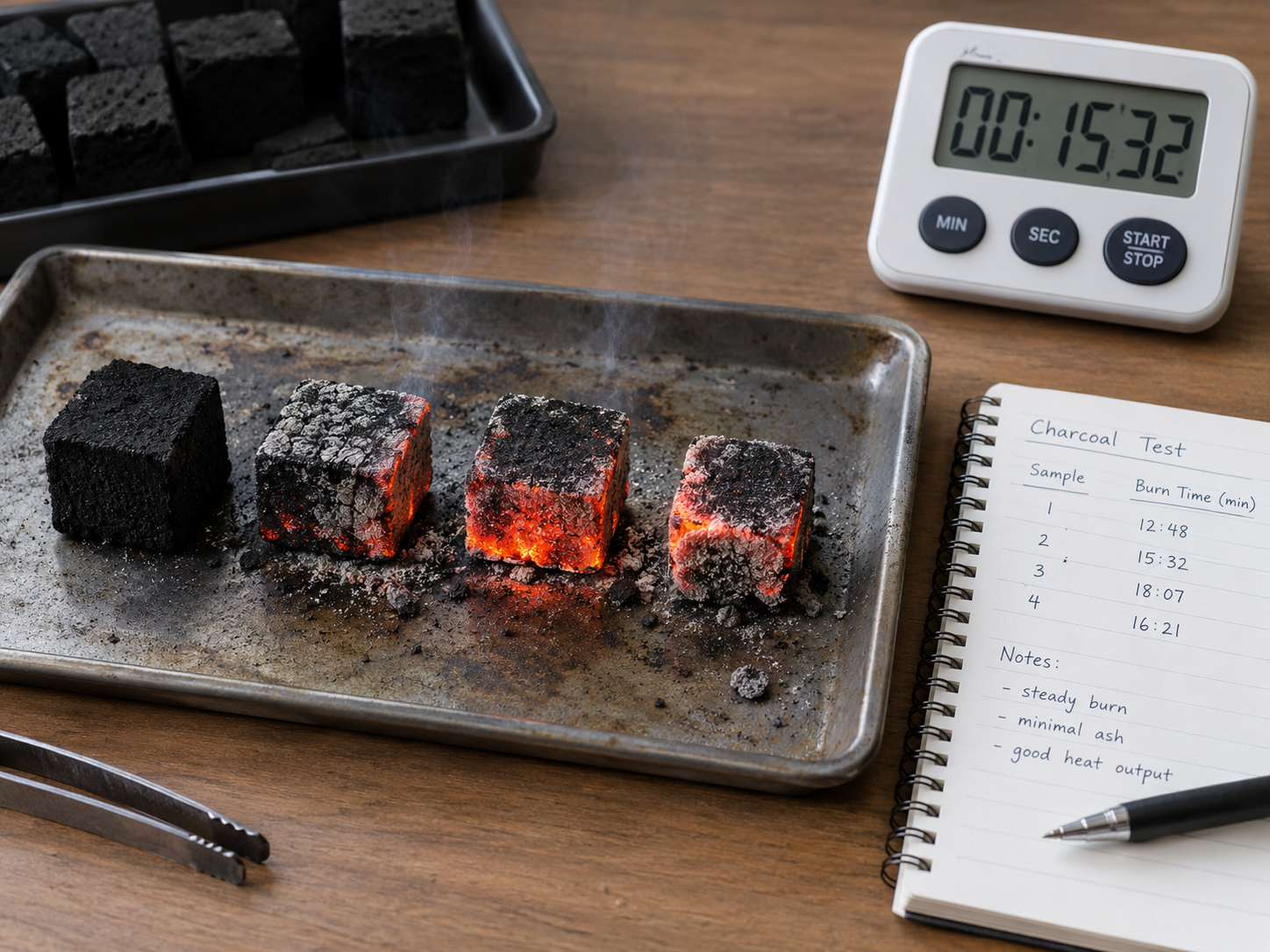
This guide treats quick light charcoal and shisha charcoal made from coconut shell as distinct options with different trade-offs, not interchangeable products. The goal is a repeatable way to measure ignition time, ash behavior, heat consistency, and fully loaded cost per session before committing to a charcoal wholesale order.
How fruitwood quick-light and coconut shell charcoal differ
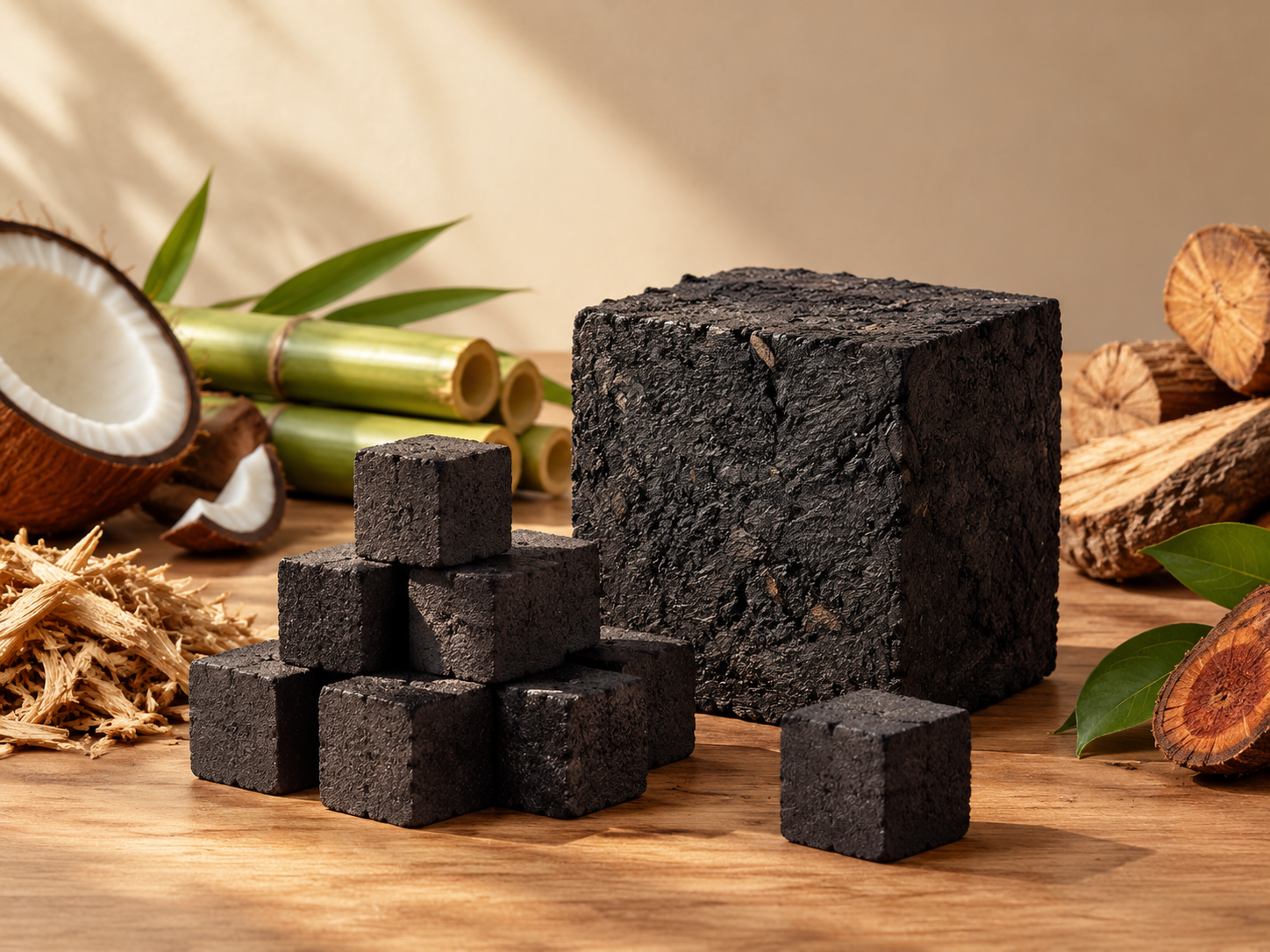
Fruit wood charcoal is commonly sold in quick-light formats engineered to ignite with minimal setup. These products often contain an ignition aid and are shaped into blocks, cubes, or perforated discs so air flows through the piece and ignition spreads quickly. A typical example is a large fruit wood block designed for BBQ, outdoor cooking, and hookah use, where the format and density are chosen to balance fast lighting with a usable burn.
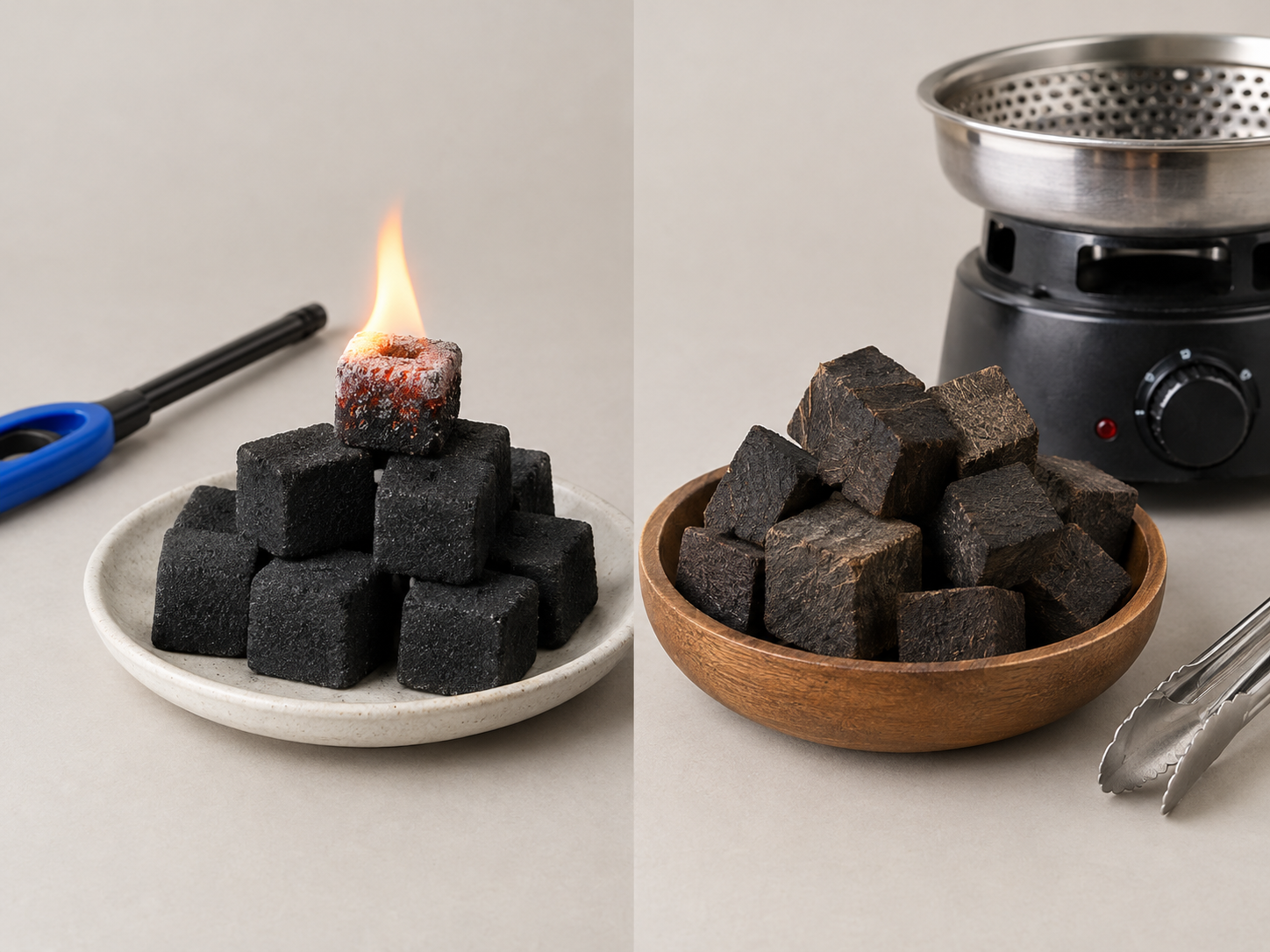
Coconut shell charcoal is a natural option, usually sold as cubes or flats without ignition additives. It typically requires an external heat source such as a burner or hot plate, and the buyer trades preparation time for other characteristics such as lower ash volume or a longer, flatter heat curve. Many shisha charcoal lines in this category are pressed into uniform cubes to fit standard hookah bowls and heat-management devices.
Performance varies widely by formulation, density, moisture content, additives, cube size, and manufacturing quality. Two products made from the same raw material can behave very differently. Buyers should always verify product specifications rather than assuming that all fruitwood or all coconut products perform alike, and should treat bamboo charcoal and bamboo cube shisha charcoal as a separate category with its own burn profile.
Ignition time: speed versus preparation
The clearest difference between formats is how the session begins. A quick light charcoal product is designed to reach usable heat with little or no external equipment, which shortens setup and reduces the tools a venue or end user needs. Coconut shell products generally need burner time before they are ready, so the clock starts earlier in the workflow even if the piece itself performs well once lit.
Measure time to full, even ignition rather than the first visible spark or flame. A piece that flashes immediately but stays cold in the center is not ready, and using it too early produces weak heat and uneven sessions. Record the lighting method, room conditions such as airflow and ambient temperature, and the time until the charcoal is genuinely ready to use.
Test several pieces from each batch, not a single sample. Note how consistently pieces reach readiness, whether some require relighting, and how much handling the process demands. Quick-light formats often suit users who prioritize convenience and speed, while coconut shell products may suit buyers willing to trade preparation time for a different ash and heat profile.
Product format also shapes ignition behavior. A large block format, such as a 50×50×40 mm block quick-burning charcoal made from black fruit wood and positioned for BBQ, outdoor cooking, and hookah use, presents a different ignition curve than a smaller perforated disc. A 50 mm perforated quick-light hookah charcoal aimed at hookah, shisha, and aromatherapy burners is built around airflow through the perforations, which can help ignition spread evenly across the piece. Buyers should match format to the intended use rather than assuming one size fits every application.
Ash, heat consistency, and session experience
Ash is where supplier data and controlled sample testing matter most. Compare ash quantity and handling requirements using documented specifications plus your own tests under identical conditions. Avoid assuming that all fruitwood or all coconut products behave the same; pressing pressure, binder choice, and raw material preparation all influence how much residue remains and how easily it is managed.
Assess whether heat stays stable through a full session and whether pieces crack, crumble, or need frequent replacement. A product that burns hot for ten minutes and then fades forces mid-session changes that frustrate users and raise consumption. For hookah charcoal and shisha charcoal, evaluate ash behavior alongside heat output and total session duration, because a low-ash product that loses heat early is not necessarily the better choice.
Odor belongs in the same evaluation. Ignition aids and binders can affect smell during lighting and during the session, so test in the intended application and note any off-notes. For incense charcoal, confirm that the product is actually intended for incense use and follow its specific safety and ventilation instructions. Incense formats are often optimized for steady smoldering rather than high heat, and an incense charcoal manufacturer for aromatherapy supply chain may specify different handling requirements than a hookah-focused line.
Calculate cost per session, not just price per carton
Price per carton tells you what you pay at the dock. Cost per session tells you what the product actually costs to use. Apply one consistent formula: total charcoal cost per session equals the quantity used per session multiplied by unit cost, then adjusted for the number of sessions the purchase delivers. Run the same calculation for every candidate product.
Include the costs that carton pricing hides: shipping and freight, breakage in transit, storage space, lighting fuel or electricity for burner-based products, labor time for preparation, and any pieces discarded because they performed inconsistently. A cheaper carton with a higher breakage rate or a shorter usable burn can easily lose on landed cost per session.
Compare products under the same session length, setup, and user expectations. A quick-light product tested in a fast-turnover venue and a coconut product tested in a slow lounge setting are not a fair comparison. For charcoal wholesale purchases, request landed-cost quotes that include duties, inland transport, and packaging, and insist on sample testing before committing to volume.
A practical buyer comparison checklist
Use a structured checklist so that every supplier is evaluated on the same basis.
- Request specifications for raw material, dimensions, density, moisture content, packaging, and intended application.
- Test ignition time, usable heat duration, ash volume and handling, breakage rate, odor, and pieces consumed per session.
- Check batch-to-batch consistency, shelf-life guidance, packaging protection, and applicable shipping or product documentation.
- Compare your sample results with the supplier's claims, and repeat tests across more than one batch before drawing conclusions.
Keep written records. A simple test log with dates, batch numbers, lighting method, and measured times turns anecdotal impressions into sourcing evidence you can share with partners and use in negotiations.
Which option fits your business?
Consider fruitwood quick-light products when fast setup and user convenience are central requirements. Venues with high turnover, outdoor and event use, and customers who want to light without extra equipment are natural fits. A fruit wood quick light hookah charcoal manufacturer relationship makes sense when speed and format consistency drive your assortment.
Consider coconut shell charcoal when your customers prioritize a natural charcoal format and your operation can accommodate burner preparation. Lounges with dedicated staff, controlled preparation areas, and customers who value a steady, long session are typical buyers. Many importers pair this with bamboo shisha charcoal wholesale programs to offer a second natural option with a different burn profile.
Choose based on tested cost per session and customer needs rather than material name or carton price alone. For mixed product lines, position quick-light charcoal and coconut shell shisha charcoal for distinct use cases, and train sales staff to explain the difference so customers buy the right product the first time.
Questions to ask a supplier before ordering
Ask for representative samples, batch test data, minimum order quantities, lead times, and packaging options. Confirm whether the supplier supports private label, OEM specifications, and export documentation, and get those commitments in writing.
When evaluating a hookah charcoal supplier or shisha charcoal manufacturer, verify production capacity and quality-control procedures rather than relying on marketing claims. Ask how batches are tracked, how moisture is controlled, and what happens when a batch falls outside specification.
For importers comparing a hookah charcoal factory or shisha charcoal factory in China, assess communication responsiveness, sample consistency across repeat orders, and shipment reliability. A supplier that answers technical questions precisely and ships samples that match the specification is a better long-term partner than one that competes only on price.
If you need custom formats, ask directly about hookah charcoal OEM manufacturer capability, private label hookah charcoal manufacturer options, and whether the supplier can produce fruit wood hookah charcoal OEM or bamboo hookah charcoal custom specifications. A custom hookah charcoal supplier should be able to document the changes it makes to density, dimensions, and packaging, and a B2B hookah charcoal supplier should provide clear terms for repeat volume.
Conclusion: choose by measured session value
The core trade-off is straightforward: quick-light convenience versus the preparation and performance profile of coconut shell charcoal. Neither is universally better. The right answer depends on how your customers light, how long their sessions run, and how much preparation your operation can absorb.
Compare ignition time, ash, heat consistency, and fully loaded cost per session using identical test conditions. Shortlist suppliers, request samples, run the tests, and calculate results before placing a wholesale order. That discipline is what separates a sourcing decision you can defend from one you have to explain later.
Related Articles
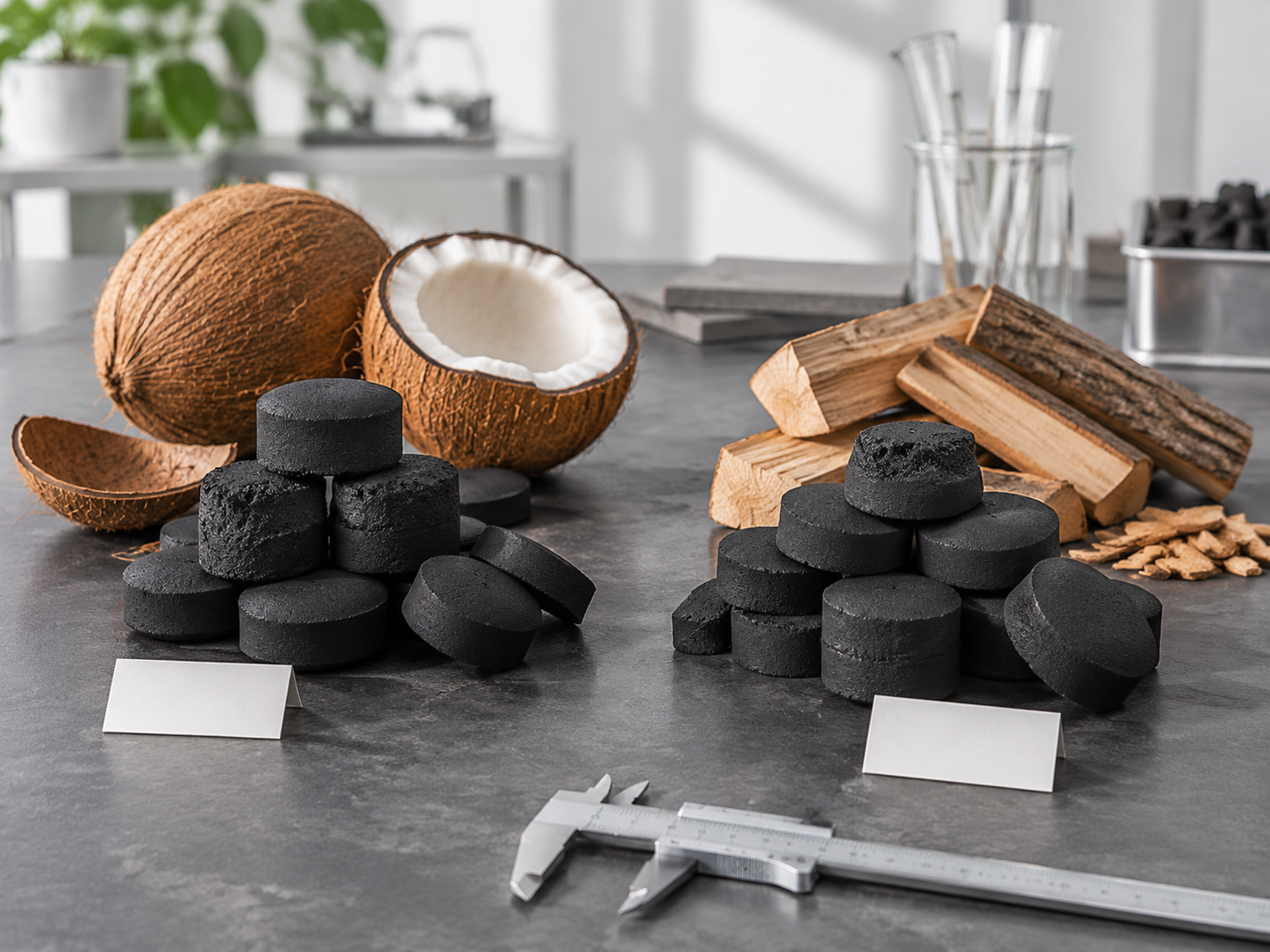
Coconut Shell vs. Fruitwood Quick-Light Charcoal: A 2026 Guide for Hookah Importers
This guide compares coconut-shell and fruitwood quick-light charcoal, focusing on the sourcing, product, and supply factors importers should verify. It offers a practical framework for evaluating samples and suppliers without assuming one feedstock is universally better.
How to Choose Charcoal by Material, Format, and Specifications
Labels such as “natural” don’t guarantee consistent performance or suitability for a particular use. This guide compares coconut shell, bamboo, and fruit wood charcoal, highlighting the specifications buyers should verify before choosing.