
How to Calculate the True Cost of Hookah Charcoal per Session

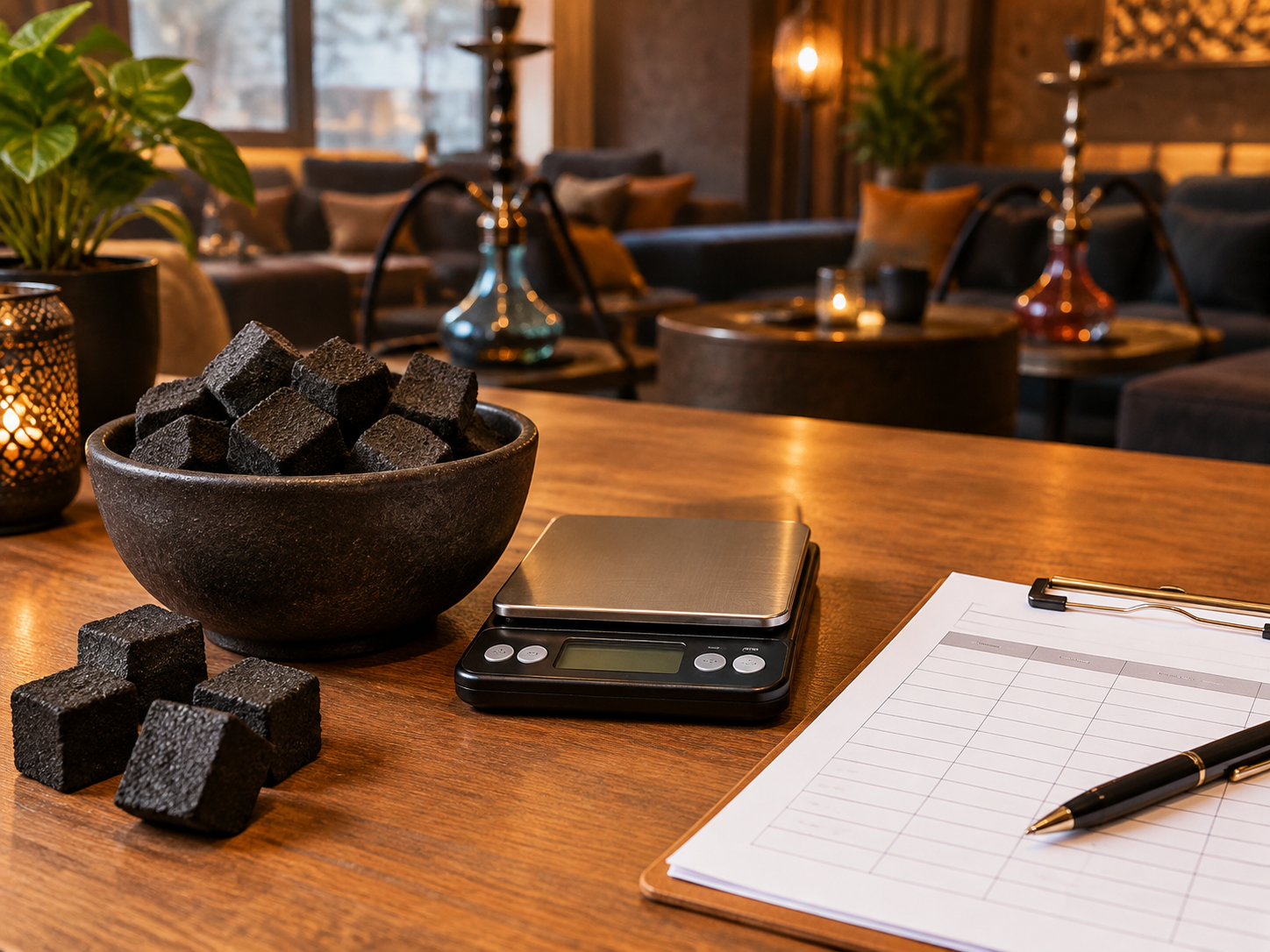
A low price per kilogram does not always mean lower operating costs: burn time, consumption, lighting labor, and waste all affect what a hookah session really costs. Learn how to compare charcoal fairly and track cost per usable session with your own supplier quotes and test data.
Why the Cheapest Box May Not Be the Cheapest Session
Hookah businesses face a practical sourcing puzzle. The purchase price on a quote is only one input. What actually determines profitability is the balance between purchase price, lighting time, burn performance, labor, and customer experience. A low price per kilogram can look attractive on a spreadsheet, but it can be misleading if a product needs more pieces per session, creates more downtime for staff, or generates more waste at the end of the night.
This is why serious buyers frame the comparison around cost per usable session rather than the quoted price of shisha charcoal. A lounge that serves 200 bowls a week will feel the difference between a product that burns cleanly for 60 minutes and one that needs a mid-session change. The same logic applies to any operator comparing quick light charcoal against natural coconut shell formats: the number that matters is what each session costs after consumption, labor, and waste are accounted for.
Start with a Like-for-Like Product Comparison
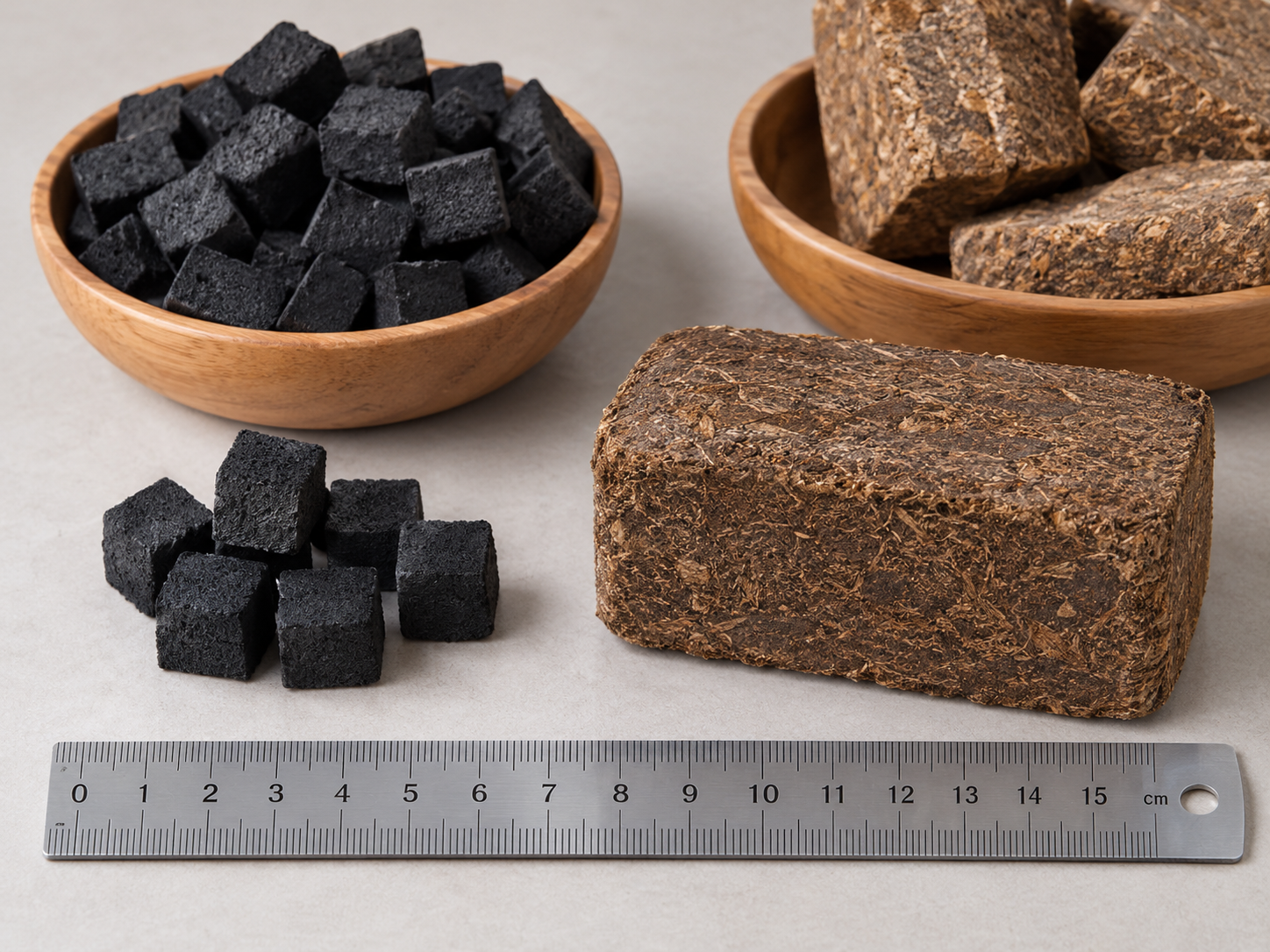
Before any math, make sure you are comparing equivalent products. Compare coconut shell charcoal with fruit wood quick light hookah charcoal using the same session length, heat requirements, and service conditions. If one test uses a deep phunnel bowl and the other uses a standard clay bowl, the consumption figures are not comparable.
Clarify product formats as well. Natural coconut shell charcoal typically comes as cubes or flats and requires an external ignition source. Quick light charcoal is designed to ignite more readily, often with a built-in accelerant, which changes both preparation time and how staff handle it during service. A product like the 50*50*40mm Block Quick-Burning Charcoal, Fully Burning, Black Fruit Wood AA554-SBQ illustrates the point: it is a large fruit wood charcoal block built for BBQ, outdoor cooking, and Hookah use, with 1–3 second ignition and a fully burning profile. That format behaves very differently from a standard 25mm coconut cube, so it belongs in its own test lane.
Check specifications and test samples before comparing prices. Cube size, density, ash volume, burn time, and ignition method can all change results. Avoid treating all fruit wood charcoal or all coconut shell hookah charcoal as interchangeable — a perforated quick-light format, for example, is engineered for airflow and fast lighting, while a dense natural cube is engineered for slow, steady heat.
The Cost-Per-Session Formula
The core calculation is simple: landed charcoal cost per kilogram multiplied by kilograms consumed per session. That gives you the raw charcoal cost of a single bowl. But raw charcoal is only part of the picture.
Add operating costs where relevant: staff lighting time, ignition fuel or equipment, breakage, unusable pieces, and disposal. A product that takes eight minutes to light versus one that takes thirty seconds has a labor cost attached, especially in a busy venue where staff time is the scarcest resource.
The fuller formula looks like this:
- Total session cost = charcoal consumed + ignition and labor costs + waste and handling costs
- Charcoal consumed = landed price per kg × kg used per session
- Ignition and labor = staff minutes × loaded hourly rate, plus any fuel or equipment cost
- Waste and handling = broken pieces, partially used pieces, and disposal time
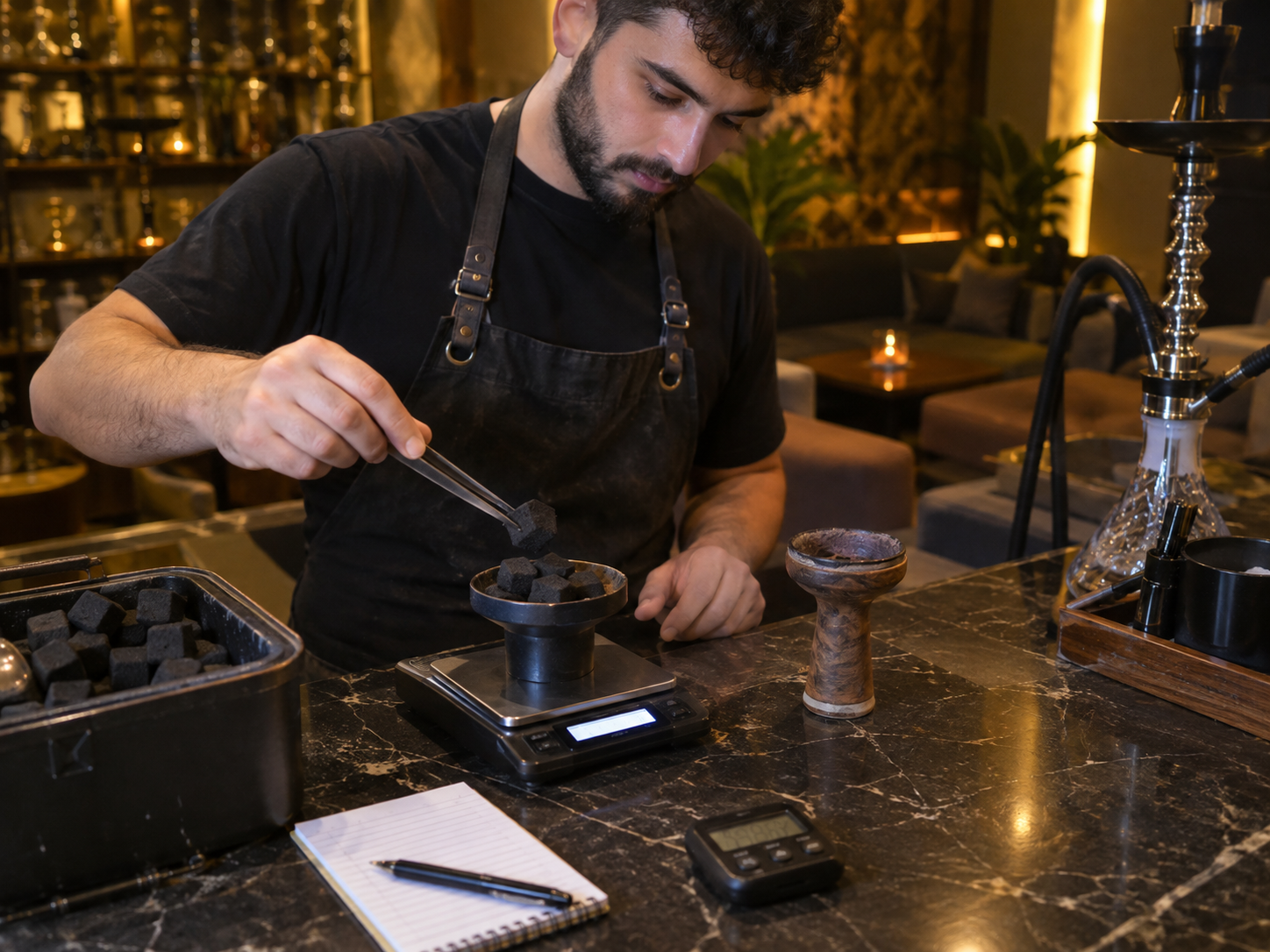
Track actual consumption by weighing the charcoal issued and returned across a representative sample of sessions. Eyeballing how many pieces "usually" go into a bowl is where most cost estimates drift.
Worked Example: Use Your Own Supplier Quotes
Rather than presenting market prices that may not apply to your freight lanes or currency, use a fill-in template. Set up a comparison table with these columns: landed price per kilogram, pieces used per session, average burn duration, lighting time, and waste rate.
Calculate cost per session for coconut shell charcoal and quick light charcoal using the same local freight, duties, and currency assumptions. The template is straightforward: price per kilogram × kilograms per session, plus operating costs. If a supplier quotes in cartons or containers, convert everything to a per-kilogram landed basis first.
Run low, expected, and high-consumption scenarios. A lounge with short 45-minute sessions and light heat management will land in the low scenario; a venue with long sessions, heavy coal rotation, and multiple bowl changes will land in the high scenario. The ranking between two products can flip depending on which scenario reflects your actual service pattern, which is exactly why a single point estimate is risky.
What Changes the Result in Real Operations?
Session duration, heat management, bowl type, charcoal dimensions, and staff practice all affect consumption. A larger block format like the 50*50*40mm Block Quick-Burning Charcoal delivers a long, steady burn suited to extended sessions, while smaller cubes give finer control over heat. Neither is universally better — the fit depends on your menu and service style.
Lighting time can matter enormously in busy venues. Quick light charcoal may reduce preparation friction during peak hours, while natural coconut shell charcoal may fit operations that already have established ignition equipment and dedicated prep staff. The 50mm perforated quick burning charcoal fruit charcoal is a good example of a format designed for fast, even ignition, with perforations that support airflow and a fruit fragrance profile suited to Hookah, Shisha, and aromatherapy burners.
Burn consistency, ash volume, odor, breakage, and customer preference can influence usable output and repeat business. A product that leaves heavy ash may require more frequent bowl changes; a product with an off-odor can cost you a table. Record these factors during a controlled trial instead of relying on supplier claims alone.
Beyond Charcoal Price: Landed Cost and Supply Reliability
Include freight, duties, packaging, storage, minimum order quantities, payment terms, and lead times in charcoal wholesale comparisons. A slightly higher unit price with reliable lead times and consistent batches is often cheaper than a bargain that arrives late or varies between shipments.
Assess batch consistency, documentation, packaging integrity, and replacement policies with each hookah charcoal supplier. Ask a shisha charcoal manufacturer or shisha charcoal exporter for product specifications, samples, and a clear quotation basis. For importers, verify factory capacity and quality controls rather than selecting a shisha charcoal factory in China on price alone — a hookah charcoal manufacturer for importers should be able to document its process, not just its price list.
When Alternative Charcoal Categories Belong in the Buying Review
Bamboo charcoal and bamboo charcoal cubes may be relevant alternatives for businesses evaluating natural charcoal formats. Compare them by tested session performance rather than by category reputation, and treat bamboo shisha charcoal wholesale quotes the same way you would any other: landed cost per kilogram against measured consumption.
Incense charcoal serves different use cases from hookah charcoal, so do not assume incense charcoal pricing or specifications transfer to shisha operations. If you are sourcing for multiple product lines, evaluate an incense charcoal manufacturer for aromatherapy separately from a hookah-focused supplier, and keep fruit wood incense charcoal wholesale in its own purchasing track.
A Practical Trial and Measurement Plan
Test each product across comparable sessions, staff shifts, and service conditions. A trial run only on quiet Tuesday evenings will not tell you how a charcoal performs on a packed Saturday.
Log the following for every session in the trial:
- Charcoal weight issued and returned
- Pieces used and any pieces discarded
- Lighting time from start to ready
- Session duration and number of relights
- Customer feedback and any complaints
- Discarded material and ash volume
Calculate average cost per session and the variation between batches, then compare both with your current product baseline. Repeat the trial with enough sessions to avoid basing a purchasing decision on one unusually busy or quiet shift.
How to Choose a Supplier and Buying Model
Use a checklist covering product consistency, test samples, lead times, export documentation, packaging, and commercial terms. For bulk hookah charcoal supplier bids, request comparable landed-cost quotes and clarify whether prices refer to product weight, carton, or container.
Businesses needing differentiated packaging can assess a private label hookah charcoal manufacturer, hookah charcoal OEM manufacturer, or custom hookah charcoal supplier. Match specialized searches to the exact product and format required — a fruit wood quick light hookah charcoal manufacturer, a fruit wood charcoal cubes supplier, a bamboo cube shisha charcoal supplier, or a quick light hookah charcoal factory all describe different capabilities. The same applies to narrower terms like fruit wood charcoal for hookah supplier, quick light shisha charcoal exporter, B2B hookah charcoal supplier, fruit wood hookah charcoal OEM, and bamboo hookah charcoal custom — each points to a specific sourcing model, and precision here saves time later.
Decision Framework: Which Option Fits Your Business?
Choose based on measured cost per usable session, operational convenience, customer acceptance, and dependable supply — not headline price alone. Summarize results in a scorecard covering landed cost, session consumption, preparation time, consistency, waste, and reorder reliability.
Recalculate when supplier pricing, freight, session practices, or product specifications change. Charcoal economics are not static; a freight surcharge or a shift in session length can move the answer.
The buyer action is straightforward: request samples, collect comparable quotes, and run a documented trial before committing to a large charcoal wholesale order. The suppliers who can support that process with specifications, consistent batches, and clear terms are the ones worth building a long-term relationship with.
Related Articles
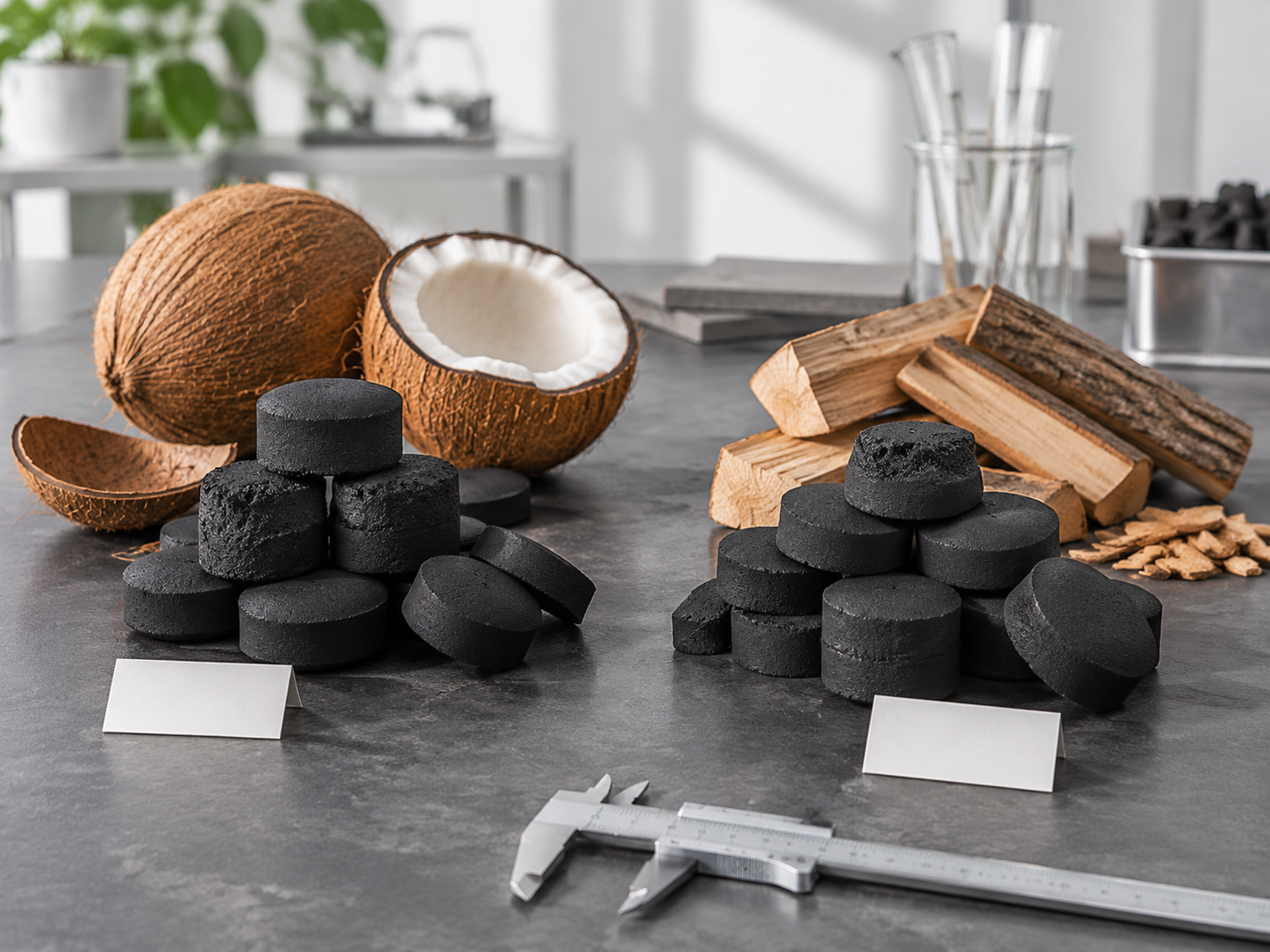
Coconut Shell vs. Fruitwood Quick-Light Charcoal: A 2026 Guide for Hookah Importers
This guide compares coconut-shell and fruitwood quick-light charcoal, focusing on the sourcing, product, and supply factors importers should verify. It offers a practical framework for evaluating samples and suppliers without assuming one feedstock is universally better.
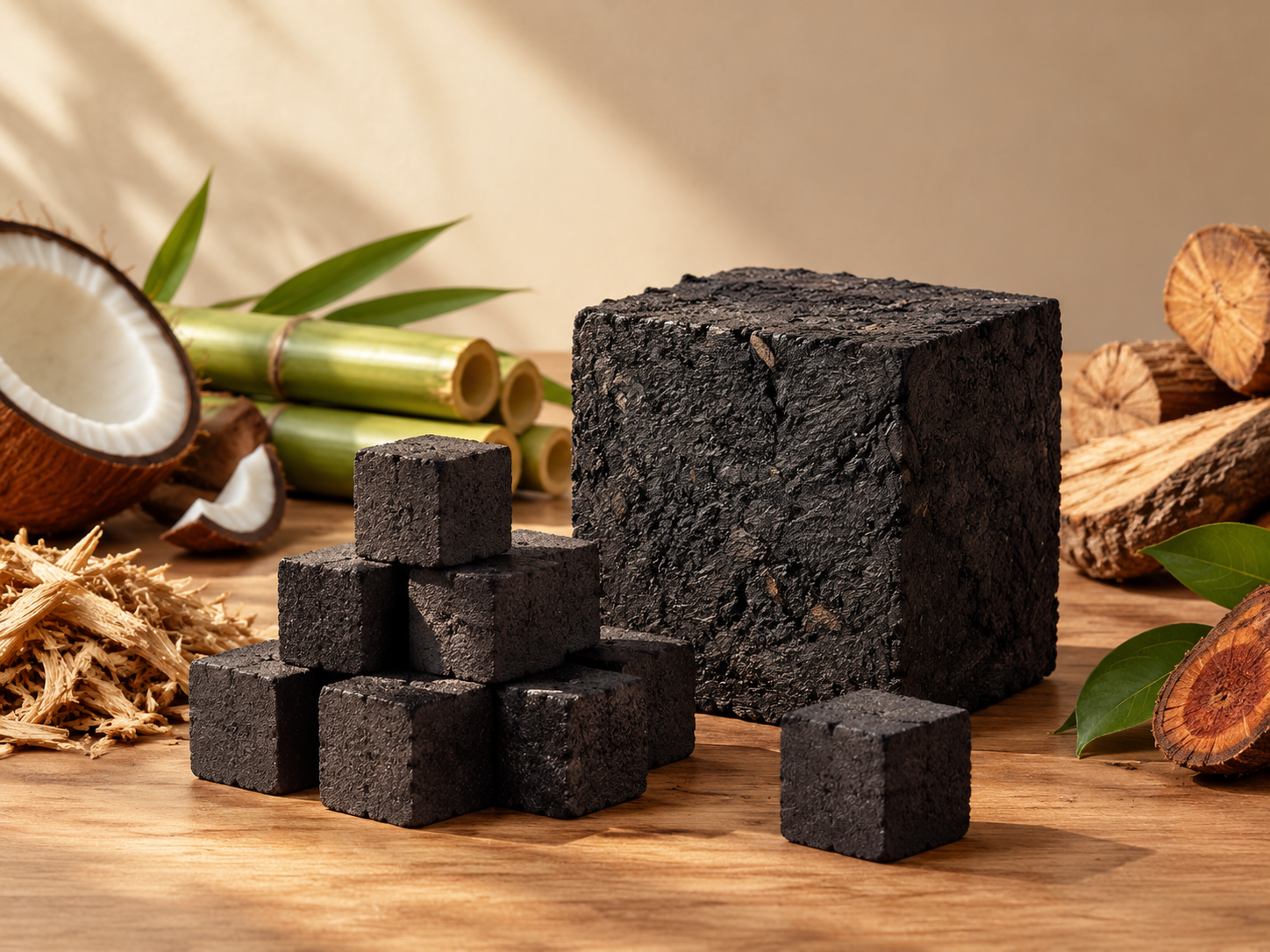
How to Choose Charcoal by Material, Format, and Specifications
Labels such as “natural” don’t guarantee consistent performance or suitability for a particular use. This guide compares coconut shell, bamboo, and fruit wood charcoal, highlighting the specifications buyers should verify before choosing.