
Hookah Charcoal: Comparing the True Cost per Session

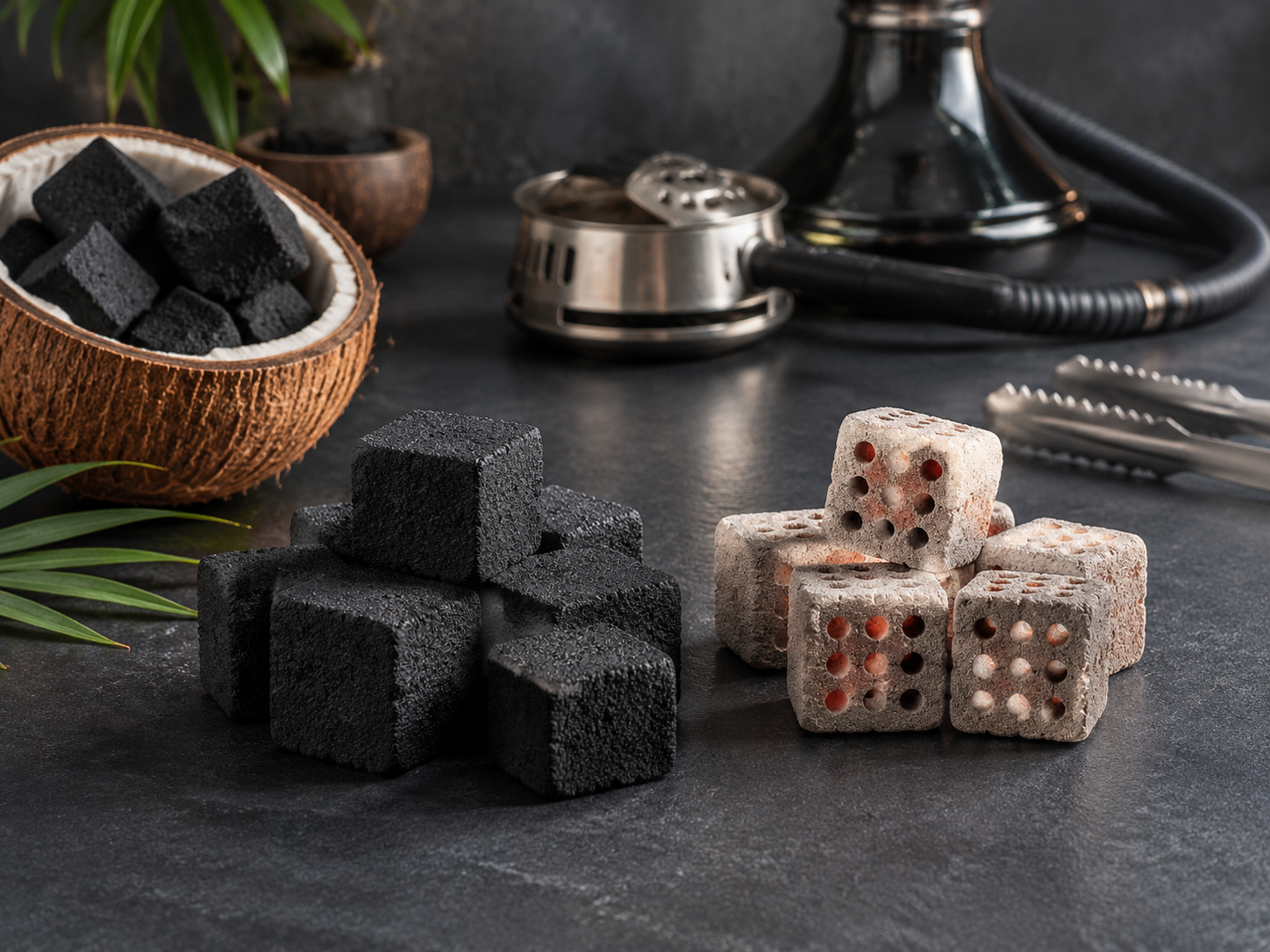
Compare coconut shell charcoal and fruitwood quick-light charcoal by more than their purchase price. A practical cost-per-session framework shows how burn time, lighting, labor, and waste affect the real cost of each usable session.
Why the Cheapest Box Can Cost More Per Hookah Session
Every hookah buyer faces the same dilemma at the quotation stage: unit prices are easy to compare, but the numbers that actually matter are buried. Burn time, lighting effort, usable heat, and waste rarely appear on a price list, yet they determine what each session truly costs. A low sticker price on a box of quick light charcoal can quietly disappear once staff time, rejected pieces, and short burn cycles are factored in.
This is a practical purchasing problem, not a philosophical debate between coconut and fruitwood. Both materials can serve a hookah business well, and both can fail if the specification, batch consistency, or supplier documentation is weak. The goal here is to compare total cost per session for coconut shell charcoal and fruitwood quick light charcoal using transparent assumptions you can replace with your own numbers.
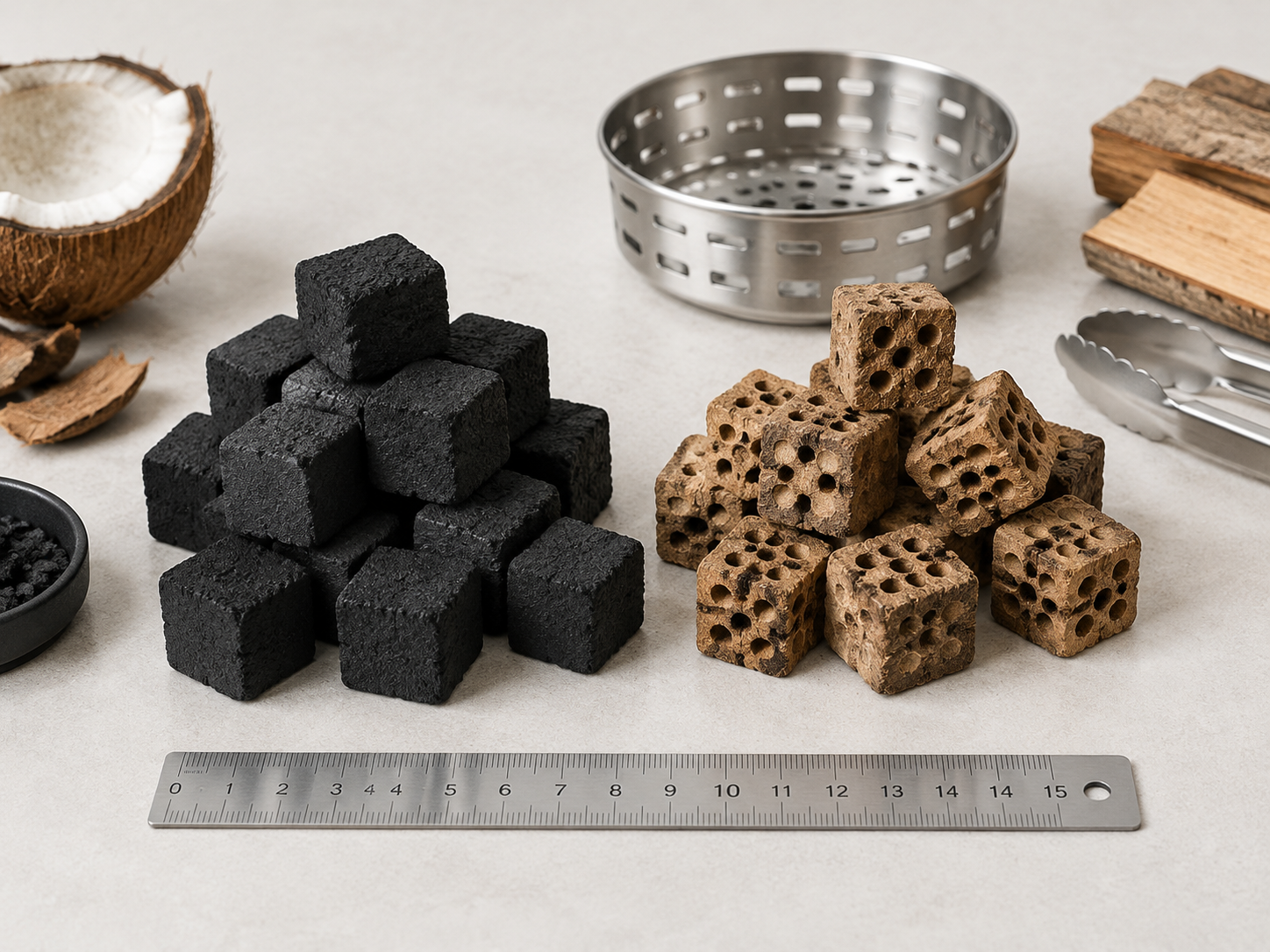
By the end, you should be able to look at any offer—whether from a hookah charcoal factory in China or a regional distributor—and calculate what a finished session costs, not just what a kilogram costs.
What Counts as a Hookah Session Cost?
Cost per session is the total cost of charcoal consumed and prepared, divided by the number of usable sessions delivered. That definition sounds simple, but it forces you to include items that most purchase orders ignore.
The core formula is:
Cost per session = (landed charcoal cost + lighting or labor costs + expected waste) ÷ usable sessions
To use it, collect the following inputs for each product under consideration:
- Price per kilogram, converted to your purchasing currency
- Pieces used per session, based on your bowl and heat-management style
- Average burn time per piece under real conditions
- Lighting method and the time or fuel it consumes
- Rejected, broken, or under-sized pieces as a percentage of the order
Separate what you can measure from what depends on the user. Freight, duties, and piece weight are measurable. Session length, coal rotation habits, and staff skill vary by venue. Keep both categories visible so you do not blame a product for a workflow problem—or credit it for a well-trained team.
Coconut Shell Charcoal vs. Fruitwood Quick-Light: How They Differ
Coconut shell shisha charcoal is commonly sold in pressed cubes with consistent dimensions, which makes heat placement predictable. Fruitwood quick-light products are formulated to ignite readily, often with an accelerant layer, so they reach usable heat with minimal external equipment. Neither format is inherently superior; they solve different problems.
Quick light charcoal can cut lighting time dramatically, which matters in high-turnover lounges where staff minutes are expensive. Coconut-based hookah charcoal may suit buyers prioritizing sustained heat and consistent sizing across a long session. But material alone does not guarantee performance. Burn tests, ash volume, odor, and heat consistency must be verified by SKU and by batch.
It also helps to distinguish fruit wood charcoal from quick-light formulations. A product such as the 50*50*40mm Block Quick-Burning Charcoal, Fully Burning, Black Fruit Wood AA554-SBQ is a large fruit wood block built for BBQ, outdoor cooking, and hookah use, with a 1–3 second ignition claim. That is a different specification from a perforated quick-light hookah coal, even though both are fruitwood-based. Material origin and ignition characteristics are not interchangeable specifications, and treating them as such is one of the most common sourcing mistakes.
For buyers who want a dedicated hookah format, the 50mm perforated quick burning charcoal fruit charcoal is designed for hookah, shisha, and aromatherapy burners, with a fruit fragrance profile and a perforated shape that supports airflow. Products like these show why the category deserves SKU-level comparison rather than a single coconut-versus-fruitwood verdict.
The Cost-Per-Session Calculation: A Worked Comparison
Use the table below as a fill-in worksheet. The numbers shown are illustrative only—they are not industry averages—so replace them with your own quotes and test results.
- Landed cost per kilogram: Product A (coconut cube) $3.20; Product B (fruitwood quick-light) $2.60
- Pieces used per session: A = 3; B = 4
- Average piece weight: A = 25 g; B = 20 g
- Lighting time per session: A = 12 minutes on a burner; B = 3 minutes
- Session duration achieved: A = 75 minutes; B = 55 minutes
- Waste rate (breakage, rejects): A = 4%; B = 8%
Step one: calculate charcoal grams per session. Product A uses 3 × 25 g = 75 g. Product B uses 4 × 20 g = 80 g.
Step two: apply the landed cost. Product A: 0.075 kg × $3.20 = $0.24. Product B: 0.080 kg × $2.60 = $0.21.
Step three: add waste. Product A: $0.24 ÷ 0.96 = $0.25. Product B: $0.21 ÷ 0.92 = $0.23.
Step four: add lighting and labor. If staff time is valued at $0.20 per minute, Product A's 12-minute lighting adds $2.40 per session, while Product B's 3-minute ignition adds $0.60. The totals flip the story: Product A lands near $2.65 per session and Product B near $0.83.
Now change one assumption. If the coconut cube lasts 90 minutes and allows a second session on the same coal, its cost per session drops sharply. If the quick-light product's burn time falls short in a windy outdoor setup, its advantage narrows. A higher-priced product can absolutely have a lower session cost when fewer pieces are needed or each piece lasts longer—but only if your test data supports it.
Run a sensitivity check on fuel prices, labor rates, exchange rates, and charcoal consumption per session. A 10% swing in freight or currency can erase a narrow margin, especially on charcoal wholesale orders priced in a foreign currency.
The Costs Buyers Often Leave Out
Freight, duties, insurance, warehousing, packaging, and payment fees belong in the landed cost. A quote that looks competitive at the factory gate can lose its edge once a 40-foot container, customs clearance, and pallet storage are included. Ask every hookah charcoal supplier for a full landed-cost breakdown, not an FOB figure alone.
In commercial settings, lighting fuel, staff time, and equipment also count. Quick-light products reduce the need for burners and the labor to manage them, which is a real operating saving. Coconut cubes may require a dedicated burner and a staff member to monitor ignition, which is a real operating cost.
Hidden costs also come from the product itself: breakage in transit, inconsistent piece size that changes heat output, excess ash that shortens a session, and lots that fail incoming quality checks. Each of these converts purchased kilograms into unusable inventory.
This is why the comparison must always be cost per usable session—not cost per box, per kilogram, or per piece. Those units are convenient for accounting but misleading for purchasing decisions.
How to Compare Products Fairly
Standardize the test before you compare. Use the same bowl, the same heat-management setup, the same session length, and the same procedure for each product. Otherwise you are measuring your own habits, not the charcoal.
Record the following for each candidate:
- Ignition time and time to usable heat
- Heat consistency across the session
- Ash volume and ash behavior
- Odor, both before and during use
- Number of pieces consumed per session
Repeat tests across multiple batches and retain batch details so that supplier samples can be compared with production orders. A sample that performs well is only meaningful if the production batch matches it.
Request product specifications and independent or documented test results where available. Do not rely on marketing claims alone—including ignition-time claims. Verify them under your own conditions.
Which Charcoal Makes Sense for Different Buyers?
For lounges and hospitality buyers, staff workflow, reliable heat, and repeatable session costs matter as much as purchase price. A quick light hookah charcoal format can simplify shift handovers and reduce equipment dependencies, while a coconut cube program may suit venues with dedicated coal stations and longer sessions.
For retailers and distributors, customer preference, packaging, shelf stability, and the cost of returns or complaints drive the decision. A product that generates complaints is expensive regardless of its wholesale price.
For importers, landed cost, production consistency, shipment planning, and supplier documentation are the deciding factors. A hookah charcoal manufacturer for importers should be able to provide batch records, carton specifications, and clear nonconformance procedures.
Note that incense charcoal and bamboo charcoal serve different product and use-case requirements. Bamboo charcoal cubes for shisha wholesale and fruit wood incense charcoal wholesale are legitimate categories, but compare them only when the intended application matches. An incense charcoal manufacturer for aromatherapy is solving a different problem than a shisha charcoal manufacturer serving lounges.
Questions to Ask a Supplier Before Placing a Bulk Order
Start with the specification. Ask for material composition, dimensions, piece count or weight, burn-test methodology, and batch-to-batch tolerances. A serious shisha charcoal exporter or quick light hookah charcoal factory will answer these in writing.
Then confirm commercial terms: minimum order quantities, lead times, packaging options, shipping terms, and procedures for damaged or nonconforming goods. For private-label or custom programs, clarify branding, carton specifications, sample approval, and production quality control. A private label hookah charcoal manufacturer should be able to walk you through artwork approval and pre-production samples without ambiguity.
Evaluate a hookah charcoal supplier or shisha charcoal manufacturer on documented performance and communication—not price alone. Responsiveness during the quotation stage is usually a preview of responsiveness during a quality dispute.
A Practical Buying Checklist and Next Step
Build a simple worksheet with one column per product and one row per input: landed cost per kilogram, pieces per session, piece weight, ignition time, session duration, waste rate, and labor cost per minute. Apply the formula from earlier and calculate cost per usable session for each coconut shell and fruitwood quick-light option.
Before committing to a large charcoal wholesale purchase, place trial orders and run side-by-side tests across at least two batches. Compare ignition, heat, ash, odor, and consumption under your real conditions.
When you request quotes, share your target session length, preferred format, and destination market. Suppliers who understand your use case can recommend the right specification—whether that is a large fruit wood block, a perforated quick-light coal, or a coconut cube program—rather than simply quoting the cheapest line.
The takeaway is straightforward: select the product that delivers the best verified cost and operating fit for your actual use case. That may be a quick light charcoal that saves labor minutes, a coconut cube that holds heat through a long session, or a blended portfolio for different venues. The math, not the box price, should make the decision.
Related Articles
Coconut Shell vs. Fruitwood Quick-Light Charcoal: A 2026 Guide for Hookah Importers
This guide compares coconut-shell and fruitwood quick-light charcoal, focusing on the sourcing, product, and supply factors importers should verify. It offers a practical framework for evaluating samples and suppliers without assuming one feedstock is universally better.
How to Choose Charcoal by Material, Format, and Specifications
Labels such as “natural” don’t guarantee consistent performance or suitability for a particular use. This guide compares coconut shell, bamboo, and fruit wood charcoal, highlighting the specifications buyers should verify before choosing.