
Coconut Shell vs. Fruitwood Quick-Light Charcoal: Cost per Bowl

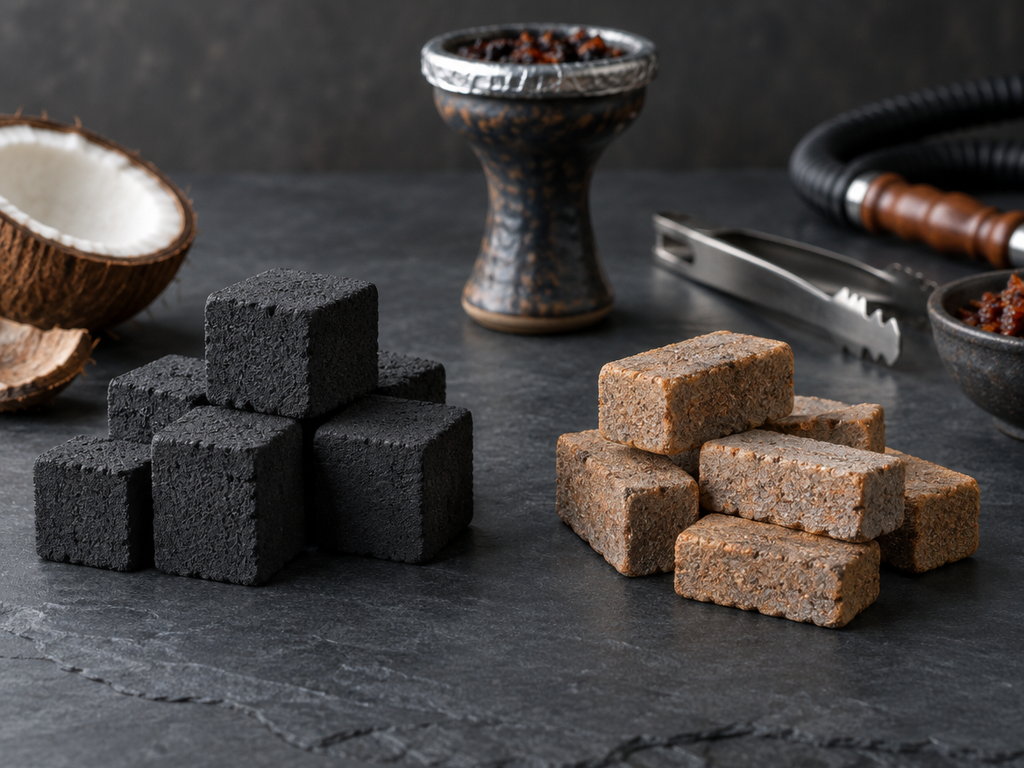
A low carton price does not always mean lower costs once freight, breakage, ignition, and performance are considered. This guide compares coconut shell and fruitwood quick-light charcoal using total cost per usable bowl as the key measure.
Introduction: Why the Cheapest Carton May Cost More per Bowl
Every hookah importer faces the same balancing act. The landed price on a carton looks attractive, but freight rates move, product performance varies from batch to batch, and customers notice when a session runs short or a coal crumbles before it ever reaches the bowl. A low quote per kilogram can quietly turn into a high cost per session once waste, relighting, and complaints are factored in.
That is why charcoal sourcing should be treated as a total-cost problem rather than a simple price-per-kilogram comparison. The number that matters is not what you pay for a container — it is what each usable bowl actually costs you after logistics, handling, breakage, and customer experience are accounted for.
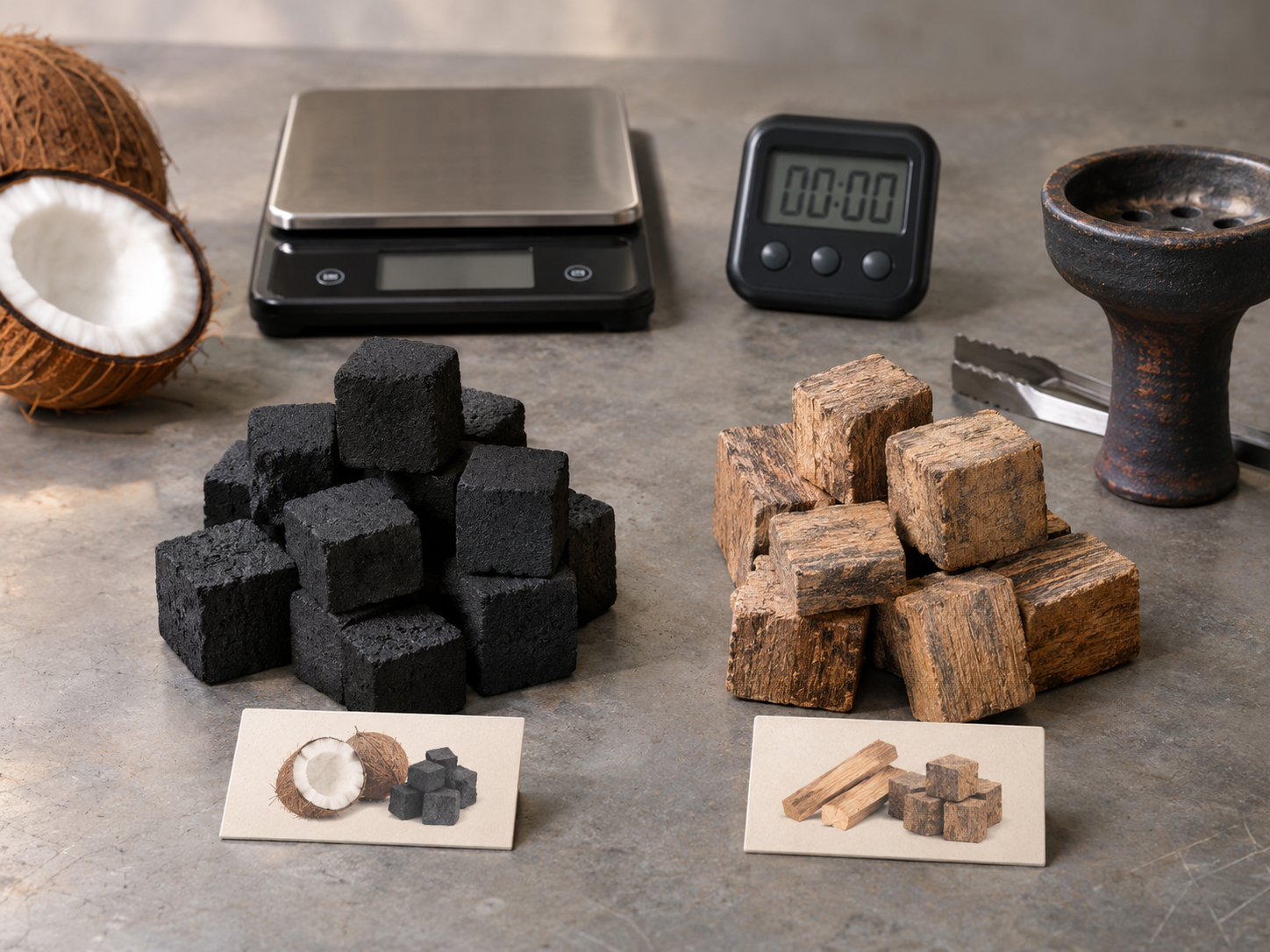
This comparison focuses on two common options for the shisha market: coconut shell charcoal and fruitwood quick light charcoal. Both can serve the same customer, but they behave very differently in the bowl, in the warehouse, and on the balance sheet. Throughout, the key measure is cost per usable bowl.
What Is Being Compared?
Coconut shell charcoal is a natural charcoal option commonly supplied in cubes or other hookah formats. It is typically valued for long, steady heat and low ash, and it usually requires an external heat source such as a burner to ignite fully.
Fruitwood quick-light charcoal is formulated to ignite more readily, often with a built-in accelerant, which makes lighting convenience a central selling point. Many buyers stock it precisely because it shortens setup time and reduces dependence on lighting equipment. A representative example is the 50*50*40mm Block Quick-Burning Charcoal, Fully Burning, Black Fruit Wood AA554-SBQ — a large fruit wood charcoal block designed for BBQ, outdoor cooking, and hookah use, with a very fast 1–3 second ignition and a fully burning profile. Another format worth sampling is the 50mm perforated quick burning fruit charcoal, a perforated quick-light coal intended for hookah, shisha, and aromatherapy burners, carrying a fruit fragrance note.
Specifications vary widely by manufacturer, so compare product samples and documented test results rather than assuming all shisha charcoal performs alike. Two suppliers can quote the same carton weight and still deliver very different bowl yields.
It is also important to distinguish hookah charcoal from products intended for incense charcoal applications, even when a supplier offers both categories. An incense charcoal disc or stick may share raw materials with hookah products but is formulated for a different burn profile and use case. Treat them as separate SKUs with separate test criteria.
Build a Fair Total Cost-per-Bowl Model
A practical formula keeps the comparison honest:
Total landed and usage cost per bowl = (product + logistics + handling + lighting + breakage + waste costs) ÷ bowls served
On the cost side, landed cost should include purchase price, packaging, inland transport, ocean freight, insurance, duties, customs fees, and warehouse handling. On the usage side, account for pieces or grams used per bowl, usable burn time, relighting, unusable fragments, and customer-reported performance.
To compare fairly, run a consistent test batch across both products and track the same variables: weight per piece, bowl count achieved, ignition time, burn duration, and leftover charcoal at the end of the session. When importers record these figures side by side, the gap between a cheap quote and a genuinely economical product usually becomes obvious within a few sessions.
Landed Cost: Compare More Than the FOB Quote
Carton weight, pallet configuration, container loading efficiency, packaging dimensions, and order volume all affect landed cost. A denser, more tightly packed product may cost more per carton but ship more efficiently per container, while bulky packaging can quietly erode margin through wasted cube space.
Always compare quotes using the same Incoterm, product specification, packing format, and destination assumptions. A FOB quote from one supplier and a CIF quote from another are not comparable numbers.
Larger charcoal wholesale orders can improve unit pricing, but they also increase inventory, cash-flow, and storage exposure — particularly for products sensitive to moisture. Balance the discount against the carrying cost and the risk of holding slow-moving stock.
Request a complete quotation from each hookah charcoal supplier, including specifications, packaging details, lead time, and export documentation. A quote that omits documentation or inspection costs is not a landed cost; it is a starting point.
Performance Costs: Burn, Breakage, and Bowl Yield
Compare actual bowl yield rather than relying only on advertised burn time or price per kilogram. What matters is whether each product maintains usable heat for the intended session, and whether users need extra pieces or replacements mid-session. A coal that requires a second piece halfway through effectively doubles your per-bowl consumption.
Record breakage during packing, transit, storage, and handling, since damaged pieces reduce saleable yield before the product ever reaches a customer. Fragile formats may look cost-effective on paper but lose that advantage in the warehouse.
Evaluate ash volume, odor, taste impact, and customer feedback under consistent hookah setup and operating conditions. A quick-light coal with a noticeable accelerant smell may suit one market and fail in another where customers are sensitive to taste. Natural options such as bamboo charcoal cubes are often positioned as a low-odor alternative and deserve a separate trial if your channel values that attribute.
Convenience and Labor: The Value of Quick-Light Ignition
Assess whether quick light charcoal reduces lighting equipment needs, staff time, or setup friction for your target channel. In a high-volume lounge, shaving a minute off each setup across hundreds of bowls per week can translate into meaningful labor savings. In a retail channel where consumers light at home, the same convenience may drive repeat purchase.
Balance that convenience against any differences in unit price, session duration, handling requirements, or consumer preferences. Ignition speed is not a universal advantage — it depends entirely on the customer segment and how the product is used.
For B2B buyers, document the lighting method and measured time in every trial so comparisons between quick light and natural charcoal are repeatable. A stopwatch and a standard protocol are worth more than a supplier's marketing claims.
Worked Comparison: Calculate Your Cost per Bowl
Use the following fill-in template. The figures below are hypothetical and illustrative only — replace them with your own supplier quotes and local operating data.
- Landed cost per carton: input your verified figure
- Net charcoal weight per carton: grams
- Average grams per bowl: grams
- Bowls per carton (before waste): net weight ÷ grams per bowl
- Estimated waste (breakage, fragments, relights): percentage
- Adjusted bowls per carton: bowls before waste × (1 − waste %)
- Base cost per bowl: landed cost per carton ÷ adjusted bowls per carton
Add optional inputs for lighting labor, equipment, breakage, and customer replacements to build a channel-specific total. A lounge with paid staff and a retail channel with self-lighting consumers will produce very different final numbers from the same carton.
Run a sensitivity check for changes in freight, exchange rates, order size, and grams consumed per bowl. If a 10% swing in ocean freight or a small change in grams per bowl flips the decision, the margin is too thin to rely on a single quote.
How to Run a Buyer-Side Product Trial
Request representative samples and confirm that they match the production specification offered for bulk orders. Samples that differ from production are one of the most common sources of disappointment after the first container arrives.
Test multiple batches using the same bowl, heat-management method, session duration, and measurement process. Score ignition, heat consistency, usable duration, breakage, ash, odor, packaging condition, and user satisfaction.
Compare trial results with a shipment-level quality plan, including pre-shipment inspection and a documented process for handling claims. A shisha charcoal manufacturer that welcomes inspection and has a clear claims process is usually a safer long-term partner than one that resists scrutiny.
Supplier Qualification and Customization
Assess a shisha charcoal manufacturer on raw-material sourcing, production controls, batch consistency, capacity, and export experience. Ask a hookah charcoal factory directly about product specifications, quality checks, packaging options, lead times, and traceability.
For private label or OEM programs, clarify branding, carton artwork, minimum order quantities, sample approval, and responsibility for compliance documentation. A private label hookah charcoal manufacturer should be able to show you previous artwork approvals and a clear sample sign-off process before you commit to tooling or print runs.
Use targeted supplier searches where relevant — for example, a fruit wood quick light hookah charcoal manufacturer, a bamboo cube shisha charcoal supplier, or a shisha charcoal exporter with experience in your destination market. Buyers exploring adjacent categories should evaluate bamboo charcoal cubes and incense charcoal separately rather than assuming they meet hookah requirements; an incense charcoal manufacturer for aromatherapy may produce excellent burner products that are simply not formulated for bowl use.
When sourcing quick-light formats, confirm that the specific block or perforated design matches your channel — a large block such as the AA554-SBQ suits buyers who want a long, stable burn, while perforated formats appeal to customers who prioritize fast, even ignition.
Import and Market Considerations
Check destination-market requirements for labeling, packaging, product claims, safety documentation, and import classification with qualified local advisers. Requirements differ by country and can change, so build compliance review into your sourcing calendar rather than treating it as a one-time task.
Plan for seasonal demand, production lead times, port congestion, and buffer stock when setting reorder points. Charcoal demand often spikes around holidays and outdoor seasons, and a supplier's quoted lead time is not a guarantee during peak periods.
Compare a bulk hookah charcoal supplier or B2B hookah charcoal supplier on reliability and service as well as price. Responsiveness during a quality issue is often worth more than a small per-unit saving. Treat market forecasts or supplier-reported performance figures as directional unless their methodology and source can be verified.
Decision Framework: Which Option Fits Your Channel?
Favor the option with the lower verified cost per bowl when product performance and customer acceptance meet the channel's requirements. That single principle resolves most sourcing debates.
- Consider quick-light fruitwood where ignition convenience is important and trial results support the economics.
- Consider coconut shell charcoal where its tested session performance, customer preference, and landed economics fit the product positioning.
- Use a weighted scorecard covering landed cost, bowl yield, convenience, consistency, compliance, supplier reliability, and brand fit.
Score each supplier against the same criteria and weight them according to your channel. A lounge operator and a retail distributor will weight convenience and consistency very differently, and the scorecard should reflect that.
Conclusion: Buy on Verified Bowl Economics
The meaningful comparison is not simply coconut versus fruitwood. It is the cost and value of each usable bowl delivered to the customer — after freight, breakage, lighting labor, and real session performance are all counted.
Validate supplier claims through samples, repeatable tests, transparent quotes, and production-batch controls. When the numbers are built on verified data rather than catalog claims, the right sourcing decision usually makes itself.
Importers ready to move from estimate to evidence should request a like-for-like quotation from a qualified hookah charcoal manufacturer for importers, including landed-cost inputs, packaging specifications, and any private-label requirements. A side-by-side trial of quick-light and natural formats, measured with the same protocol, is the fastest route to a defensible cost per bowl.
Related Articles
Coconut Shell vs. Fruitwood Quick-Light Charcoal: A 2026 Guide for Hookah Importers
This guide compares coconut-shell and fruitwood quick-light charcoal, focusing on the sourcing, product, and supply factors importers should verify. It offers a practical framework for evaluating samples and suppliers without assuming one feedstock is universally better.
How to Choose Charcoal by Material, Format, and Specifications
Labels such as “natural” don’t guarantee consistent performance or suitability for a particular use. This guide compares coconut shell, bamboo, and fruit wood charcoal, highlighting the specifications buyers should verify before choosing.