
A 7-Step Checklist for Sourcing Charcoal as an Importer


A practical checklist for comparing charcoal suppliers beyond unit price, from defining end use and product specifications to assessing composition, performance, safety, and landed cost. It highlights why shisha, incense, and other charcoal applications require distinct requirements and evidence-based evaluation.
Introduction: A sourcing decision that affects more than price
For importers, choosing a charcoal supplier is rarely as simple as comparing quotes. A low unit price can conceal inconsistent burn performance, loosely defined specifications, shipping and moisture risks, or thin safety documentation that creates problems long after the container has cleared customs. The cheapest pallet is not a bargain if half of it crumbles in transit or if the product behaves differently from the approved sample.
Buyers also arrive at this decision from different directions. Some are sourcing shisha charcoal for retail resale to lounges and consumers; others need incense charcoal for aromatherapy burners; still others are building a private-label line. These applications do not always share the same requirements, and a product that performs well in one context may be poorly suited to another.
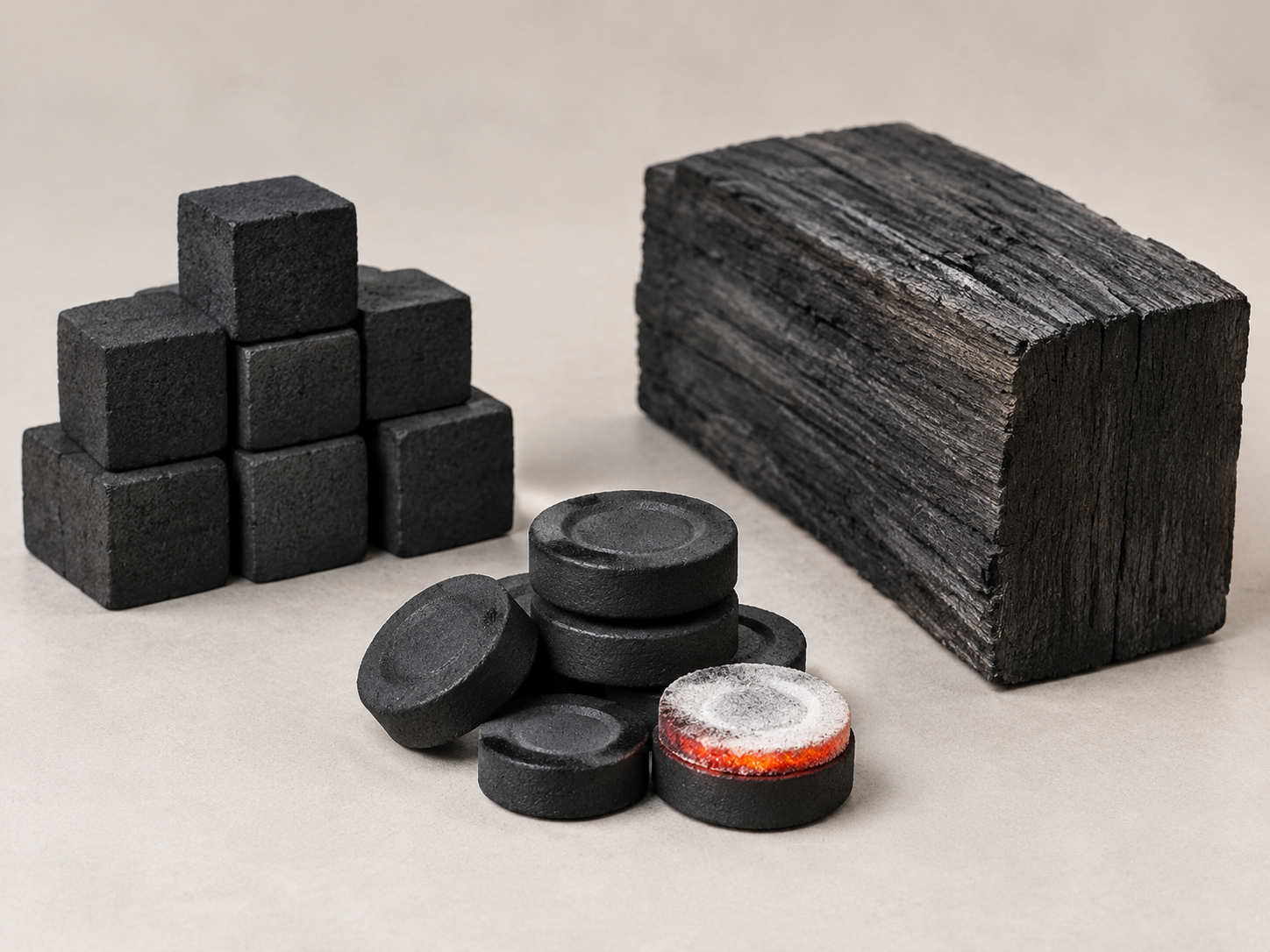
This seven-step checklist is designed to help importers evaluate quick light charcoal alongside coconut shell, fruit wood charcoal, and bamboo charcoal options on a consistent, evidence-based footing. It covers product definition, composition, burn data, factory controls, compliance, landed cost, and first-order validation.
One safety point deserves emphasis up front. Charcoal combustion can produce carbon monoxide, and this applies to every feedstock category discussed here. Buyers should consult authoritative safety guidance in their destination market and require clear handling, storage, and ventilation instructions on labels and in product literature. Suppliers should be asked to provide accurate use information rather than unsupported assurances that a product is "risk-free" indoors.
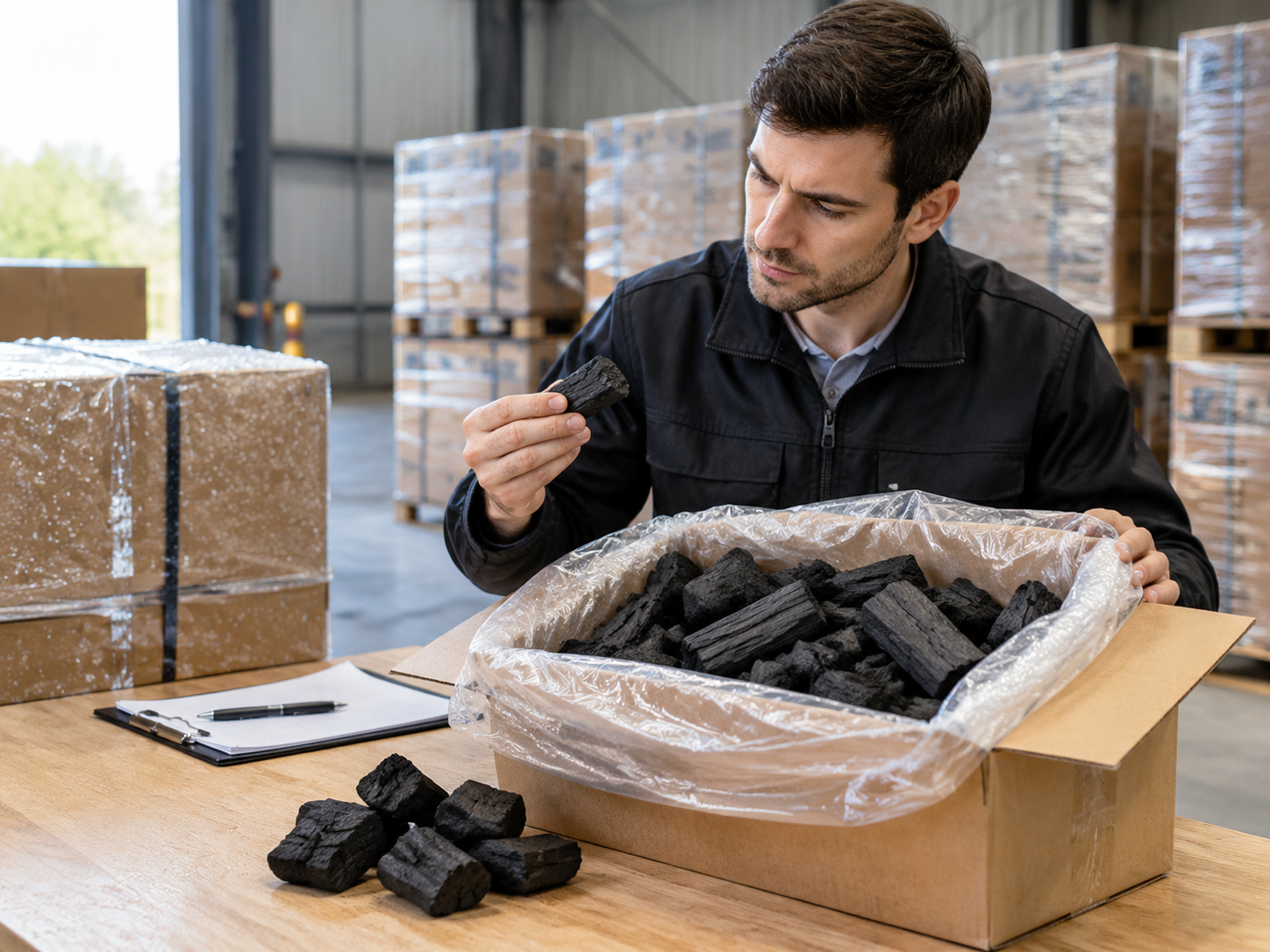
Step 1: Define the product and end-use before requesting quotes
Before a single quote is requested, specify whether the product is intended for hookah charcoal, incense charcoal, or another application entirely. Do not assume products are interchangeable. A format optimized for a shisha bowl is not automatically appropriate for a resin burner, and vice versa.
For shisha charcoal, identify the preferred format—cubes, flats, or quick-light discs—and the intended heating setup. Define target dimensions, weight, ash tolerance, burn duration, heat output, ignition method, and packaging format. These parameters become the basis for comparing suppliers fairly.
- Target dimensions and dimensional tolerances
- Unit weight and pieces per box or carton
- Acceptable ash volume and ash behavior
- Required burn duration and heat consistency
- Ignition method and expected ignition time
- Packaging format, including moisture protection
Clarify whether fruit wood quick-light products are being evaluated for hookah use, incense use, or both, and request application-specific specifications for each. A large-format block product illustrates why this matters: the 50*50*40mm Block Quick-Burning Charcoal, Fully Burning, Black Fruit Wood AA554-SBQ is a substantial fruit wood block positioned for BBQ, outdoor cooking, and hookah use, with a stated 1–3 second ignition. Its size and heat profile suit applications that want a long, steady burn from a single piece, which is a different requirement from a small disc designed for a quick aromatherapy session. Defining the end-use first tells you which of those profiles you actually need.
Step 2: Compare feedstock, formulation, and product claims
Ask every candidate supplier for the declared feedstock and composition for coconut shell, fruitwood quick-light, and bamboo products. Feedstock is not a marketing detail—it drives density, ash character, odor, and burn behavior, and it should be documented rather than inferred from the product name.
For quick light charcoal, request details about the ignition aid and supporting product documentation. The ignition aid is what makes the product light quickly, and buyers should understand what it is rather than relying on the label alone. Ask how it is applied, at what loading, and whether the supplier can provide consistent batch documentation.
Claims such as "natural," "low-odor," or "low-ash" should be defined and supported by test results or measurable specifications. A claim without a number behind it is difficult to verify and harder still to defend to your own customers.
Confirm that bamboo charcoal cubes for shisha and fruit wood charcoal for hookah are explicitly designed and documented for the stated use. A product described generically as "charcoal" may have been formulated for a different application, and the specification sheet should say plainly what the product is intended to do.
Step 3: Request comparable burn and quality data
Ask each shisha charcoal manufacturer or hookah charcoal supplier for a written specification sheet and representative test results. The goal is comparability: every candidate should be assessed against the same criteria, under the same conditions, so that differences reflect the product rather than the test method.
Compare ignition time, usable burn time, heat consistency, ash amount, breakage rate, odor, and batch-to-batch variation. Where a supplier reports its own figures, ask how the test was conducted—equipment, sample size, ambient conditions, and whether the result reflects a single batch or an average.
- Ignition time to usable heat
- Usable burn duration under a defined setup
- Heat consistency across the burn
- Ash volume and ash structure
- Breakage rate in handling and transit
- Odor during ignition and during the burn
- Batch-to-batch variation across production runs
Request samples from more than one production batch before treating a result as representative. A single good sample proves that the factory can produce a good batch; it does not prove that it can do so repeatedly. Evaluate fruit wood charcoal cubes supplier samples and bamboo cube shisha charcoal supplier samples against the same agreed criteria, using the same scorecard, so that the comparison holds up when you present it internally.
Perforated formats are worth testing specifically, because perforation changes airflow and burn behavior. The 50mm perforated quick burning charcoal fruit charcoal is a 50 mm perforated quick-light product intended for hookah, shisha, and aromatherapy burners, with a fruit fragrance profile. Because it straddles more than one use case, it is a good example of a product that should be tested separately for each application you intend to sell it into.
Step 4: Verify factory capability, traceability, and quality controls
Establish whether the supplier manufactures the product directly or sources it from another facility, and identify where production actually takes place. Trading companies are not inherently a problem, but you should know which entity controls the process and who is accountable when a batch fails.
Ask about raw-material traceability, incoming inspections, production controls, finished-goods checks, and how complaints or failed batches are handled. A supplier that can describe its corrective-action process in concrete terms is usually a safer long-term partner than one that answers these questions vaguely.
For a hookah charcoal factory or shisha charcoal factory in China, verify the facility, production capacity, and documentation through appropriate due diligence—site information, business records, audit reports where available, and references. Confirm that a hookah charcoal manufacturer for importers can maintain agreed specifications across repeat orders, not only during sample production. Consistency at scale is the capability that matters most to an importer, and it is the one most often taken on trust.
Step 5: Assess compliance, packaging, and safe-use communication
Ask which product tests, declarations, and transport documents are available for the destination market and intended product category. Requirements vary by market and by product type, so the question should be framed specifically rather than as a general request for "certificates."
Review labels and instructions for accurate material, use, storage, and ventilation information. Do not imply that charcoal is risk-free indoors, and do not accept supplier artwork that does. Clear, accurate handling and ventilation instructions protect your customers and your brand.
Request packaging details, including moisture protection, carton strength, pallet configuration, and retail-label options. Charcoal is moisture-sensitive and prone to breakage, so packaging is a quality-control issue as much as a presentation one.
For incense charcoal manufacturer for aromatherapy inquiries, confirm that the product and its claims are appropriate for incense use rather than assuming hookah specifications apply. The burn profile, format, and labeling expectations can differ substantially between the two categories.
Step 6: Calculate landed cost and supply reliability
Compare charcoal wholesale quotes on a like-for-like basis, including product specification, packaging, minimum order quantity, and shipping terms. A quote that excludes packaging upgrades or assumes a different Incoterm is not comparable to one that includes them.
Estimate landed cost by accounting for freight, duties, handling, inspection, breakage, and any market-specific compliance expenses. Breakage deserves particular attention: a fragile product with a high in-transit loss rate can erase an attractive unit price very quickly.
- Freight and insurance
- Duties, taxes, and customs handling
- Inspection and testing costs
- Expected breakage and shrinkage
- Market-specific compliance and labeling expenses
- Warehousing and onward distribution
Confirm production lead times, monthly capacity, peak-season planning, payment terms, and contingency arrangements. Then evaluate a bulk hookah charcoal supplier or shisha charcoal exporter on delivery consistency and communication as well as unit price. A supplier who answers questions promptly before the order is usually the same one who answers them after.
Step 7: Approve samples, negotiate terms, and monitor the first order
Create a sample scorecard and have relevant team members assess ignition, burn behavior, ash, odor, packaging, and handling. Involving more than one reviewer reduces the risk of a single enthusiastic opinion driving a large commitment.
Document approved specifications, tolerances, inspection methods, defect remedies, and change-control requirements in the purchase agreement. Change control matters: without it, a supplier may substitute a raw material or adjust a formulation between orders without notifying you.
For private label hookah charcoal manufacturer or hookah charcoal OEM manufacturer arrangements, confirm artwork, packaging ownership, exclusivity scope, and approval steps. These details are far easier to settle before production than after the first print run.
Use a pilot order where practical, then review inspection results, customer feedback, and delivery performance before increasing order volume. The pilot is your last low-cost opportunity to discover a problem.
Supplier questions and red flags
Ask a B2B hookah charcoal supplier for current specifications, sample-batch traceability, production location, and a realistic capacity and lead-time commitment. For a custom hookah charcoal supplier, confirm which product attributes can be changed and which changes require new testing or a revised minimum order.
Treat the following as reasons for further review rather than immediate rejection—but do review them:
- Unsupported performance or safety claims
- Inconsistent results across samples from different batches
- Vague or evasive answers about factory location and ownership
- Reluctance to provide written specifications
- Quotes that cannot be compared because terms are undefined
Use searches such as fruit wood quick light hookah charcoal manufacturer, quick light hookah charcoal factory, and bamboo shisha charcoal wholesale to build a shortlist, then verify each candidate independently. Search results are a starting point, not a qualification.
Conclusion: Make the decision on evidence, not material labels alone
The seven checks are straightforward: define the end-use, verify composition, request comparable burn data, confirm factory controls, assess compliance and packaging, calculate landed cost, and validate the relationship with a monitored first order. Each step produces a document or a data point you can act on.
Coconut shell, fruitwood quick-light, and bamboo options should be compared against the same buyer-defined requirements. No feedstock is automatically the right answer; the right answer is the product that meets your specification consistently, at a landed cost that works, with documentation you can stand behind.
Importers are encouraged to request samples and written specifications before selecting a long-term supplier or placing a large order. Related sourcing needs—such as fruit wood incense charcoal wholesale or bamboo charcoal cubes for shisha wholesale—should be pursued only after confirming the intended use and the applicable requirements for that category.
Related Articles
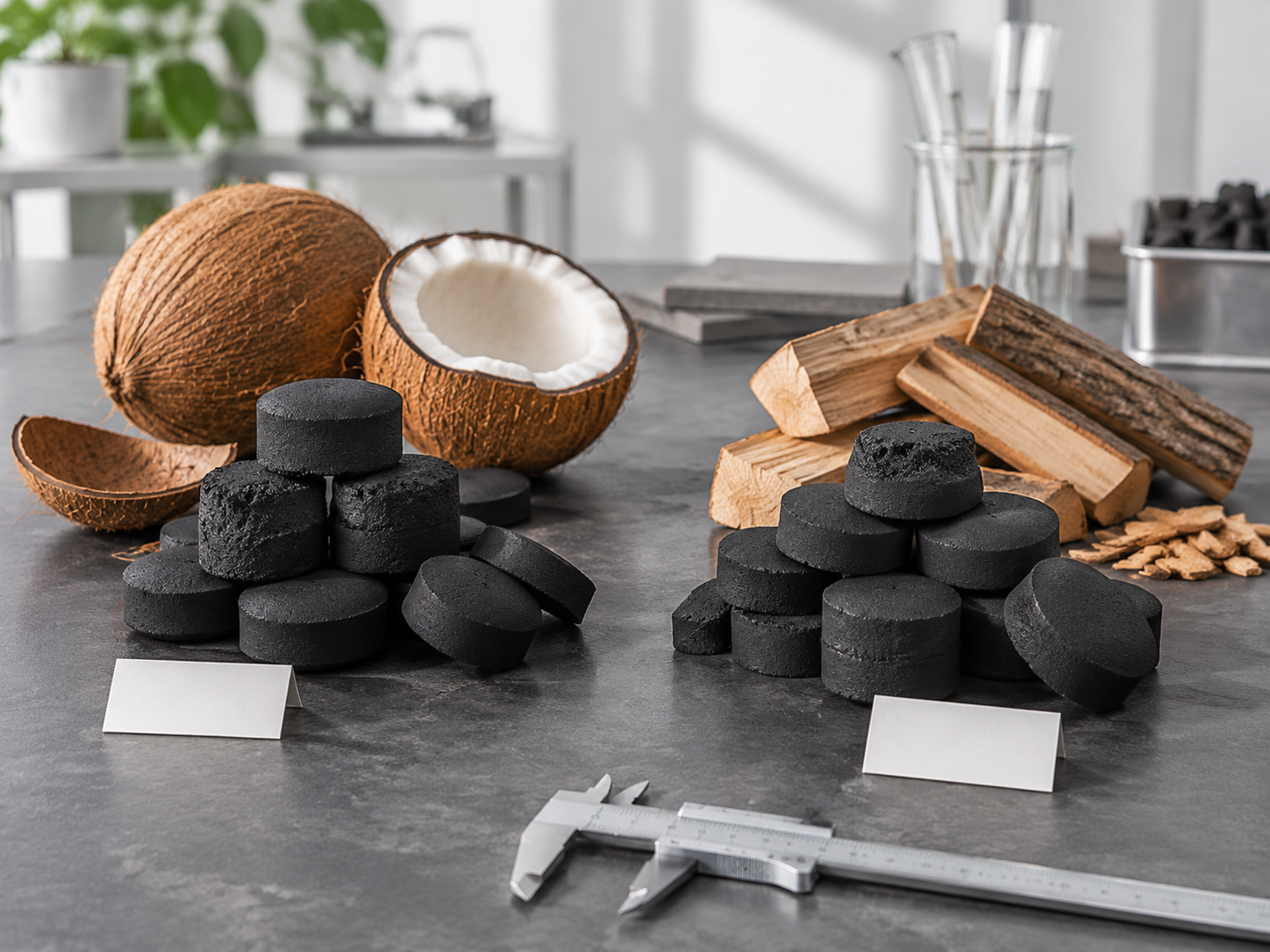
Coconut Shell vs. Fruitwood Quick-Light Charcoal: A 2026 Guide for Hookah Importers
This guide compares coconut-shell and fruitwood quick-light charcoal, focusing on the sourcing, product, and supply factors importers should verify. It offers a practical framework for evaluating samples and suppliers without assuming one feedstock is universally better.
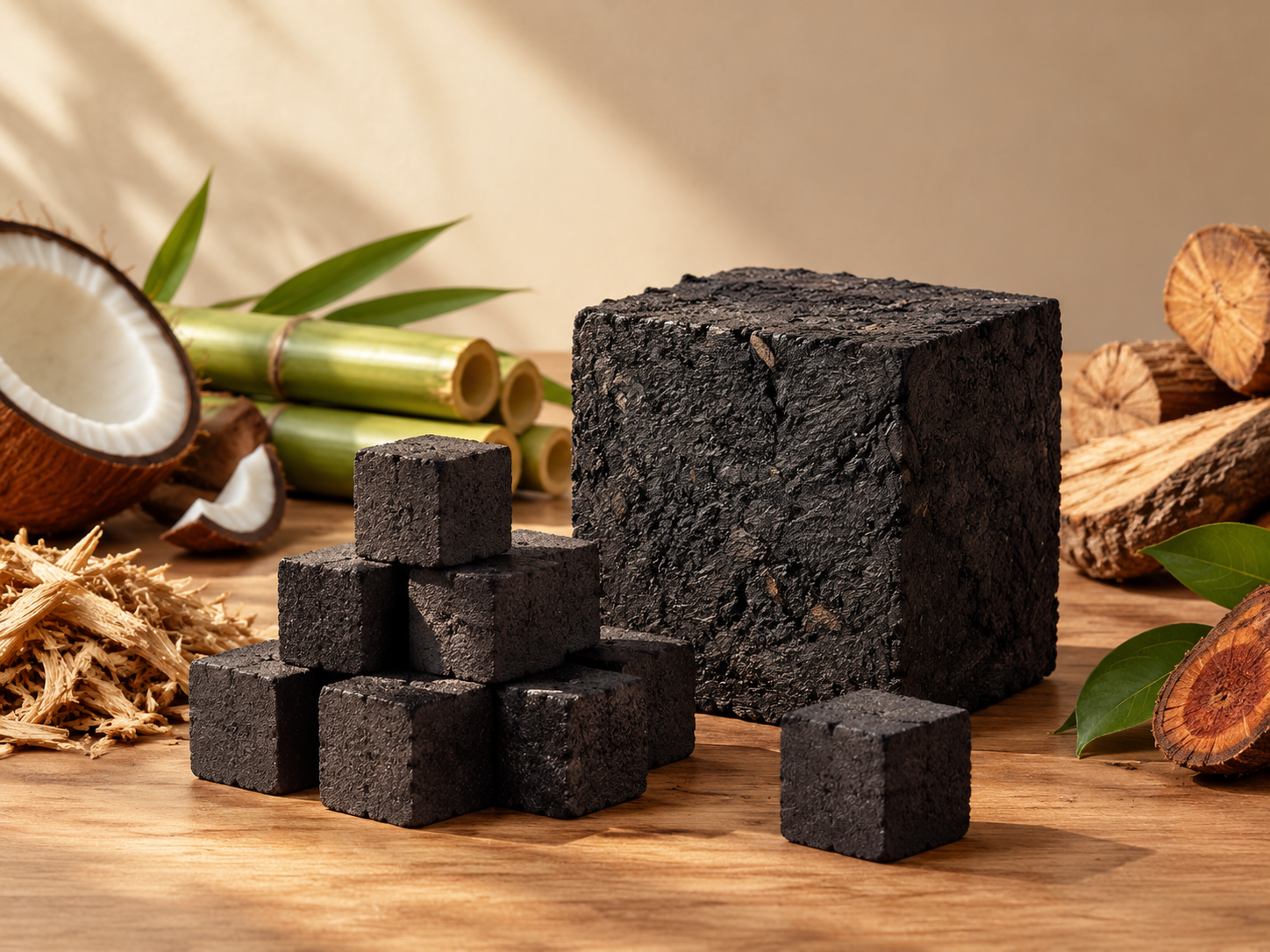
How to Choose Charcoal by Material, Format, and Specifications
Labels such as “natural” don’t guarantee consistent performance or suitability for a particular use. This guide compares coconut shell, bamboo, and fruit wood charcoal, highlighting the specifications buyers should verify before choosing.