
The Coconut Charcoal Myth: Choosing Hookah Charcoal for Market Fit

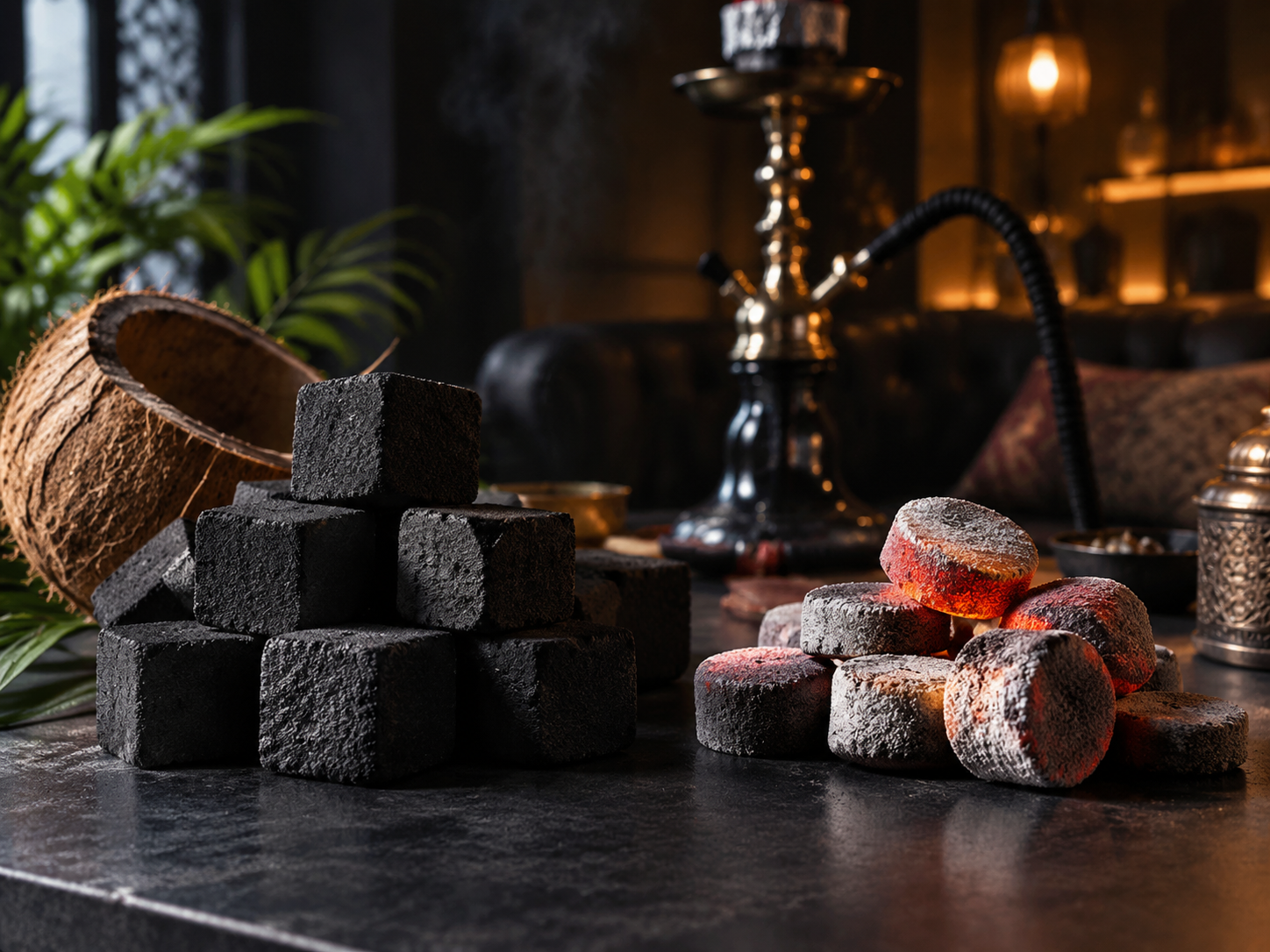
Coconut shell charcoal can deliver excellent performance, but a premium price or raw material label does not guarantee quality or profit. B2B buyers should match charcoal specifications, turnover, and customer needs to their market rather than defaulting to the most heavily marketed option.
Introduction: The “Premium Coconut” Assumption in the Hookah Market
Walk through almost any trade show, browse any hookah supplier catalog, or read any lounge owner’s forum thread, and you will encounter the same assumption: coconut shell charcoal is the premium choice, and premium is always better. For years, coconut shell charcoal has been positioned as the default upgrade for hookah lounges, distributors, and retailers who want to signal quality to their customers.
But here is the problem for a B2B buyer: the best shisha charcoal is not automatically the most expensive or the most heavily marketed product. A charcoal that commands a premium price in one market may sit unsold on a warehouse shelf in another. The right charcoal decision depends on customer segment, session style, local regulations, price sensitivity, logistics, and product positioning — not on a single raw material’s reputation.
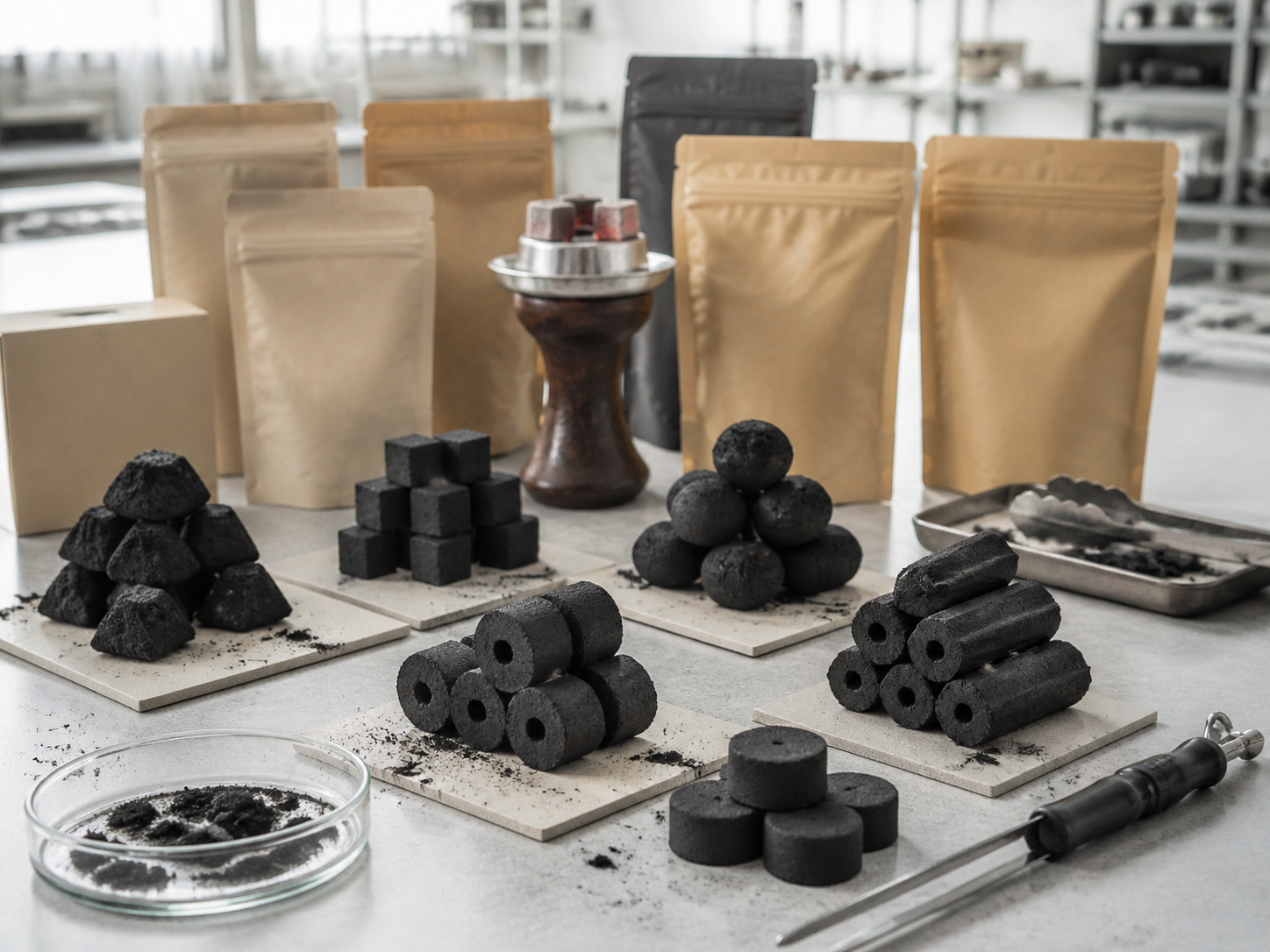
This article examines the coconut shell charcoal myth directly and explains why a diversified, market-fit sourcing strategy usually beats a one-size-fits-all premium approach.
Why Coconut Shell Charcoal Earned Its Premium Reputation
To be fair, coconut shell charcoal earned its reputation for real reasons. Well-manufactured coconut shell briquettes can offer long burn times, low odor, a dense ash structure, and a clean smoking experience. For upscale lounges and experienced shisha consumers, premium-grade coconut hookah charcoal can be genuinely attractive — it holds heat steadily, produces minimal ash mess, and supports long, unhurried sessions.
However, raw material origin alone does not guarantee quality. Two coconut shell charcoals can perform completely differently depending on carbonization temperature, binder ratios, drying time, pressing pressure, packaging, and quality control discipline. A reliable shisha charcoal manufacturer should be able to provide burn-time, ash-content, moisture, odor, breakage, and ignition-performance specifications — not just the words “100% coconut shell” on a box.
The lesson for buyers is simple: you are not buying a raw material, you are buying a manufacturing process. Coconut shell is the input; consistency is the product.
The Myth: Higher-Priced Coconut Charcoal Always Produces Higher Profit
The core myth is not that coconut charcoal is bad — it is that higher-priced coconut charcoal automatically produces higher profit. In practice, the opposite often happens.
- A higher unit cost reduces distributor and retailer margins, especially in price-driven markets where customers compare charcoal by the carton, not by the briquette.
- Premium coconut products may move more slowly if end customers prioritize affordability, easy lighting, or familiar local formats.
- Inventory tied up in slow-selling charcoal can cost more — in warehousing, tied-up capital, and missed reorder cycles — than choosing a well-matched alternative with faster turnover.
- Charcoal wholesale buyers should evaluate gross margin, reorder frequency, damage rate, freight costs, and customer retention — not only purchase price.
A charcoal that sells out every month at a modest margin frequently outperforms a “premium” product that sits for two quarters. Profit is a function of turnover and fit, not of price tag prestige.
When Quick Light Charcoal Is the Better Commercial Choice
Quick light charcoal is often dismissed by enthusiasts, but for many markets it is the commercially superior option. It is the practical choice for convenience-focused consumers, travel use, outdoor settings, and markets where electric burners are less common. Fast ignition reduces friction for first-time hookah users and customers who want an immediate session without waiting on a coil burner.
A quick light charcoal supplier should clearly document lighting behavior, burn duration, odor, spark level, safety guidance, and packaging compliance. Quick light charcoal should not be compared to natural charcoal only on burn time — it should be assessed against its intended use case: convenience. Judged on that standard, a well-made quick-light product can be exactly what a value-oriented market needs.
For importers, sourcing from a dedicated quick light hookah charcoal factory can support localized packaging, tablet sizes, carton counts, and private-label branding. A good example of this category is the 50mm perforated quick burning charcoal fruit charcoal — a 50 mm perforated quick-light hookah charcoal designed for hookah, shisha, and aromatherapy burners, with a fruit-based formulation that supports fast, even ignition. Its perforated design helps airflow during lighting, which shortens wait time for customers who value speed above all else.
For buyers who want an even larger format, the 50*50*40mm Block Quick-Burning Charcoal, Fully Burning, Black Fruit Wood AA554-SBQ is a large fruit wood charcoal block built for BBQ, outdoor cooking, and hookah use, with 1–3 second ignition and full burning characteristics. Its block shape suits buyers serving outdoor and hospitality channels where a single, long-lasting piece is more convenient than multiple small cubes.
Bamboo Charcoal: A Strong Alternative for Cost, Supply, and Positioning
Bamboo charcoal deserves far more attention than it typically receives in B2B sourcing conversations. It can provide a compelling balance of heat performance, sustainability messaging, availability, and competitive cost — a combination that is difficult to match with coconut shell alone.
Bamboo cube shisha charcoal supplier options may be especially relevant for buyers seeking natural charcoal formats beyond coconut shell. Bamboo charcoal cubes for shisha wholesale programs can be positioned for lounges and retailers that want consistent cube shapes and a differentiated material story — bamboo regenerates quickly, which supports a credible sustainability narrative in markets where eco-positioning drives purchasing.
Buyers should test bamboo charcoal for heat stability, odor, ash behavior, breakage resistance, and compatibility with different bowl and heat-management setups. When coconut raw-material pricing or availability becomes volatile, bamboo shisha charcoal wholesale may be a practical diversification strategy that protects both margin and supply continuity.
Fruit Wood Charcoal: The Underrated Fit for Specific Customers
Fruit wood charcoal is one of the most underrated categories in the hookah supply chain. It can be suitable for buyers seeking natural-origin products with different heat profiles, local sourcing opportunities, or traditional market appeal.
Fruit wood charcoal for hookah supplier programs can serve niche retailers, regional hookah brands, and customers who value wood-based alternatives to coconut or bamboo. Fruit wood charcoal cubes supplier options should be evaluated for density consistency, smoke neutrality, moisture control, and shipping durability — wood-based charcoals vary more between batches than many buyers expect, so supplier discipline matters.
Fruit wood quick light hookah charcoal manufacturer capabilities may suit buyers who want a convenience product with a differentiated raw-material story — combining fast ignition with a wood-origin narrative that stands out on a crowded shelf. Beyond hookah, fruit wood incense charcoal wholesale can also create cross-selling opportunities for distributors serving aromatherapy, religious, and home-fragrance markets, allowing one supplier relationship to cover multiple product lines.
Don’t Confuse Hookah Charcoal With Incense Charcoal
One of the most common and costly sourcing mistakes is treating hookah charcoal and incense charcoal as interchangeable. They are not. They have different performance requirements, safety expectations, shapes, and end-user applications.
Incense charcoal is often designed for burning resins, powders, herbs, or aromatherapy materials rather than heating shisha tobacco. An incense charcoal manufacturer for aromatherapy should be selected based on ignition profile, odor neutrality, ash control, and compatibility with incense use — not on burn time for a tobacco bowl.
Distributors should maintain distinct product specifications and labeling for shisha charcoal and incense charcoal to avoid customer confusion and product misuse. Mixing the two in a catalog without clear differentiation invites complaints, returns, and in the worst cases, safety incidents.
How to Choose the Right Charcoal Mix for Your Market
Rather than chasing a single “best” charcoal, build a portfolio segmented by customer need: premium natural cubes, value natural cubes, quick light charcoal, lounge-grade products, and incense charcoal.
- Use coconut shell charcoal where customers genuinely value long sessions, low odor, and premium positioning.
- Use bamboo charcoal when you need supply flexibility, competitive pricing, or a sustainability-oriented alternative.
- Use fruit wood charcoal when traditional positioning, regional preferences, or specialized wholesale demand supports the product.
- Use quick light charcoal where convenience, speed, and accessibility drive purchasing decisions.
- Test multiple samples under realistic conditions — real bowls, real customers, real lighting setups — before committing to bulk hookah charcoal supplier contracts.
A balanced portfolio does more than protect margins. It protects your business from raw-material price swings, shipping disruptions, and shifting consumer preferences.
What Importers Should Ask a Hookah Charcoal Supplier
Vague claims of “premium quality” are worthless in a sourcing negotiation. Specific, verifiable data is what protects your business.
- Request technical specifications covering fixed carbon, ash content, moisture, volatile matter, burn time, ignition time, dimensions, weight tolerance, and compression strength.
- Ask for batch consistency procedures, pre-shipment inspection records, packaging drop-test results, and third-party test reports when available.
- Confirm whether the supplier can support OEM cartons, multilingual labels, barcode placement, retail display packs, and compliance documentation.
A capable hookah charcoal OEM manufacturer should be able to align charcoal size, shape, packaging, branding, and order quantities with your specific sales channel. Private label hookah charcoal manufacturer programs are most valuable when they include quality consistency, artwork support, repeatable specifications, and protected brand presentation — not just a logo stamped on a generic carton.
For international buyers, verify export experience with a shisha charcoal exporter and confirm port options, lead times, container loading plans, and required documentation. When evaluating a shisha charcoal factory in China or another established production region, validate production controls, export capability, sample quality, and communication reliability before placing a large order. A responsive custom hookah charcoal supplier that answers technical questions clearly is usually a safer long-term partner than one that only quotes the lowest price.
Building a More Profitable Charcoal Sourcing Strategy
Avoid relying on one raw material or one product tier. A balanced portfolio — coconut, bamboo, fruit wood, and quick light — can protect your business from supply shocks and changing customer preferences.
Work with a B2B hookah charcoal supplier that offers transparent specifications rather than vague marketing language. A hookah charcoal manufacturer for importers should help buyers compare coconut, bamboo, fruit wood, and quick-light options based on commercial goals: target margin, turnover speed, customer segment, and logistics constraints.
The best charcoal wholesale strategy is not to sell the most expensive briquette. It is to sell the right product, at the right margin, to the right customer segment — consistently, season after season.
Conclusion: Premium Means Fit, Not Just Material
Coconut shell charcoal remains a strong option, but it is not automatically the best choice for every hookah business. Quick light charcoal, bamboo charcoal, fruit wood charcoal, and incense charcoal can each serve profitable and legitimate market needs — often better than a premium coconut product that does not match local demand.
Successful buyers choose charcoal based on performance, positioning, landed cost, customer expectations, and supplier reliability. The strongest hookah charcoal supplier relationship is built on transparent quality standards, market-specific product development, and dependable long-term supply. Premium, in the end, means fit — not just material.
Related Articles
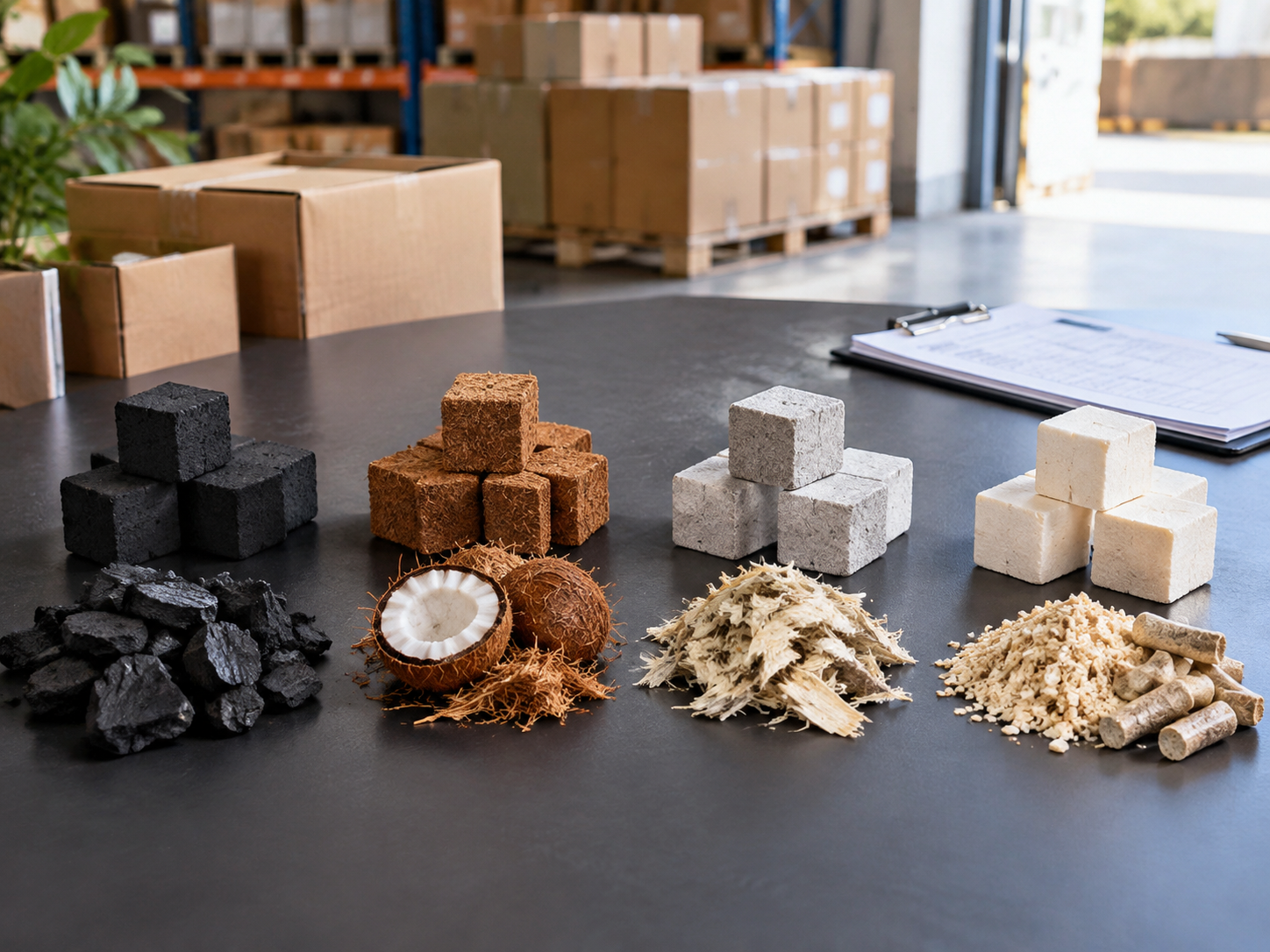
2025 Hookah Charcoal Market Outlook: Why Importers Are Diversifying Beyond Coconut Shell Charcoal
Importers are reassessing hookah charcoal sourcing as supply disruptions, changing logistics costs, product consistency, and demand for variety make single-source strategies riskier. The article outlines a practical approach to comparing coconut shell charcoal with alternatives such as bamboo, fruit wood, and quick-light products, emphasizing documented specifications, supply reliability, compliance, and safe handling.

How to Evaluate Alternatives to Coconut Shell Charcoal: A 7-Step Importer Checklist
Switching charcoal feedstocks can affect heat, ash, odor, breakage, delivery reliability, and brand reputation—not just purchase price. This checklist helps importers define product requirements and compare shisha, quick-light, and alternative charcoal under consistent conditions, while keeping incense charcoal specifications separate.