
2025 Hookah Charcoal Market Outlook: Why Importers Are Diversifying Beyond Coconut Shell Charcoal

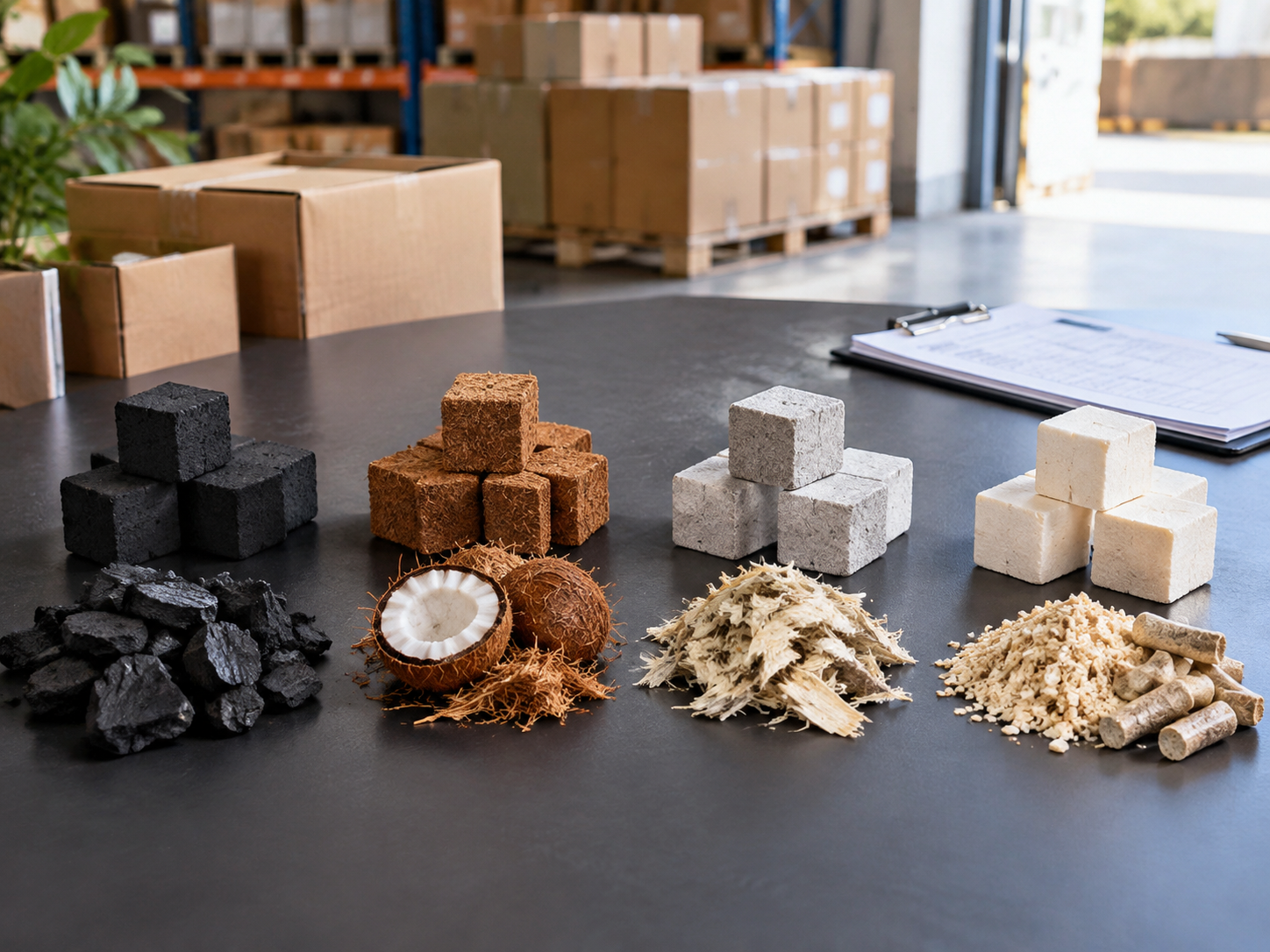
Importers are reassessing hookah charcoal sourcing as supply disruptions, changing logistics costs, product consistency, and demand for variety make single-source strategies riskier. The article outlines a practical approach to comparing coconut shell charcoal with alternatives such as bamboo, fruit wood, and quick-light products, emphasizing documented specifications, supply reliability, compliance, and safe handling.
2025 Hookah Charcoal Market Outlook: Why Importers Are Diversifying Beyond Coconut Shell Charcoal
Introduction: Importers Face More Than a Sourcing Decision
Ask any seasoned importer what keeps them up at night, and the answers rarely change: availability that swings without warning, burn performance that varies from batch to batch, landed costs that creep upward with every freight cycle, and customers who want more choices on the shelf than the same cube in a different box. In 2025, sourcing shisha charcoal is no longer a simple matter of picking a supplier and repeating last year's order. It is a portfolio decision.
There is also a responsibility dimension that serious buyers cannot ignore. Charcoal products involve open flame, heat, and smoke, and every market expects clear handling guidance. Product selection should always account for the intended use of the charcoal — hookah, barbecue, or aromatherapy — and should be paired with accurate lighting, ventilation, handling, and disposal instructions. Importers who treat safety documentation as an afterthought often discover that retailers and regulators treat it as a priority.
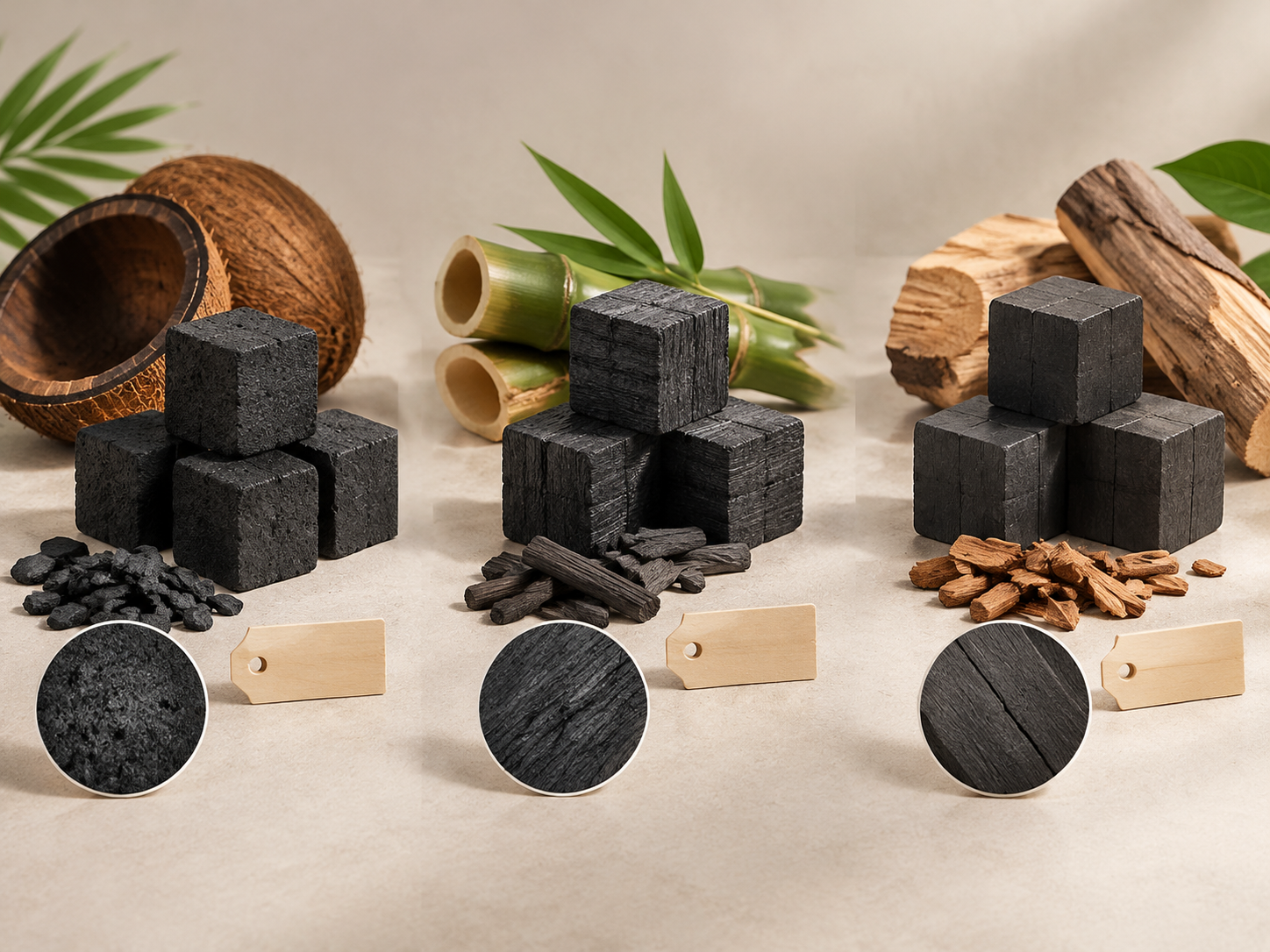
This article is written for importers who want to evaluate alternatives to coconut shell charcoal without sacrificing quality, compliance, or supply reliability. We will look at what is shaping the market, why diversification is gaining momentum, and how to compare quick light charcoal, natural options, and emerging material categories using evidence rather than assumptions.
The 2025 Market Outlook for Shisha Charcoal
The forces shaping importer decisions this year are practical rather than speculative. Supply resilience tops the list. Buyers who once relied on a single raw material and a single production route have learned that a drought, a shipping disruption, or a factory shutdown can ripple through an entire season of sales. Dependable specifications come next: retailers want cubes that look and perform the same in January and July. Logistics remain a constant pressure, with freight rates, container availability, and port congestion continuing to influence total cost. Finally, differentiation matters more than ever, because consumers increasingly ask for products that feel distinct rather than interchangeable.
Diversifying sourcing and charcoal types is one of the most effective ways to reduce reliance on a single raw material or production route. When a buyer qualifies more than one material — say, coconut shell alongside bamboo charcoal or fruit wood charcoal — a disruption in one channel does not automatically become a stockout in another. This is not about abandoning proven products. It is about building optionality into a supply chain that has repeatedly demonstrated how quickly conditions can change.
Industry research and importer sourcing frameworks consistently point in the same direction: structured evaluation, documented specifications, and multi-source qualification outperform reactive purchasing. We deliberately avoid quoting market-size or growth projections here, because unsupported figures help no one. What matters for your business is whether a given charcoal type meets your customers' expectations, your compliance obligations, and your margin targets — and whether your supplier can repeat that performance at scale.
Why Importers Are Looking Beyond Coconut Shell Charcoal
Coconut shell charcoal earned its reputation honestly. It burns hot, produces relatively low ash, and has become the default expectation in many hookah markets. But "default" is not the same as "only option," and a growing number of importers are exploring alternatives such as bamboo charcoal and fruit wood charcoal. The important caveat: performance depends heavily on raw material, production method, and quality control. Two products made from the same material can behave very differently if one is pressed at low density and the other is produced with tight process discipline.
Buyers evaluating alternatives typically compare a consistent set of variables:
- Burn time — how long a cube or block stays usable under real-world conditions.
- Ash behavior — volume, color, and how easily ash is managed during a session.
- Odor — whether the charcoal contributes any scent that could interfere with the shisha flavor.
- Ignition profile — how quickly and evenly the product lights, and whether it requires a torch or responds to a flame.
- Cube consistency — dimensional uniformity, which affects stacking, heat management, and packaging efficiency.
- Packaging — roll counts, inner and outer carton configuration, and shelf appeal.
- Market suitability — whether the product fits the expectations of a specific region, retail channel, or consumer segment.
The practical recommendation is straightforward: run trial orders and comparative testing rather than assuming one charcoal type is universally superior. A product that performs beautifully in one market may underwhelm in another simply because customer habits differ. Test, measure, and let your own data decide.
Quick Light Charcoal: Convenience, Trade-Offs, and Buyer Checks
Quick light charcoal appeals to a distinct and sizable consumer segment: people who value speed and convenience. These products are engineered to ignite rapidly with a handheld lighter or a match, which removes the need for a separate burner or long waiting period. For casual users, outdoor gatherings, and markets where convenience drives repeat purchase, that speed is a genuine selling point. Products such as a 50*50*40mm Block Quick-Burning Charcoal, Fully Burning, Black Fruit Wood AA554-SBQ illustrate how far this category has come — a large fruit wood charcoal block designed for BBQ, outdoor cooking, and hookah use, with ignition measured in seconds and a formulation built to burn fully.
Convenience, however, comes with trade-offs that importers should understand before committing to volume. Quick light products typically ignite faster but may burn for a shorter duration than premium natural charcoal, and they can carry a distinct ignition odor during the lighting phase. That is not a defect — it is a characteristic of the category — but it shapes which customers will be satisfied.
Before placing orders, verify the following:
- Ignition consistency — does every cube in the batch light within the stated window?
- Labeling and ingredient disclosure — is the information complete and accurate for your destination market?
- Applicable market requirements — chemical, packaging, transport, and consumer-safety rules vary by country.
- Safe-use instructions — clear guidance on lighting, ventilation, handling, and disposal should accompany the product.
Comparing quick light products with natural shisha charcoal is ultimately a question of matching product to customer. Natural charcoal tends to suit enthusiasts who prioritize a clean, long burn and are willing to wait for ignition. Quick light charcoal suits buyers who prioritize immediacy and ease. Many successful importers carry both, positioning each to the audience it serves best.
Bamboo Charcoal and Fruit Wood Charcoal: Where They May Fit
Bamboo charcoal has attracted attention as a complementary or alternative material, particularly for buyers seeking supply diversification. When sourcing it, assess raw-material traceability first — knowing where the bamboo comes from supports both quality control and documentation. Then examine cube dimensions, density, and batch consistency, because these factors determine whether the product behaves predictably in your market. A reliable bamboo cube shisha charcoal supplier should be able to provide specifications, samples, and repeatable tolerances rather than vague assurances.
Fruit wood charcoal occupies a different niche. It can serve as a differentiated option for hookah and other applications, subject to product testing and market suitability. Fruit wood is also a natural fit for the quick-light category, where its combustion characteristics pair well with rapid ignition. A 50mm perforated quick burning charcoal fruit charcoal, for example, is engineered for hookah, shisha, and aromatherapy burners, with a perforated format that supports airflow and even burning. Products like this demonstrate how material choice and format design can be combined to create something genuinely distinct on the shelf.
One clarification that prevents costly mistakes: incense charcoal and charcoal intended for hookah use have distinct performance and labeling needs. Incense charcoal is typically formulated for sustained, low-odor smoldering in a burner, while hookah charcoal is designed around heat output and session length. Buyers should confirm the intended use with the manufacturer in writing and ensure that packaging, instructions, and any regulatory documentation match that use. A supplier who cannot clearly state intended use is a supplier worth reconsidering.
A Practical Importer Checklist for Charcoal Wholesale
Whether you are evaluating a new material or renegotiating with an existing partner, a structured approach to charcoal wholesale purchasing protects both margin and reputation. Start by requesting the fundamentals from every candidate supplier:
- Detailed product specifications, including dimensions, density, and material composition.
- Physical samples for hands-on testing under your own conditions.
- Test results and certifications where available and applicable.
- Production capacity and realistic lead times.
- Packaging details, including inner units, carton configuration, and palletization.
Next, look beyond the sample. Assess consistency across batches, review quality-control procedures, confirm export documentation capabilities, and ask how the supplier handles seasonal or demand-driven fluctuations. A supplier who performs well in a quiet month but falters during peak season creates problems precisely when you can least afford them.
Finally, calculate total landed cost rather than unit price alone. Freight, duties, packaging, breakage, storage, and quality-related losses all contribute to the real cost of goods. A slightly higher unit price from a supplier with better consistency and fewer defects can easily deliver a lower landed cost overall. Using a structured sourcing framework to compare suppliers and product types — before committing to large-volume orders — is one of the highest-return habits an importer can build.
Choosing the Right Hookah Charcoal Supplier
Supplier selection deserves the same rigor as product selection. Evaluate a hookah charcoal supplier on manufacturing transparency, communication quality, production capacity, export experience, and responsiveness to your specifications. Ask direct questions: Can you show me your production process? Who manages quality control? How do you handle a specification deviation? Suppliers who answer clearly and promptly during the inquiry stage tend to behave the same way during a dispute.
It is equally important to confirm that the shisha charcoal manufacturer can deliver consistent dimensions, packaging suited to your market, and documentation appropriate for the destination country. Small dimensional variations that seem trivial at the factory can cause stacking problems, heat-management inconsistencies, and customer complaints at the retail level.
For buyers considering a shisha charcoal factory in China, verification is essential. Confirm the facility's actual location and capabilities, review its quality systems, test sample-to-production consistency by ordering a pilot batch, and clarify shipping arrangements and Incoterms in advance. A factory that welcomes a visit — virtual or in person — and provides documentation without hesitation is generally a safer long-term partner than one that deflects scrutiny.
OEM, Private Label, and Customization Options
Once your supply base is stable, the next lever for growth is differentiation. Working with a hookah charcoal OEM manufacturer or a private label hookah charcoal manufacturer allows you to build a brand that retailers cannot easily substitute with a competitor's generic product. This is particularly valuable in markets where shelf space is crowded and brand recognition drives repeat purchase.
Practical customization conversations usually cover:
- Cube shape and size — including formats tailored to specific burner types or consumer preferences.
- Packaging artwork — design, language, and regulatory information for each destination market.
- Carton configuration — roll counts, inner packaging, and master carton specifications.
- Labeling — ingredient disclosure, warnings, and usage instructions.
- Minimum order quantities — and how they scale across product variations.
Before placing an OEM order, confirm ownership of artwork, approve physical samples in writing, and agree on production tolerances and change-control procedures. These details prevent disputes later, particularly when a design or specification evolves between the first order and the fifth.
Safety, Compliance, and Responsible Product Positioning
Compliance is not a formality — it is a condition of market access. Importers should confirm applicable chemical, labeling, packaging, transport, and consumer-safety requirements in each destination market, and should verify that the supplier's documentation supports those requirements. Requirements differ meaningfully between regions, so a product cleared for one market is not automatically cleared for another.
Every charcoal product should ship with clear lighting, ventilation, handling, and disposal instructions appropriate to its intended use. These instructions protect consumers and reduce the risk of returns, complaints, and regulatory attention.
Equally important is restraint in marketing. Avoid making health, environmental, or performance claims unless they are supported by reliable, product-specific evidence. Statements about emissions, ash content, or burn duration should be traceable to test data rather than marketing convention. Responsible positioning builds durable brand equity; unsupported claims invite scrutiny that no importer wants.
Building a More Resilient 2025 Sourcing Strategy
Resilience is built deliberately. Where it is commercially and technically appropriate, qualify more than one material or production source so that no single disruption can halt your supply. This does not require carrying excessive inventory or splitting orders unnecessarily — it means having a tested, documented alternative ready to activate.
Use pilot orders and customer feedback to determine whether alternatives genuinely meet local demand. A product that tests well in a sample box may still need packaging, pricing, or positioning adjustments before it succeeds at retail. Repeat-batch checks then confirm that the supplier can sustain quality over time, not just on the first shipment.
Track supplier performance using measurable indicators: defect rates, on-time delivery, specification compliance, and landed cost. Reviewing these metrics quarterly turns sourcing from a series of impressions into a data-driven process — and makes it far easier to justify expanding or reducing a supplier's share of your business.
Conclusion: Diversify with Evidence, Not Assumptions
Moving beyond coconut shell charcoal is a sourcing strategy, not a guarantee of lower cost or better performance. The value lies in optionality: more materials, more production routes, more ways to serve customers whose preferences vary by market and occasion. Approached with discipline, diversification reduces risk. Approached on assumption, it simply introduces new variables.
Compare quick light charcoal, natural shisha charcoal, bamboo charcoal, and fruit wood charcoal options against documented requirements — burn performance, ash behavior, ignition profile, packaging, compliance, and landed cost. Let trial orders and customer response tell you which products deserve to scale.
Before committing to large-volume orders, request samples and full specifications from a qualified B2B hookah charcoal supplier. Test them under your own conditions, verify the documentation, and confirm that the manufacturer can repeat the result batch after batch. That is how importers turn a volatile market into a competitive advantage.
Related Articles
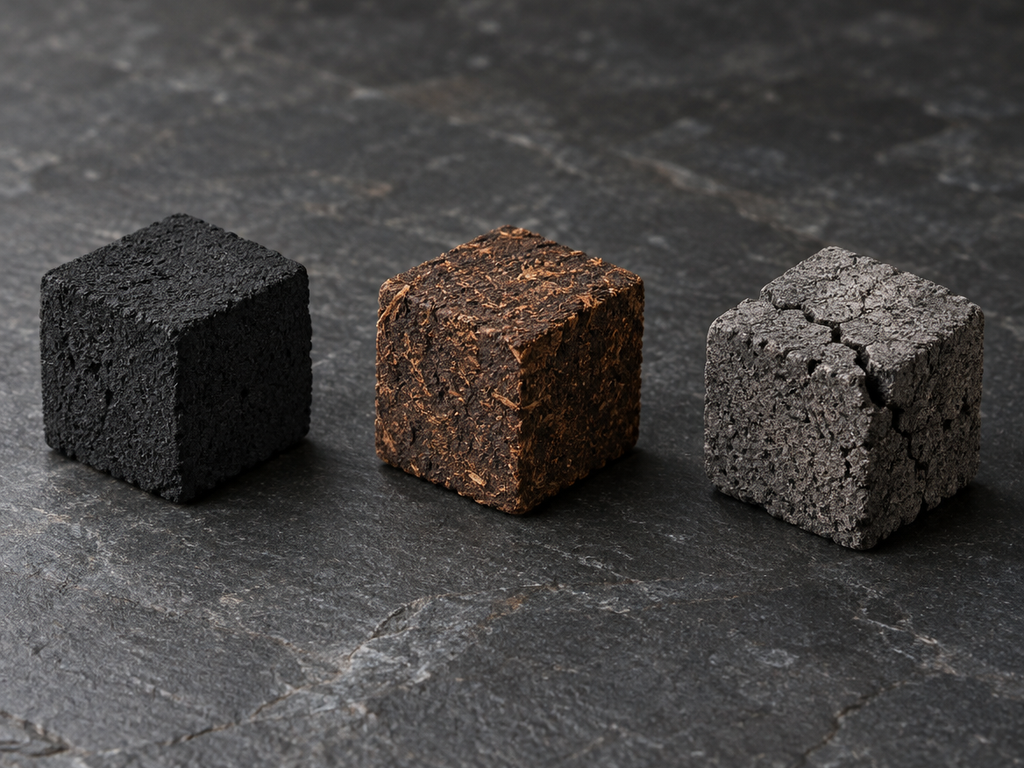
Myth Busted: Is Coconut Shell Charcoal Always the Cleanest and Longest-Lasting?
Coconut shell charcoal can perform well, but its feedstock alone does not guarantee low odor, low ash, or a long burn. Buyers should compare product-specific test results and batch consistency, while using charcoal with proper ventilation and following safety instructions.

How to Evaluate Alternatives to Coconut Shell Charcoal: A 7-Step Importer Checklist
Switching charcoal feedstocks can affect heat, ash, odor, breakage, delivery reliability, and brand reputation—not just purchase price. This checklist helps importers define product requirements and compare shisha, quick-light, and alternative charcoal under consistent conditions, while keeping incense charcoal specifications separate.