
Quick-Light Charcoal ROI: Cost per Session for Fruitwood, Bamboo, and Coconut Shell

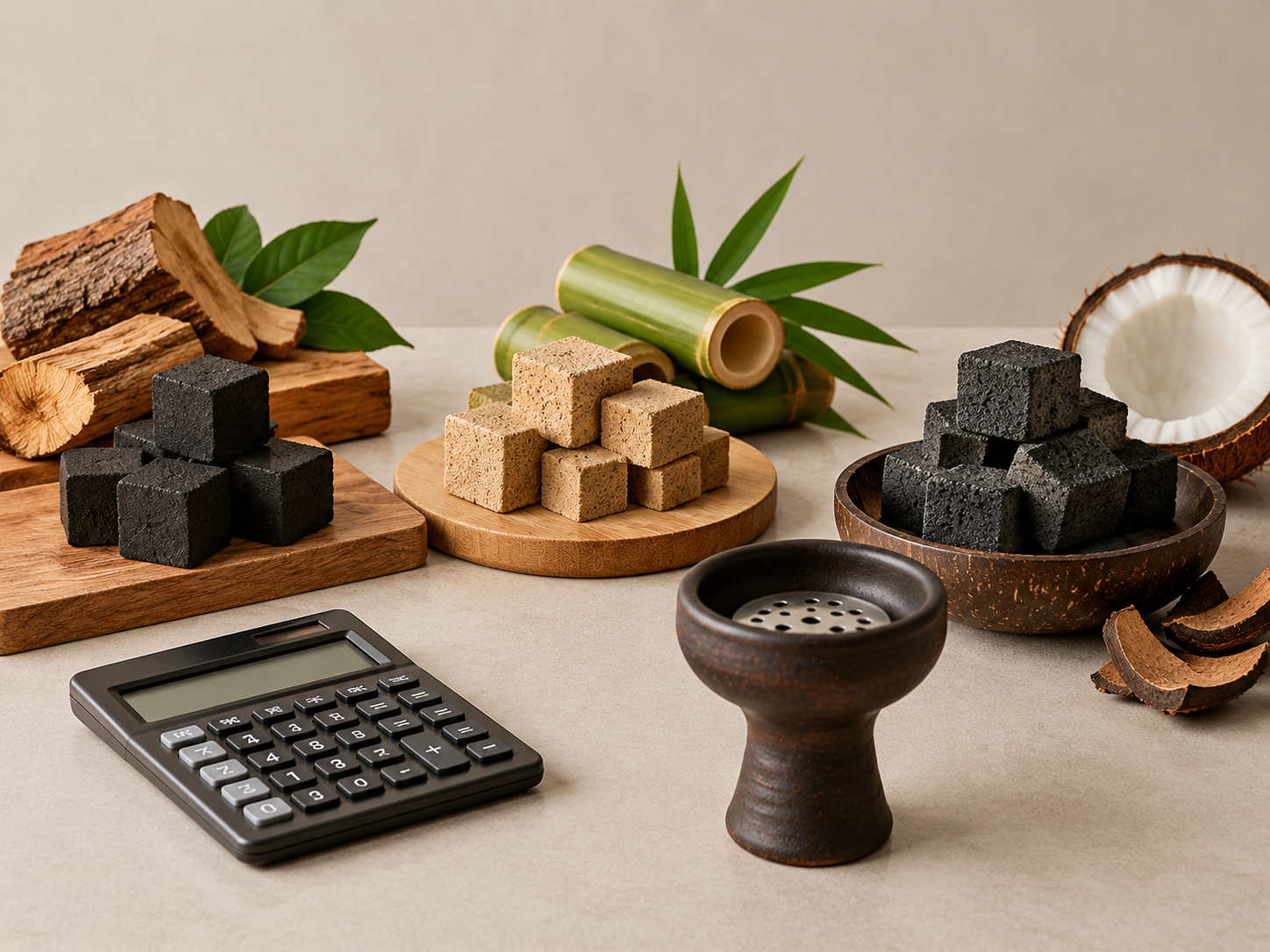
Compare fruitwood, bamboo, and coconut-shell charcoal by the cost of usable sessions—not just the price per carton. The guide explains how product format, burn time, ignition, and intended use affect sourcing decisions for lounges, retailers, and private-label buyers.
Quick-Light Charcoal ROI Calculator: What Fruitwood and Bamboo Cubes Really Cost Per Session vs. Coconut Shell
Introduction: The Purchase Price Is Not the Real Cost of Quick-Light Charcoal
If you import charcoal, run a hookah lounge, stock a retail shelf, or produce private-label incense lines, you already know the trap: the quotation sheet looks clean, the carton price looks competitive, and the margin projection looks healthy. Then the first container lands. Cubes arrive cracked. Burn time runs short during peak service. Customers complain about odor. Staff spend extra minutes relighting. Suddenly the cheapest quote on paper becomes the most expensive product in your warehouse.
That is why experienced buyers stop comparing price per box and start comparing cost per usable session. This shift matters most in the quick light charcoal category, where convenience is the entire selling proposition. A self-lighting tablet that ignites in seconds but dies in twenty minutes is not a bargain — it is a labor and complaint generator. Meanwhile, a denser natural cube that costs more per kilogram can quietly reduce total operating cost because fewer pieces are consumed per session.
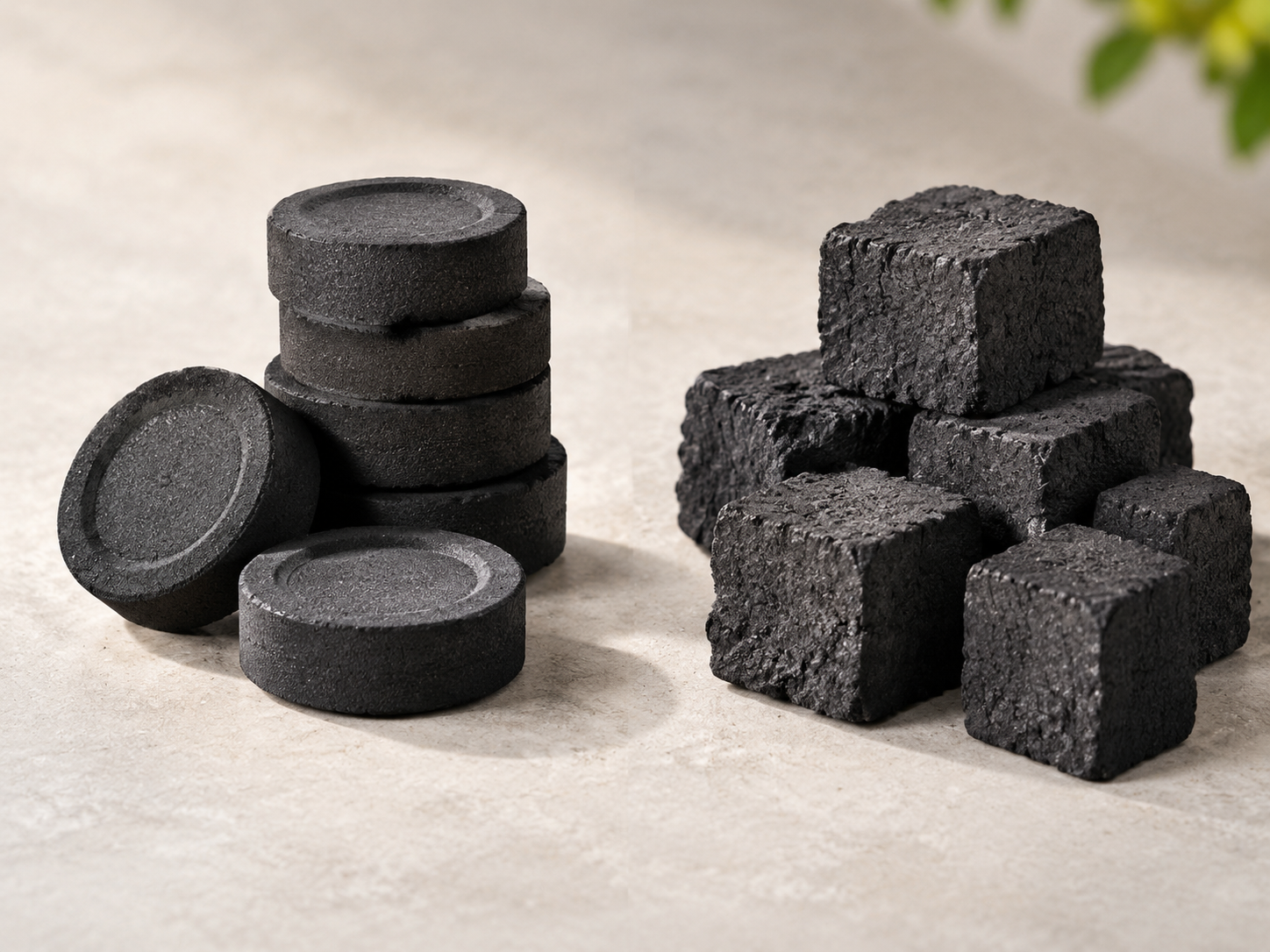
There is also a genuine use-case split that buyers must respect. Some customers want quick light charcoal purely for convenience: no burner, no waiting, no equipment. Others deliberately choose natural shisha charcoal or incense charcoal because they prioritize low odor, cleaner handling, longer sessions, and flavor neutrality. Both groups are valid markets — but they cannot be evaluated with the same unit-price math.
This article answers one practical question: how do fruit wood charcoal, bamboo charcoal, and coconut-shell cube products compare when calculated by actual sessions served rather than cost per carton? It is written as a sourcing guide for charcoal wholesale buyers evaluating hookah charcoal programs, resin-burning incense charcoal, and private-label product lines across multiple channels.
First, Define the Products Correctly: Quick-Light vs. Natural Cubes
Before any ROI calculation, buyers need clean product definitions. Quick light charcoal generally contains ignition aids — often nitrate-based — that allow it to catch from a flame or sparkler-style lighter within seconds. Natural cube charcoal typically requires a burner, hot plate, or another sustained heat source, and it lights more slowly but burns with fewer additives.
Here is where confusion creeps in: fruit wood charcoal and bamboo charcoal can be sold in either format. A supplier may offer natural fruitwood briquettes, or a quick-light fruitwood tablet, or both. The raw material does not automatically determine lighting behavior — the formulation does. Buyers should verify the actual product format rather than assume that "fruitwood" means natural or that "bamboo" means additive-free.
It also helps to separate quick-light hookah charcoal from quick-light incense charcoal. Size, ignition speed, odor expectations, ash behavior, and regulatory requirements can differ significantly by application. A 50mm perforated disc designed for a hookah bowl is not interchangeable with a small tablet designed for a resin burner, even if both are labeled "quick light."
For example, a product like the 50*50*40mm Block Quick-Burning Charcoal, Fully Burning, Black Fruit Wood AA554-SBQ is built as a large fruit wood charcoal block for BBQ, outdoor cooking, and hookah use, with a 1–3 second ignition window and full-burn behavior. It solves a specific problem: fast lighting without sacrificing block size. By contrast, a 50mm perforated quick burning charcoal fruit charcoal is engineered for hookah, shisha, and aromatherapy burners, with a fruit fragrance profile and a perforated format that supports airflow. Same broad category, different jobs.
Whatever the format, a competent hookah charcoal supplier should provide technical specifications covering raw material, cube dimensions, moisture content, fixed carbon, ash content, volatile matter, lighting time, burn time, odor profile, and packaging format. Without these numbers, you are not comparing products — you are comparing marketing copy.
Buyer warning: Comparing a self-lighting tablet with a natural coconut cube solely by unit price creates a misleading ROI calculation. Preparation time, session duration, replacement frequency, and odor impact are fundamentally different, and those differences show up in labor cost and customer satisfaction long before they show up in your purchase ledger.
The Quick-Light Charcoal ROI Calculator: Calculate Cost Per Usable Session
Here is the core formula this article is built around:
Cost per session = (landed charcoal cost + preparation labor + energy cost + expected waste/replacement cost + complaint/return allowance) ÷ number of completed sessions
Each input deserves a working definition.
Landed charcoal cost is not the FOB price. It is ex-factory price plus freight, duties, insurance, inland delivery, packaging losses, and financing costs. A container that loses 4% of its pieces to breakage has a higher effective landed cost per saleable piece than the invoice suggests.
Preparation labor captures the human time required to get charcoal ready. Quick light charcoal may reduce ignition time to seconds, while natural shisha charcoal may require burner capacity, staff time, and pre-heating procedures. In a busy lounge, five extra minutes per table across a full evening is a real payroll number.
Energy cost applies mainly to natural cubes: electricity or gas for burners, plus the ventilation load they create.
Waste factor covers broken cubes, moisture damage, inconsistent lighting, crumbling, partial burns, and discarded unused charcoal. This is often the single largest hidden cost in a wholesale program.
Operational factor: multiply the number of pieces used per hookah or incense session by the actual replacement rate during service — not the theoretical number printed on the carton. If staff routinely add a second cube halfway through a session, your real consumption is higher than your specification sheet claims.
For distributors, add a second formula:
Gross profit per carton = carton selling price − landed carton cost − fulfillment cost − returns/claims reserve
Run both formulas for every candidate product before you negotiate. The results frequently contradict the quotation sheet.
Inputs Buyers Should Collect Before Comparing Fruitwood, Bamboo, and Coconut Shell
A credible comparison requires four categories of input data.
- Purchase inputs: FOB or EXW price, minimum order quantity, carton weight, pieces per carton, payment terms, lead time, and shipment method.
- Performance inputs: average lighting time, stable heat duration, usable burn duration, number of cubes per session, relight frequency, ash volume, spark behavior, odor, and breakage rate.
- Operational inputs: burner electricity or gas cost, employee minutes required per session, ventilation needs, cleaning time, and storage losses.
- Commercial inputs: customer preference, repeat-purchase rate, retailer complaints, product-return rate, and the price premium the market will actually accept.
Then add compliance inputs, which matter especially for quick light charcoal: disclosure requirements for ignition agents, shipping restrictions where applicable, label language, warning requirements, and destination-market testing expectations. A product that clears customs but fails a retail compliance review is not a bargain.
Ask every shisha charcoal manufacturer or shisha charcoal exporter for batch-level test data and a retained-sample policy before finalizing a wholesale order. Retained samples are what allow you to prove — or disprove — a quality claim three shipments later.
Example ROI Comparison: Fruitwood, Bamboo Charcoal, and Coconut Shell Cubes
The table below is illustrative, not universal. Actual results depend on cube size, formulation, packing quality, shipping conditions, and customer usage habits. Use it as a template, then replace every number with your own verified data.
| Material / Format | Landed Cost per Piece | Pieces per Session | Usable Burn Minutes | Preparation Cost | Waste Rate | Total Cost per Session | Est. Margin per Served Session |
|---|---|---|---|---|---|---|---|
| Fruitwood natural cube | Moderate | 2–3 | 45–60 | Burner + labor | Medium | Moderate | Moderate |
| Bamboo natural cube | Low–moderate | 2–3 | 40–55 | Burner + labor | Medium–high | Moderate | Moderate |
| Coconut shell cube | Higher | 2 | 60–75 | Burner + labor | Low | Low–moderate | Higher |
| Quick light tablet | Low | 3–4 | 20–30 | Minimal | High | Variable | Depends on channel |
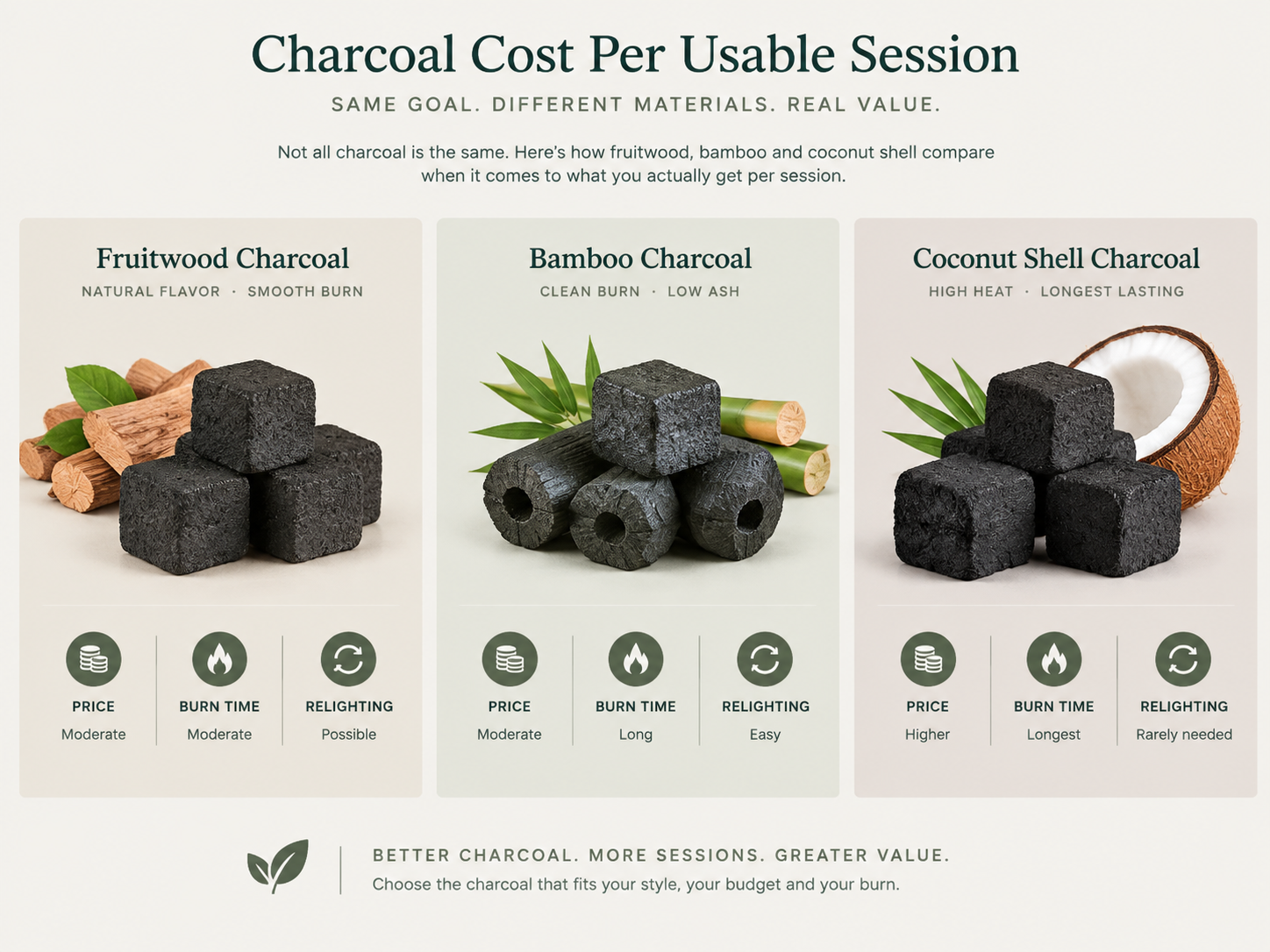
Scenario A — Fruit wood charcoal. Fruitwood offers familiar natural-material positioning and potentially competitive sourcing, particularly in regions with established orchards and carbonization capacity. The catch is consistency. Performance depends heavily on carbonization control, binder selection, moisture management, and cube strength. A well-made fruitwood cube can hold heat steadily; a poorly made one crumbles in the bowl.
Scenario B — Bamboo charcoal. Bamboo supports a renewable-resource narrative and is often considered by buyers seeking an alternative to coconut supply. But buyers must evaluate density, ash volume, odor, and real burn duration rather than relying on material claims. Bamboo varies widely by species, age at harvest, and kiln process.
Scenario C — Coconut-shell charcoal. Coconut shell is commonly specified for dense cube briquettes and consistent heat output. Its higher purchase price may be offset if fewer cubes are needed per session, breakage is lower, and sessions run longer. In many lounge environments, this is exactly what happens.
Scenario D — Quick light charcoal. Quick-light formats can produce the lowest preparation-time cost for certain incense or convenience-led applications. But buyers should calculate whether shorter usable duration, scent interference, or product-positioning constraints reduce total margin. In a premium lounge, a fast-lighting tablet that adds odor to a delicate shisha flavor is not a cost saving — it is a refund waiting to happen.
Why Coconut Shell May Cost Less Per Session Even When It Costs More Per Carton
The density and heat-stability logic is straightforward. A denser cube holds usable heat longer, which means fewer mid-session replacements. If a coconut cube delivers 70 minutes of usable heat and a lighter cube delivers 40, the coconut product may require one fewer piece per session — and one fewer staff intervention.
Lower breakage also protects margins across the entire chain: wholesale shipping, warehouse handling, and retail shelf placement. Every cracked cube is a unit you paid for and cannot sell. Suppliers with tight cube-size tolerances and strong packaging convert more of your landed volume into saleable pieces.
Odor matters too. In premium hookah charcoal programs, flavor neutrality influences lounge satisfaction and consumer repurchase behavior. A cube that introduces its own scent competes with the shisha flavor the customer actually paid for.
Market context supports the continued commercial attention here: a coconut shell charcoal market forecast cited a market value of 60.37 million, reflecting sustained demand for standardized, cube-shaped briquettes with controlled moisture and heat performance. That standardization is precisely what makes cost-per-session modeling possible.
That said, coconut shell is not automatically superior. A verified bamboo or fruitwood product from a disciplined factory can outperform a poorly manufactured coconut product every time. The material sets the ceiling; the manufacturing process determines where you actually land.
When Fruitwood Charcoal Can Be the Better Commercial Choice
Fruit wood charcoal is attractive in several specific situations: established local sourcing, a differentiated natural-material story, particular incense applications, or a buyer base that values material origin as part of the brand narrative.
Evaluate fruit wood quick light hookah charcoal separately from natural fruitwood cubes. Ignition treatment can change odor, handling, shelf-life, and target-market suitability. A quick-light fruitwood product may be perfect for a convenience-driven retail channel and completely wrong for a flavor-focused lounge.
For fruit wood incense charcoal wholesale programs, prioritize low-smoke performance, neutral odor before fragrance or resin is added, tablet integrity, and consistent ignition behavior. Resin burners are unforgiving — a tablet that sparks or smells will not survive a second order.
Also verify that a fruit wood charcoal cubes supplier can maintain raw-material traceability and consistent carbonization across repeat orders. Ask what happens when the harvest changes. Ask how they compensate for seasonal moisture variation in green wood.
A practical sourcing checklist for a fruit wood hookah charcoal OEM should include sample approval, formula agreement, cube tolerance, carton-drop testing, moisture limits, and corrective-action terms. Get all six in writing before the first production run.
When Bamboo Charcoal Delivers Better ROI
Buyers consider bamboo shisha charcoal wholesale for several reasons: material availability, sustainability messaging, alternative supply options, and potential cost control. Bamboo grows quickly and is widely available, which can reduce raw-material risk compared with coconut, whose supply is more concentrated.
However, bamboo charcoal cubes for shisha wholesale should be assessed for hardness, spark resistance, ash color and volume, odor, burn consistency, and compatibility with common heat-management devices. A cube that fits a competitor's bowl but not your customers' bowls creates friction at the point of use.
A capable bamboo cube shisha charcoal supplier can improve ROI through stronger packaging, tight cube-size tolerances, low dust content, and lower transit breakage. These are unglamorous improvements that show up directly in your cost-per-session number.
For bamboo hookah charcoal custom orders, choose cube dimensions based on the target bowl type and session length rather than copying a competitor's format. A 22mm cube and a 26mm cube serve different bowls and different session durations.
Finally, test multiple production batches. Supplier consistency matters more than an initial sample's performance. One good sample proves nothing; three consistent batches prove a process.
Hidden Costs That Distort a Charcoal Wholesale Comparison
Most sourcing spreadsheets miss at least one of the following.
- Breakage and dust: calculate saleable pieces after ocean freight, customs inspection, warehousing, and last-mile delivery — not pieces loaded at the factory.
- Moisture exposure: insufficient barrier packaging affects lighting, cracking, weight accuracy, and customer perception. A cube that absorbed humidity in transit may weigh correctly and still fail to light.
- Carton inefficiency: compare freight cost per usable kilogram, not simply freight cost per carton. A bulky carton with low net weight wastes container space.
- Quality claims: include the cost of replacements, refunds, distributor credits, and lost account confidence when cubes smell, spark, fail to light, or extinguish early.
- Stockouts and long lead times: a cheaper hookah charcoal factory quote can become expensive if inconsistent supply forces emergency purchases or causes lost sales during peak season.
- Private-label complexity: artwork revisions, multilingual labels, barcodes, carton design, third-party testing, and market-specific warning statements should all be included in the first-order ROI model.
Each of these items is small in isolation and significant in aggregate. Across a full container, they can easily exceed the price difference between two competing suppliers.
How to Vet a Hookah Charcoal Supplier Before You Commit
Start with documents. Request business registration, factory audit information, product specifications, quality-control process, test reports, packing specifications, and export references. A supplier that cannot produce these quickly is telling you something.
Then clarify the supplier's actual role. Ask whether they are a hookah charcoal OEM manufacturer, a trading company, or a direct hookah charcoal factory. Identify who controls raw materials, formulation, production, and final inspection. Trading companies can be excellent partners, but you should know who is accountable when a batch fails.
For a shisha charcoal factory in China or another export market, evaluate container-loading practices, moisture protection, carton compression strength, and communication speed during quality incidents. The last one is the hardest to assess in advance and the most important when something goes wrong.
Request a pre-shipment inspection plan covering cube dimensions, net weight, moisture, ignition behavior, burn test, odor test, ash test, breakage level, and carton integrity. Define pass/fail thresholds in advance so the inspection is objective.
For a custom hookah charcoal supplier or private label hookah charcoal manufacturer, define ownership of artwork, approved samples, specifications, molds, and confidential product formulas in writing. Ambiguity here creates disputes later.
Finally, use a scorecard that weights cost per session, quality consistency, compliance readiness, MOQ flexibility, lead time, communication, and corrective-action capability. Weighted scoring prevents a single low price from dominating the decision.
B2B Procurement Strategy: Choose the Right Product for Each Channel
Different channels reward different products. Match the format to the use case.
- Lounge and hospitality channel: prioritize stable heat, low breakage, repeatable performance, and labor efficiency. Natural coconut, bamboo, or fruitwood cubes may all fit, depending on verified test results in your actual bowls.
- Retail convenience channel: quick light charcoal may fit customers who lack burners. Packaging and clear instructions should address safe use and realistic odor expectations.
- Aromatherapy and resin-burning channel: work with an incense charcoal manufacturer for aromatherapy that can deliver neutral-burning tablets or discs suited to fragrance-sensitive use.
- Importer and distributor channel: work with a hookah charcoal manufacturer for importers that can support reliable container quantities, labeling, documents, and stable repeat production.
- Premium private-label channel: pursue a B2B hookah charcoal supplier with OEM capability, carton customization, product traceability, and consistent quality controls.
One more consideration: a reported 3% buyer-criteria trend reference is a useful prompt to show why small performance improvements matter at volume. Lower breakage by a few percentage points, or eliminate one replacement cube per session, and the effect on large-volume procurement margins is material — often larger than a negotiated price concession.
Conclusion: Buy the Lowest Cost Per Session, Not the Lowest Cost Per Box
The decision principle is simple to state and demanding to execute: quick light charcoal, fruitwood cubes, bamboo charcoal, and coconut-shell charcoal should all be evaluated against the same landed-cost-per-usable-session model. Anything less is guesswork dressed up as procurement.
Coconut shell may justify a higher unit price when durability, heat duration, and reduced replacement needs lower total operating cost. Fruitwood and bamboo can be strong alternatives when a supplier can verify consistent raw materials, controlled manufacturing, and reliable performance across batches. Quick-light formats can win decisively in convenience-led channels where preparation time is the dominant cost.
The practical next step is straightforward. Request matched samples from at least two suppliers. Run controlled burn and breakage tests under your own conditions. Enter the results into the ROI calculator. Then negotiate charcoal wholesale pricing based on verified performance rather than marketing claims — because the supplier who can prove cost per session is the supplier worth keeping.
Related Articles
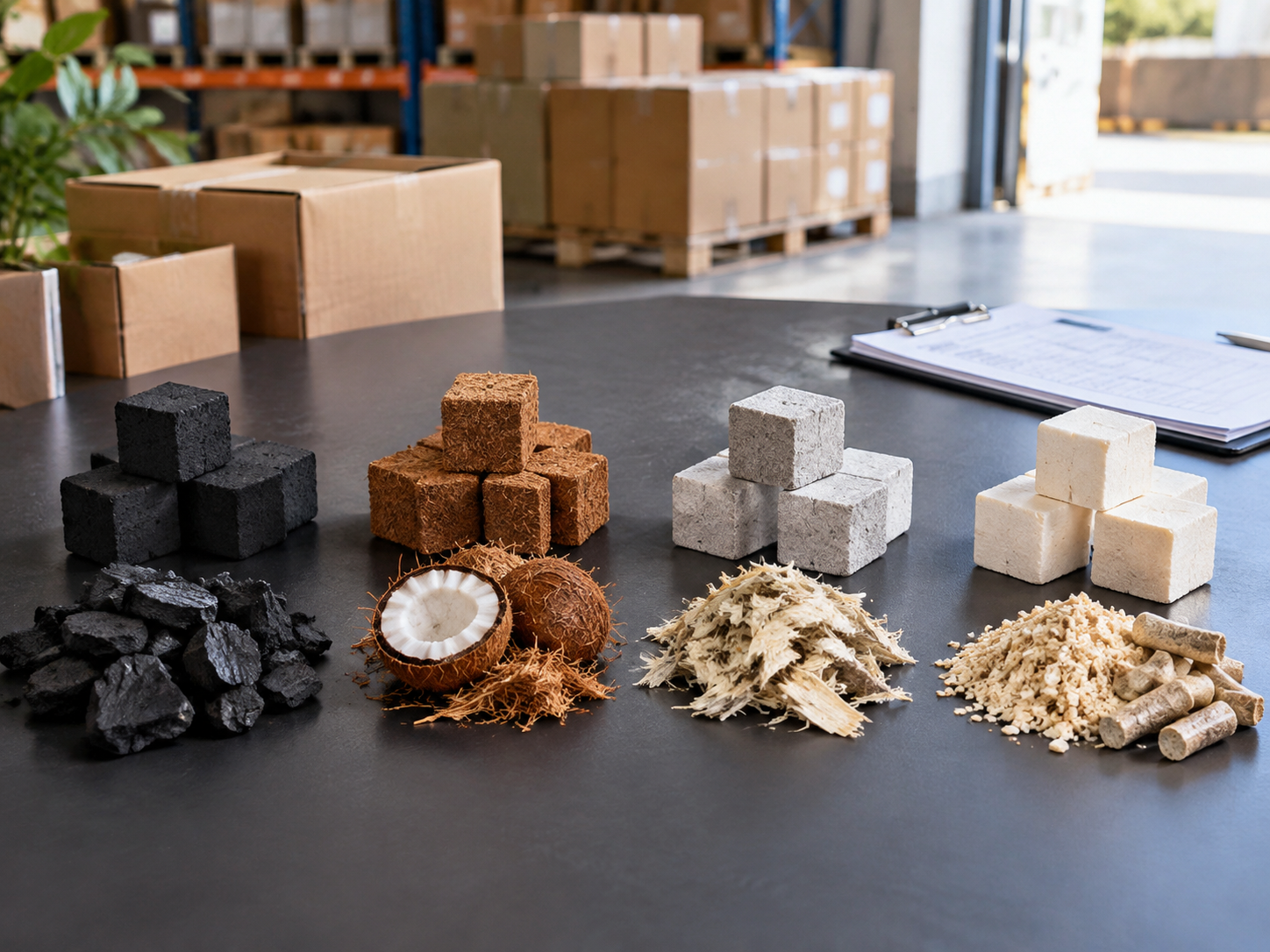
2025 Hookah Charcoal Market Outlook: Why Importers Are Diversifying Beyond Coconut Shell Charcoal
Importers are reassessing hookah charcoal sourcing as supply disruptions, changing logistics costs, product consistency, and demand for variety make single-source strategies riskier. The article outlines a practical approach to comparing coconut shell charcoal with alternatives such as bamboo, fruit wood, and quick-light products, emphasizing documented specifications, supply reliability, compliance, and safe handling.

How to Evaluate Alternatives to Coconut Shell Charcoal: A 7-Step Importer Checklist
Switching charcoal feedstocks can affect heat, ash, odor, breakage, delivery reliability, and brand reputation—not just purchase price. This checklist helps importers define product requirements and compare shisha, quick-light, and alternative charcoal under consistent conditions, while keeping incense charcoal specifications separate.