
How a German Shisha Lounge Cut Charcoal Costs by 22%

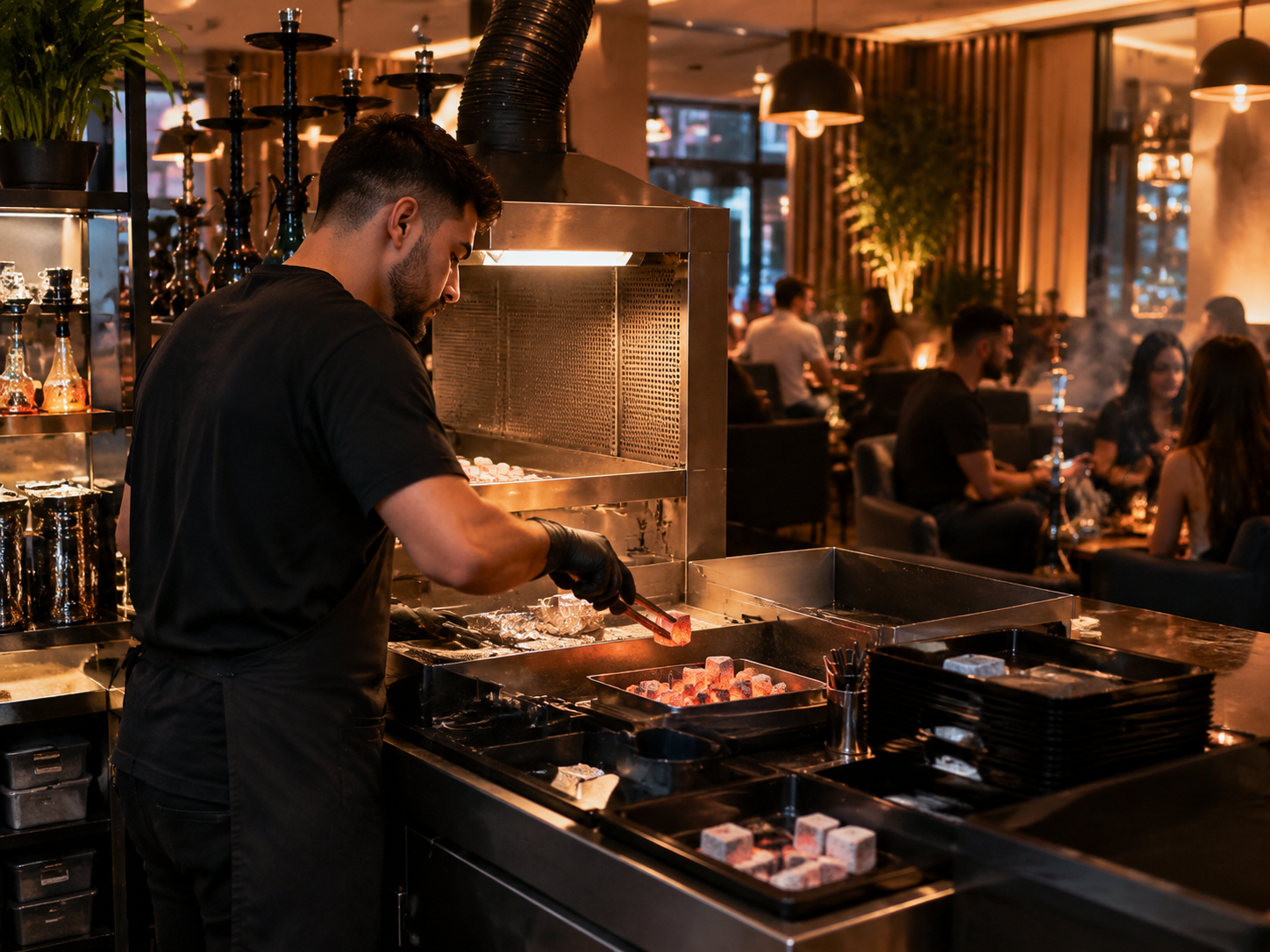
A high-volume German shisha lounge discovered that low carton prices for coconut-shell charcoal concealed higher costs from slow ignition, breakage, inconsistent heat, and frequent replacements. By measuring the total cost of usable heat per session and shifting part of its supply to fruit wood charcoal, the venue reduced charcoal-related expenses by 22%.
Introduction: The Hidden Cost Pressure Behind Every Shisha Session
For shisha lounge operators across Germany, charcoal is not a minor line item. It is a recurring operational cost that touches almost every part of the business: gross margin, staff workflow, guest satisfaction, and table turnover. A bowl that burns unevenly or dies halfway through a session does not just waste product — it consumes staff attention, triggers replacement requests, and shortens the window in which a table can be re-served.
Most lounge owners know this pressure intimately. The frustrations repeat across venues: cubes that take too long to light during a Friday night rush, inconsistent heat that forces staff to guess at portioning, excessive ash that dirties trays and tables, smoke or odor complaints from guests, and wholesale deliveries that arrive late, damp, or full of broken pieces. Each of these problems carries a cost, even when the invoice price per carton looks stable.
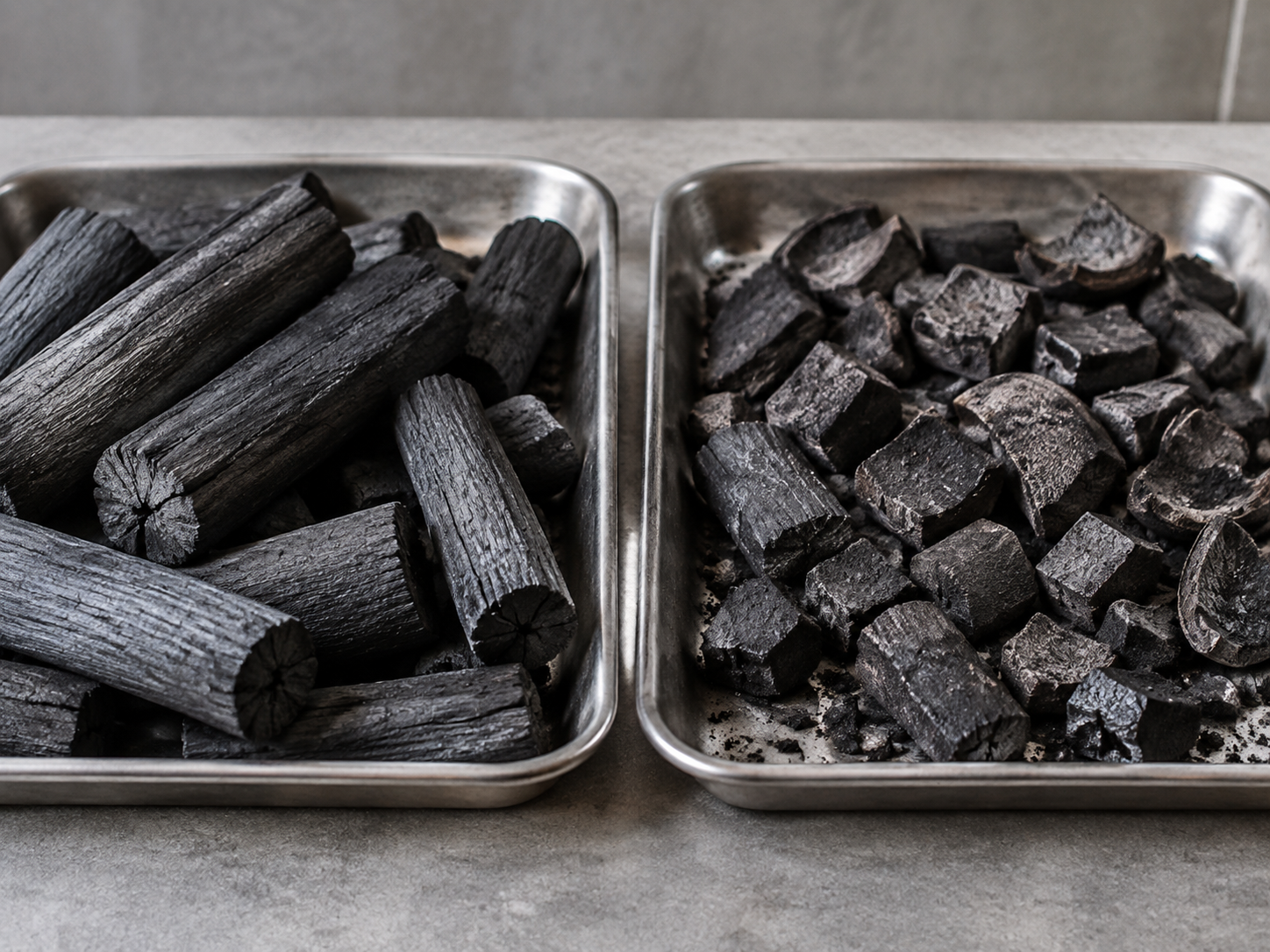
This is why so many lounges default to coconut-shell shisha charcoal. It has become the standard reference product in the category, widely available and broadly trusted. But landed costs fluctuate with freight, customs, and raw-material availability, and batch quality varies more than most buyers expect. A competitive carton price does not guarantee a competitive cost per finished bowl.
The wider market context reinforces the stakes. Europe's hookah charcoal market is projected to grow at approximately 7.8%, which means more venues competing for the same guests, more suppliers entering the category, and more pressure on procurement efficiency. When demand rises, the operators who win are usually the ones who treat charcoal as a managed cost category rather than a routine reorder.
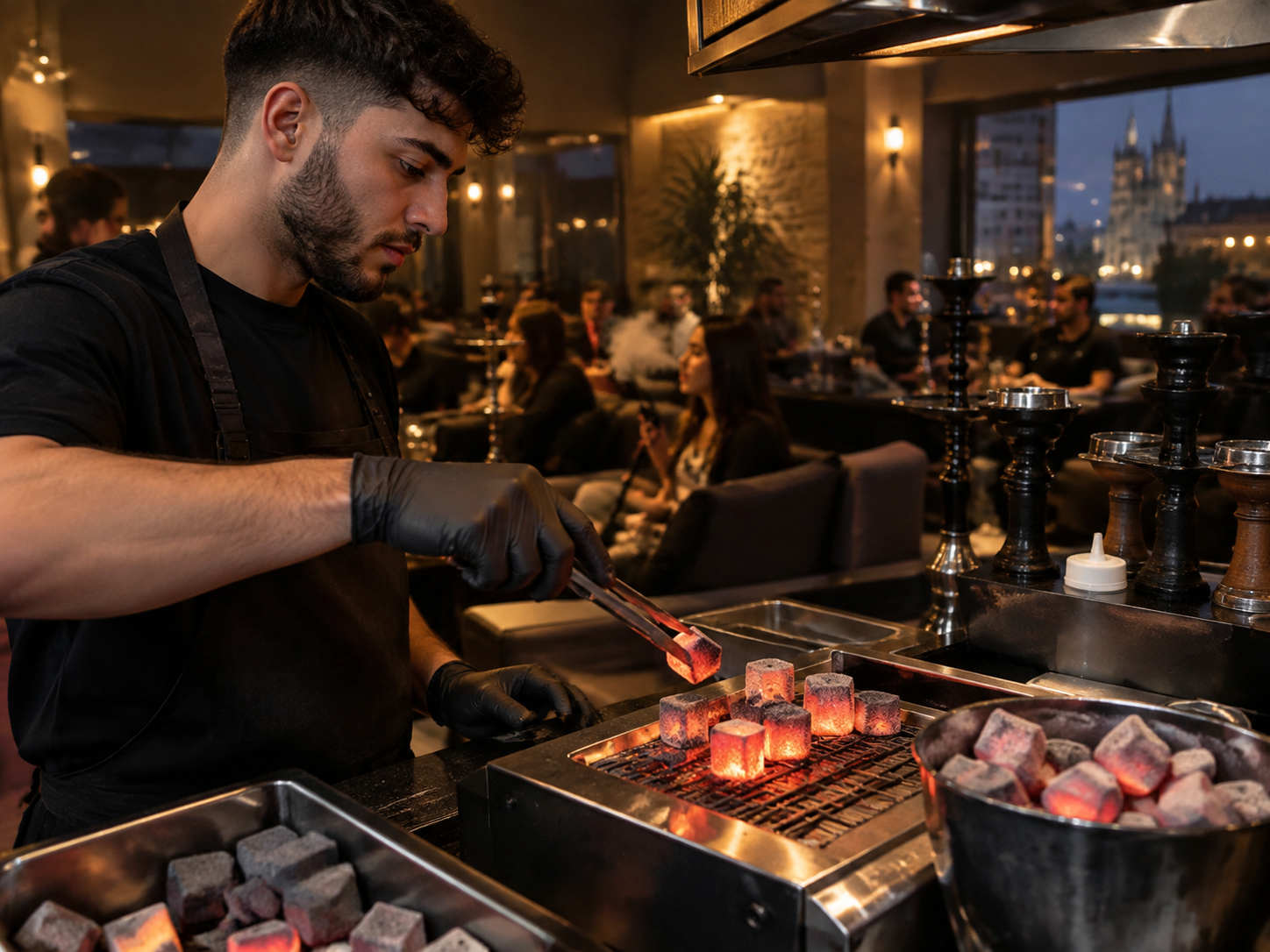
This article examines how one German shisha lounge reduced its total charcoal-related costs by 22% after evaluating its supply and switching part of its volume to fruit wood charcoal. The savings did not come from a single discount. They came from rethinking what "cost" actually means in a shisha operation.
The Lounge Profile: Why Its Coconut-Shell Charcoal Setup Was No Longer Working
The venue in question is a high-volume German shisha lounge with consistent evening and weekend demand. It is not an experimental concept or a small café with two pipes in the corner. It runs multiple stations, serves guests in extended sessions, and depends on predictable charcoal performance to keep service flowing during peak hours.
Its original purchasing model was typical for the segment. The lounge bought imported coconut-shell hookah charcoal through a bulk hookah charcoal supplier, ordering by the pallet or container-load to secure better unit pricing. On paper, the model made sense: buy in volume, reduce the per-kilogram cost, and keep the supply chain simple.
In practice, the real cost per bowl kept climbing. Several operational issues compounded:
- Slow ignition: Cubes took longer than expected to reach usable heat, which delayed first sessions and created bottlenecks at shift change.
- Uneven cubes: Size and density variation meant some pieces burned hot and fast while others struggled, forcing staff to compensate manually.
- High replacement rates: Guests requested fresh coals more often than the lounge had budgeted for, adding both product consumption and staff trips.
- Breakage and waste: Crushed or fractured cubes arrived in nearly every shipment, and damaged pieces were often unusable.
The critical realization was that the advertised price per carton was not the real cost. The real cost was the total cost of usable heat delivered per shisha session — a figure that includes waste, labor, lighting time, and replacement coals. Once the lounge started measuring that number, the coconut-shell supply looked far less competitive than its invoice suggested.
It also helps to keep product categories distinct, because they are often compared unfairly. Natural charcoal cubes are designed for sustained, low-interference heat in a bowl. Quick light charcoal is an ignition-aided format built for speed and convenience. Incense charcoal serves a completely different purpose, typically for burners and resin or bakhoor use. Judging all three by the same standard leads to poor procurement decisions.
Why Coconut Charcoal Can Become Expensive Even When the Carton Price Looks Competitive
Total cost of ownership is the only honest way to evaluate shisha charcoal. A carton price is just one input. The full picture includes purchase price, shipping, customs and duties, storage losses, broken pieces, lighting energy, labor time, and the number of coals actually consumed per bowl.
Moisture variation is a quiet cost driver. Charcoal that absorbs humidity during transit or storage can light more slowly, produce more smoke at ignition, and burn less predictably. Density inconsistency has a similar effect: a lighter cube may feel like a bargain by weight but deliver less sustained heat, which pushes staff to add coals earlier than planned. Cube breakage compounds the problem, because fractured pieces are often discarded or used inefficiently.
The coconut-shell charcoal market itself continues to expand. One market forecast values the sector at about USD 60.37 million, reflecting strong global demand. That demand is good news for availability, but it also intensifies sourcing pressure, especially when freight rates and raw-material supply shift. Buyers who focus only on the lowest quoted price often absorb the difference elsewhere.
The practical fix is to calculate cost per completed shisha service rather than cost per kilogram or carton. That means tracking how many coals a typical bowl actually consumes, how many are replaced mid-session, and how much product is lost to breakage or moisture. Once those numbers are visible, a "cheap" charcoal frequently stops looking cheap.
When comparing offers from any hookah charcoal supplier, a structured checklist keeps the evaluation honest:
- Usable yield: What percentage of the shipment arrives intact and ready to use?
- Burn duration: How long does a single cube hold stable heat under real bowl conditions?
- Ash level: How much residue accumulates, and how often must trays be cleaned?
- Odor: Does the charcoal interfere with the flavor profile of the tobacco?
- Ignition time: How long until the cube is fully lit and ready for service?
- Packaging strength: Does the carton survive international freight and internal handling?
- Consistency between shipments: Does batch two perform like batch one?
The Switch: Why Fruitwood Became a Viable Alternative
Fruit wood charcoal is produced from fruit-tree timber, often formed into briquettes or cubes through carbonization and binding processes. For hookah and heating applications, well-made fruitwood products can deliver stable heat, low odor, and predictable burn behavior — provided the raw material and manufacturing controls are solid.
The lounge's selection criteria were operational, not marketing-driven. It wanted stable heat across a full session, minimal sensory interference, predictable burn time, low breakage in transit, clean handling for staff, and a landed cost that made sense for regular replenishment rather than a one-off trial.
Comparing fruit wood charcoal with coconut-shell and bamboo charcoal at a high level, performance depends far more on process than on category name. Raw material quality, binder formulation, carbonization temperature, cube density, and manufacturing consistency all shape the final result. A premium coconut product can outperform a poorly made fruitwood cube, and vice versa. The category is a starting point, not a guarantee.
This is where supplier qualification matters. Any serious fruit wood charcoal cubes supplier should be willing to provide production specifications and samples before a buyer commits to a charcoal wholesale order. Testing multiple batches — not a single carton — is the only way to confirm that performance holds over time.
Fruitwood options can also serve adjacent categories. For example, fruit wood incense charcoal wholesale supply is a legitimate market for burners and aromatherapy use. However, hookah-grade specifications should be validated separately, because heat profile, cube size, and burn duration requirements differ meaningfully between the two applications.
The 22% Cost Reduction: Where the Savings Actually Came From
The 22% reduction was a total charcoal-related cost result, not a lower quoted product price. That distinction matters, because a cheaper carton can easily produce a more expensive operation if it burns faster, breaks more often, or demands more staff attention.
The savings came from several overlapping drivers:
- Lower landed cost per usable cube: Better yield per shipment meant less product paid for and thrown away.
- Reduced breakage: Stronger, more uniform cubes survived freight and handling far better.
- Fewer replacement coals per bowl: More stable heat reduced mid-session top-ups.
- Improved stock consistency: Predictable batches made planning and portioning easier.
- Less staff time on charcoal issues: Fewer relights, fewer guest complaints, fewer trips to the station.
An illustrative before-and-after framework helps clarify the mechanism. On the coconut-shell side, the lounge counted purchase cost, waste from broken and damp cubes, and the average number of coals consumed per session, including replacements. On the fruitwood side, it counted supply cost, usable yield, and average coals consumed per session. The gap between the two totals — not the gap between two price lists — produced the 22% figure.
Consistent cube sizing played a larger role than expected. When every cube is the same dimensions and density, staff portion naturally and stop overcompensating for weak pieces. During peak service hours, that consistency translates directly into faster table turns and calmer operations.
One caveat is essential: every lounge should validate its own results through a controlled trial. Savings vary by bowl type, heat-management device, ventilation setup, customer volume, and supplier quality. The 22% figure is a real outcome for one venue, not a universal promise.
How the Lounge Tested Fruitwood Charcoal Before a Full Rollout
The lounge treated the switch as a procurement project, not an impulse buy. It shortlisted two to three suppliers, requested production specifications and samples, and tested multiple batches rather than relying on a single carton. This step alone eliminated several candidates whose first shipment performed well but whose second did not.
Candidate fruit wood charcoal for hookah supplier evaluation focused on measurable behavior: lighting time, heat stability across a full session, ash residue, odor, sparking, breakage rate, and total burn duration. Staff feedback was collected alongside hard data, because the people lighting the coals notice inconsistencies that spec sheets miss.
A side-by-side testing table is a practical tool here. The lounge compared coconut-shell, fruitwood, and bamboo charcoal against its own service conditions rather than lab conditions, scoring each on ignition time, burn duration, ash volume, odor, breakage, and coals used per bowl. The winner was the product that performed best under real Friday-night pressure.
Quick light charcoal deserves a separate note. It is appropriate mainly for fast-start requirements and selected portable or convenience use cases. It is not automatically a direct replacement for natural shisha charcoal in a premium lounge operation, where guests often expect a slower, cleaner burn and minimal ignition odor. Where quick-light formats are used, they should be fully ignited before service, and venues should follow applicable ventilation and handling procedures.
For high-volume ignition speed, products such as the 50*50*40mm Block Quick-Burning Charcoal, Fully Burning, Black Fruit Wood AA554-SBQ are worth evaluating. This large fruit wood charcoal block is designed for BBQ, outdoor cooking, and hookah use, with a 1–3 second ignition window and full-burn behavior that suits operations where speed and consistency both matter. For lounges that also run aromatherapy burners, the 50mm perforated quick burning charcoal fruit charcoal offers a 50 mm perforated quick-light format for hookah, shisha, and aromatherapy applications, with a fruit fragrance profile that can complement certain service setups.
Choosing the Right Product Category: Shisha, Quick-Light, Bamboo, and Incense Charcoal
Category clarity prevents expensive mistakes. Each charcoal type exists for a reason, and substituting one for another without verification usually creates problems.
Shisha charcoal is the primary category for hookah bowls. It typically needs to deliver stable, long-lasting heat with minimal sensory interference, so the guest tastes the tobacco rather than the coal.
Quick light charcoal is an ignition-aided category suited to specific operational needs — fast starts, portable setups, or convenience-driven formats. It still requires careful testing for odor, lighting reliability, and guest expectations before it earns a place in a premium lounge.
Bamboo charcoal is another natural-charcoal option. A bamboo cube shisha charcoal supplier should be assessed on density, cube uniformity, ash performance, and sustainable sourcing documentation, since bamboo products vary widely in quality.
Incense charcoal is a different product family entirely. An incense charcoal manufacturer for aromatherapy may prioritize clean burning and resin compatibility rather than the heat profile needed for shisha. Buyers should never substitute incense charcoal for hookah charcoal without verifying material safety, odor profile, size, and intended-use specifications.
What German and European Buyers Should Ask a Charcoal Supplier
European buyers operate under tighter labeling, packaging, and documentation expectations than many other markets, so supplier questions should go beyond price. Start with full product specifications: raw material, cube dimensions, moisture level, fixed carbon, ash content, volatile matter, burn time, packaging configuration, and recommended ignition method.
It also matters what kind of company you are dealing with. Ask whether the supplier operates as a shisha charcoal manufacturer, a shisha charcoal exporter, a trading company, or a hookah charcoal factory. Traceability and quality-control access differ significantly between these models, and that difference shows up in batch consistency.
For import-scale purchasing, evaluate a hookah charcoal manufacturer for importers on export documentation, lead time, container loading plans, packaging durability, and communication responsiveness. A supplier that answers slowly during the quotation stage will usually answer slowly during a production problem.
Any credible B2B hookah charcoal supplier should provide batch samples, inspection reports, production photos, and references from comparable hospitality or distribution customers. For private-label projects, ask directly whether the partner can act as a private label hookah charcoal manufacturer, hookah charcoal OEM manufacturer, or custom hookah charcoal supplier. Buyers sourcing from Asia should also verify whether a shisha charcoal factory in China or a quick light hookah charcoal factory can meet EU-facing labeling, packaging, and shipment requirements.
Scaling the New Procurement Model: Wholesale, OEM, and Private-Label Options
Once a lounge group, distributor, or importer confirms a charcoal type performs well, the next step is moving from ad hoc orders to charcoal wholesale contracts with scheduled replenishment. Predictable supply reduces both stockout risk and the temptation to accept whatever is available at short notice.
Working directly with a fruit wood quick light hookah charcoal manufacturer or fruit wood hookah charcoal OEM opens up product differentiation. Buyers can specify cube size, tablet diameter, pack count, carton design, moisture targets, burn duration, and private-label branding — turning charcoal from a commodity into part of the venue's identity.
Second-source strategies are equally important. Sourcing paths for bamboo shisha charcoal wholesale and bamboo charcoal cubes for shisha wholesale give buyers a qualified alternative if freight disruptions, raw-material price shifts, or production delays hit the primary supplier. Maintaining at least one backup supplier is basic risk management in this category, not a luxury.
A Practical Cost-Saving Framework for Shisha Lounge Operators
The German lounge's experience can be condensed into a five-step action plan that any operator can adapt:
- Audit current usage: Measure how much charcoal is bought, stored, broken, and actually burned.
- Calculate cost per served bowl: Include waste, labor, lighting time, and replacement coals — not just the invoice price.
- Sample alternative charcoal types: Test fruit wood charcoal, coconut-shell products, bamboo hookah charcoal custom options, and quick-light alternatives against real service conditions.
- Run a controlled service trial: Compare batches over multiple weeks, not a single night.
- Negotiate a repeatable supply agreement: Lock in specifications, packaging, and replenishment schedules with a qualified partner.
Alongside these steps, track a small set of KPIs: cubes used per bowl, replacement requests, charcoal waste percentage, staff preparation time, guest complaints, and cost per shisha sale. These numbers reveal whether a switch is genuinely working or simply shifting costs from one line to another.
The core takeaway is straightforward. The German lounge's 22% savings came from treating charcoal as a controllable operating-cost category, supported by disciplined product testing and supplier qualification. It did not come from chasing the lowest carton price.
For operators ready to act, the next move is concrete: request samples, specifications, wholesale pricing, and OEM options from a qualified hookah charcoal supplier before making a large-volume switch. Testing costs a fraction of a bad annual contract — and in a market growing at roughly 7.8%, procurement discipline is one of the few advantages a lounge can fully control.
Related Articles

How to Evaluate Alternatives to Coconut Shell Charcoal: A 7-Step Importer Checklist
Switching charcoal feedstocks can affect heat, ash, odor, breakage, delivery reliability, and brand reputation—not just purchase price. This checklist helps importers define product requirements and compare shisha, quick-light, and alternative charcoal under consistent conditions, while keeping incense charcoal specifications separate.
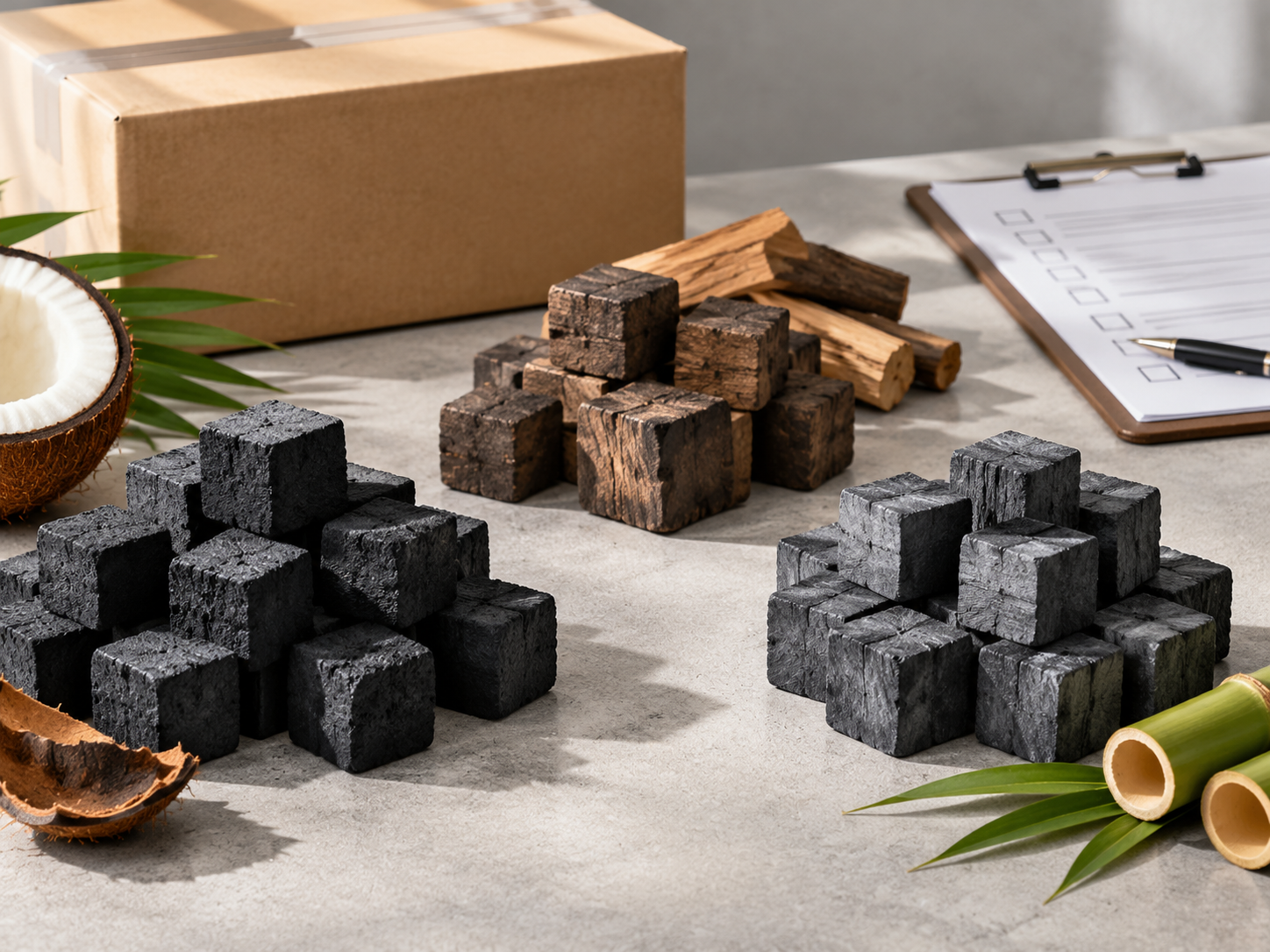
How to Source Hookah Charcoal Without Letting a Low Quote Become a Costly Mistake
This 2026 procurement guide compares coconut shell, fruitwood quick-light, and bamboo cube charcoal, showing how product performance and intended use affect sourcing decisions. It also highlights the risks of judging suppliers by unit price alone and the need to evaluate ignition, odor, ash, heat, and product consistency.